Australia · Travel guide
Melbourne City Guide: Laneways, Gardens, Sport and Coastal Day Trips
Bells ringing over the Yarra at breakfast, coffee in a laneway, a gallery after lunch and a stadium of a hundred thousand people by evening: Melbourne is easiest to understand one hour at a time.
At eight in the morning, 39 bells start to play on a terrace above the Yarra River. They are the Federation Bells in Birrarung Marr, and for an hour they ring out compositions written for them, loud enough to carry over the joggers on the riverbank and the first trams on Flinders Street. It is a good place to start a Melbourne city guide, because Melbourne makes most sense taken one part of the day at a time: gardens early, laneways and coffee by mid-morning, galleries in the afternoon, sport or theatre by night.
Plan your visit
- Base
- The central city for a first visit; Southbank, Fitzroy, Collingwood, St Kilda or Carlton for other trips More
- Getting around
- Free trams in the city centre zone, myki card elsewhere; SkyBus from the airport More
- Season
- Autumn is often the most settled; book well ahead for the big events More
- Distance
- The Twelve Apostles are a very long day trip; two or three days suit the coast More
Morning in the gardens
Melbourne was laid out with a generous belt of parkland around its grid, and the gardens are best before the city wakes up properly.
Birrarung Marr, opened in 2002 on the north bank of the river beside Federation Square, takes its name from the Woiwurrung language of the Wurundjeri people; Birrarung is the name for the Yarra and is often translated as river of mists. The bells sit on its middle terrace and play again around lunchtime and between five and six in the evening.
Across the river, the Royal Botanic Gardens spread over a large stretch of sloping lawns, lakes and plant collections in the Domain parklands. The Tan, a running track of nearly four kilometres around the gardens’ perimeter, is where much of the city goes to exercise before work.
Fitzroy Gardens, on the eastern edge of the centre, holds a curiosity. Cooks’ Cottage, the home of the parents of Captain James Cook, was built in Yorkshire in 1755, dismantled, shipped to Melbourne in 1934 and rebuilt among the elms. It is the oldest building in Australia only in the sense that its bricks were laid somewhere else first.
To the north, Carlton Gardens frame the Royal Exhibition Building, put up for the international exhibition of 1880. In 2004 the building and its gardens became the first built heritage in Australia to join the UNESCO World Heritage List. The Melbourne Museum stands next door.
Mid-morning in the laneways
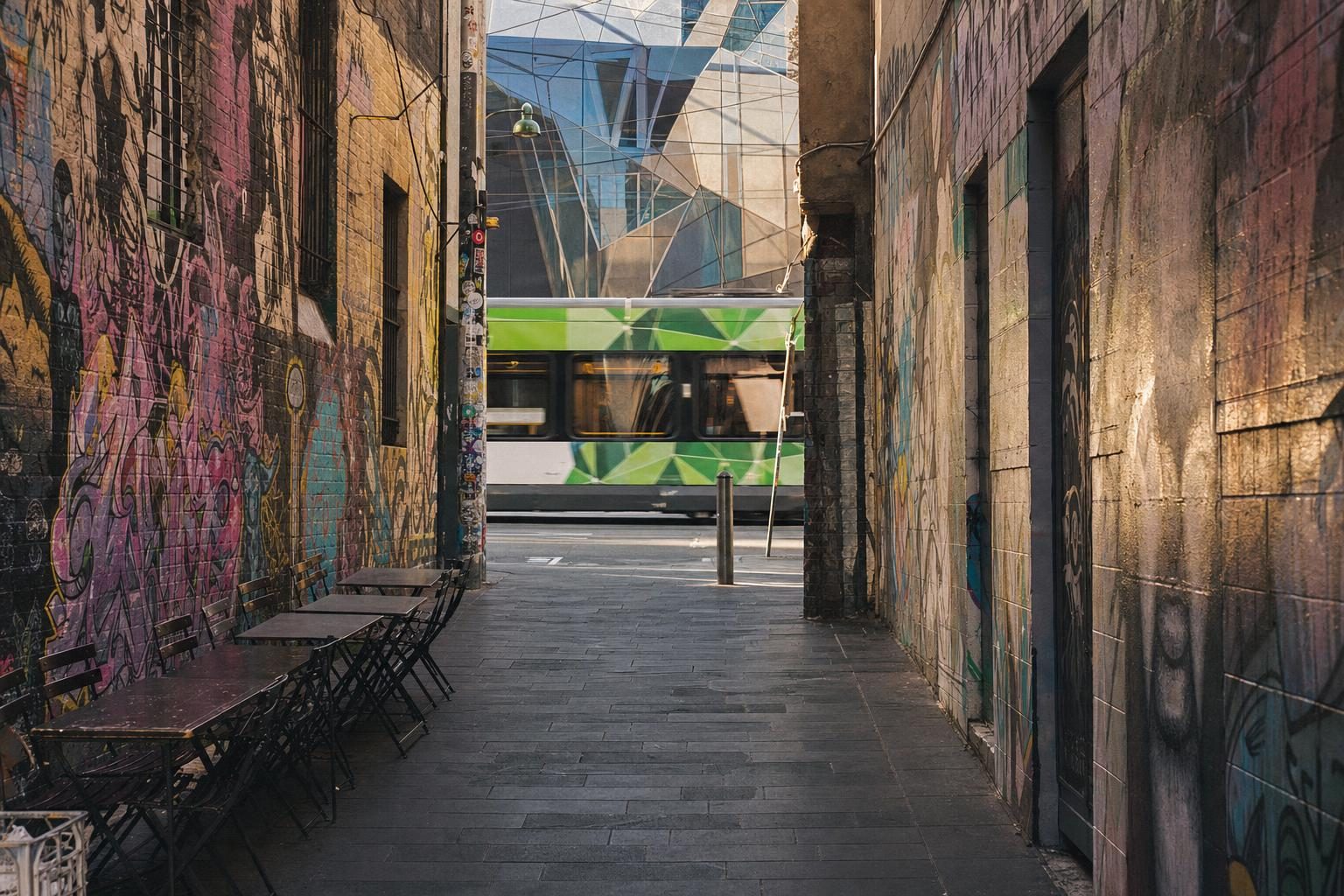
The central city is a grid of wide streets threaded with narrow lanes and arcades, and much of Melbourne’s character lives in the narrow ones. Degraves Street and Centre Place, off Flinders Lane, are lined with small cafés and tables pushed against the walls. Melbourne takes coffee seriously, and most visitors notice by the second flat white.
Hosier Lane, opposite Federation Square, is the city’s best-known street-art lane, its walls repainted so often that photographs from one year look like a different place the next. AC/DC Lane and Duckboard Place nearby have their own layers of paste-ups, stencils and murals. Some of it is clever and some is scrawl. That mix is part of the point.
St Paul’s Cathedral, at the corner of Flinders and Swanston Streets, is a calm stop between lanes. Its interior is richly coloured, with tiles, stone and stained glass, and visitors are welcome outside service times.
Afternoon with art and film
Melbourne has long treated itself as Australia’s cultural capital, and the afternoon is the time to test the claim.
The National Gallery of Victoria runs two sites. NGV International, on St Kilda Road in the arts precinct, holds the international collection and the big touring exhibitions; its great stained-glass ceiling in the Great Hall is worth lying under. The Ian Potter Centre at Federation Square shows Australian art, including Aboriginal and Torres Strait Islander work. General admission to the collections is free.
ACMI, also at Federation Square, is a museum of the moving image, covering film, television, video games and digital art, with screenings and exhibitions. The arts precinct along St Kilda Road also holds Hamer Hall, the Arts Centre and the Melbourne Recital Centre, which opened in 2009.
Evening: food, theatre and sport
Melbourne’s food reputation rests on its migrant communities. Lygon Street in Carlton is the old Italian strip. Chinatown, along Little Bourke Street, has been there since the gold-rush years of the 1850s, making it one of the oldest continuous Chinese settlements in the Western world. The Greek precinct runs along Lonsdale Street, and Richmond’s Victoria Street is known for Vietnamese food.
Opposite Flinders Street Station, the Young and Jackson Hotel is a city fixture. Upstairs hangs Chloé, a life-size nude painted in Paris by Jules Lefebvre in 1875, which has been in the hotel since 1909 and given its name to the bar that houses her.
The theatres of the East End, among them Her Majesty’s, which dates from 1886, stage musicals and touring shows.
The sporting calendar
For many people the best Melbourne city guide is a fixture list. The Australian Open tennis is played at Melbourne Park every January. The Formula One Australian Grand Prix uses a street circuit around Albert Park Lake. From March to September the city follows Australian rules football with an intensity that can surprise visitors, and the Melbourne Cricket Ground, one of the largest stadiums in the world, holds around 100,000 people on its biggest days. The football season ends there with the grand final in late September.
Then there is the Melbourne Cup, run at Flemington Racecourse on the first Tuesday of November. It is a public holiday in metropolitan Melbourne, and much of Australia stops to watch a race lasting a little over three minutes.
Markets and shopping
Queen Victoria Market, trading since the 1870s on the northern edge of the centre, is the largest and best known, selling fruit, vegetables, meat, fish, deli goods and everything else. Seasonal night markets add street food and music on summer and winter evenings. On Sundays, the Esplanade market at St Kilda sells craft along the foreshore.
For department stores, Myer and David Jones face each other across the Bourke Street Mall, and the older arcades, the Royal Arcade and the Block Arcade, are worth walking through for the mosaic floors and glass roofs alone.
Beyond city limits
The city sits at the top of Port Phillip Bay, and the coast in both directions makes for good day trips.
South-east, the road runs down the Mornington Peninsula through bayside suburbs. At Brighton Beach a row of brightly painted bathing boxes faces the bay. Further down, past Rye, Sorrento sits near the heads of the bay, and the peninsula’s wineries and hot springs make a slow second day.
Closer in, St Kilda has a long pier with a breakwater where a colony of little penguins comes ashore at dusk, a small version of the famous parade on Phillip Island.
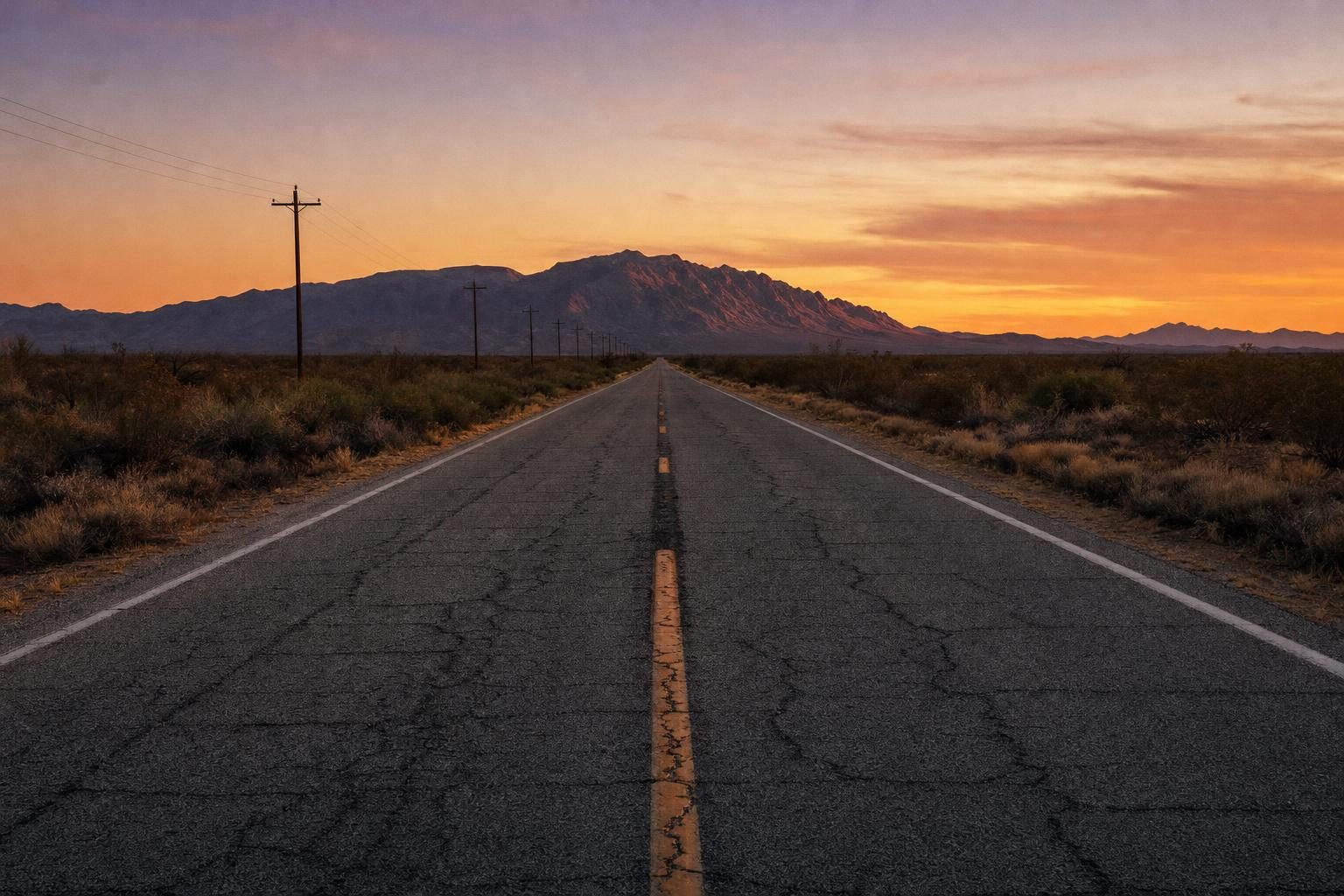
West and then south of Geelong, the Great Ocean Road begins near Torquay and follows the coast past Anglesea, Lorne and Apollo Bay. It was built by returned servicemen after the First World War and is dedicated as a memorial to those who died in it. The best-known stop, the limestone stacks of the Twelve Apostles near Port Campbell, is a very long day trip; two or three days lets the coast set its own pace. American road-trip classics such as Route 66 and its roadside culture are longer, but few are as dramatic over such a short distance.
The Melbourne city guide by season
| Season | Weather | What is on |
|---|---|---|
| Summer, Dec to Feb | Long evenings; searing heat when a north wind blows | Tennis, outdoor cinemas |
| Autumn | Often the most settled, mild days | Grand Prix, start of the football |
| Winter, Jun to Aug | Cool and grey | Laneway bars, theatres, football crowds |
| Spring | The most unpredictable weather of the year | Racing carnival, gardens in flower |
The calendar matters as much as the map. Summer, from December to February, brings long evenings, outdoor cinemas and the tennis, along with days of searing heat when a north wind blows in from the interior; on those days the bay beaches and air-conditioned galleries fill up. Autumn is often the most settled season, with mild days, the Grand Prix and the start of the football. Winter, from June to August, is cool and grey, but it is also when the laneway bars, theatres and football crowds are at their busiest, and the city feels most like itself. Spring brings the racing carnival, the flowering of the gardens and the most unpredictable weather of the year.
Hotels fill quickly and prices climb around the big events: the Australian Open in January, the Grand Prix, the football grand final in September and Cup week in early November. Booking well ahead for those dates is the single most useful piece of planning.
Outside them, Melbourne is easy.
Practical notes
Getting around:
- Trams within the Free Tram Zone in the city centre are free; elsewhere fares apply, with the myki card as the standard ticket
- SkyBus coaches link Melbourne Airport with Southern Cross Station
- Trains run to the suburbs and to Geelong, and V/Line services reach regional Victoria
- A hire car makes sense for the Great Ocean Road and the peninsulas
Melbourne’s weather has a reputation for four seasons in one day, and it is earned. Summer can bring very hot days and winter is grey and chilly. Spring swings hardest. A light jacket and an umbrella are wise in any month.
Any Melbourne city guide ends up arguing about where to stay, and the honest answer depends on the trip. For a first visit with little time, the central city puts everything within walking distance and inside the free tram area; Southbank has river views and the arts precinct; Fitzroy and Collingwood suit those who prefer bars and independent shops; St Kilda puts the bay at the door, along with a longer tram ride into town. Carlton, north of the centre, is a quieter option within walking distance of the museum, the Exhibition Building and Lygon Street.
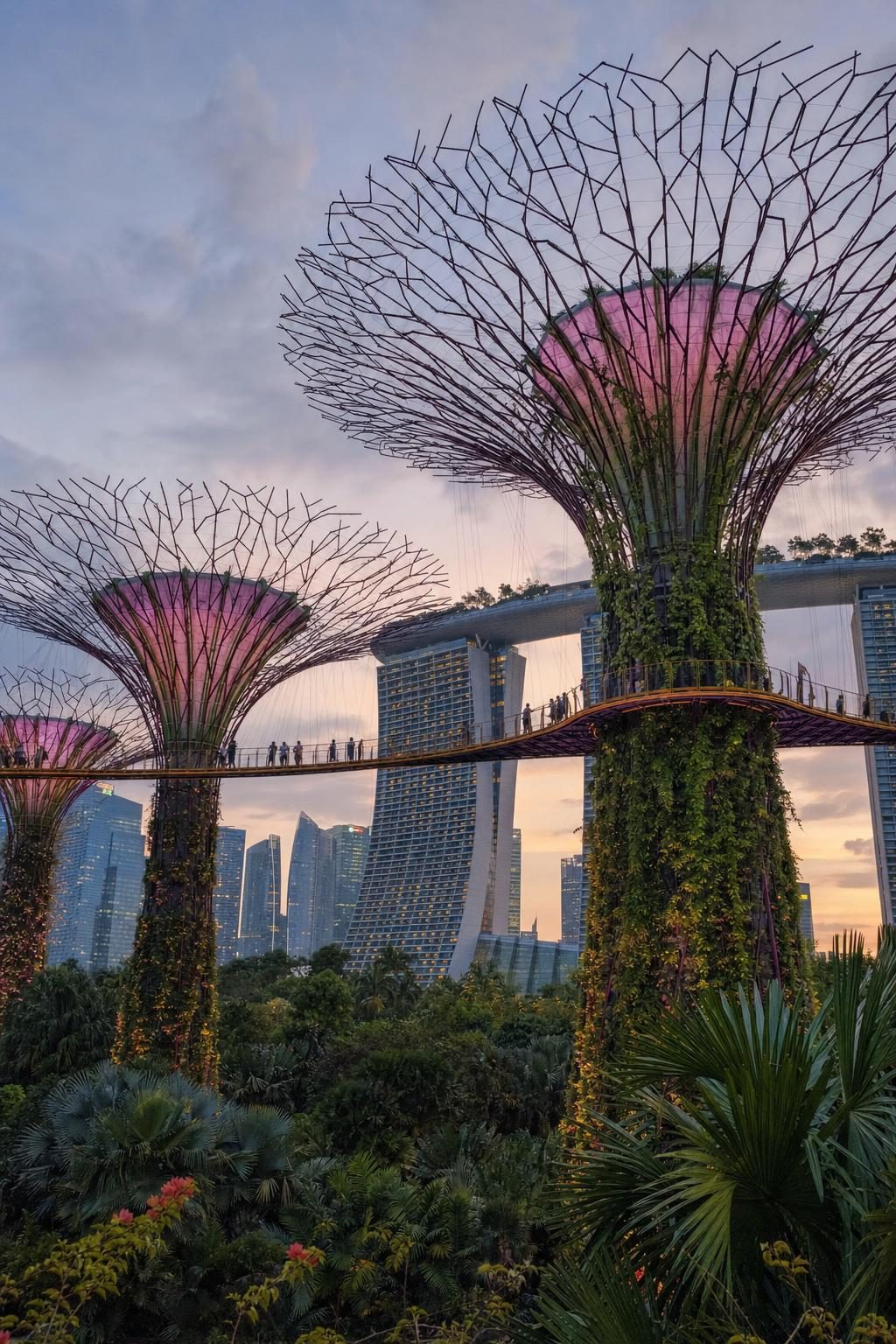
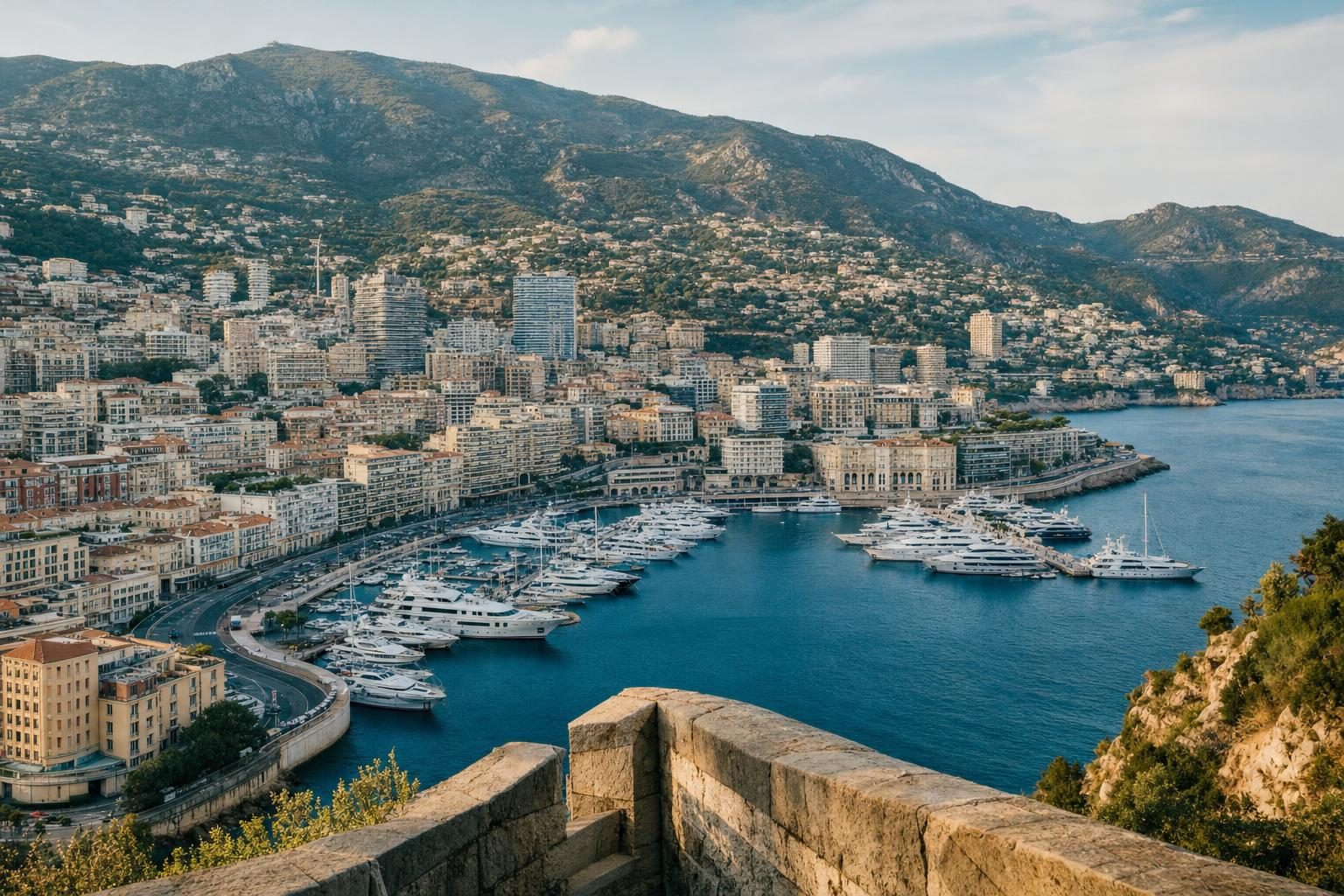
Cities built around gardens make an interesting comparison, and Singapore’s long project to become a city in a garden is one of the most deliberate. For a smaller city break in a very different key, a slow day in Monte Carlo and Monaco-Ville works as an antidote to Melbourne’s scale. More city and walking guides are collected in the travel guides section.
The bells play for the last time each day at five. Standing on the upper terrace of Birrarung Marr as they finish, with the trams below and the towers of Southbank catching the evening light, is a good way to end a first day.
Questions before you go
What is the best way to get around central Melbourne?
Trams are the simplest option. Travel within the Free Tram Zone, which covers the central business district and parts of Docklands, costs nothing, and the city centre is flat enough to walk. Outside the zone, fares apply on trams, trains and buses, with the myki card as the standard ticket.
How is Melbourne Airport connected to the city?
The SkyBus express coach runs between Melbourne Airport and Southern Cross Station in the city, and taxis and rideshare services are available at the terminals. Check current fares and timetables before travel, as they change.
When is the best time to visit Melbourne?
Autumn, from March to May, often brings settled, mild weather, and spring from September to November is pleasant but changeable. Summer can bring very hot days, especially in January and February, while winter is cool and grey. Temperatures can swing sharply within a single day.
What are the Federation Bells?
The Federation Bells are an installation of 39 upturned bells in Birrarung Marr park beside the Yarra River. They play compositions daily at set times, generally 8 to 9 am, 12.30 to 1.30 pm and 5 to 6 pm.
Is the Royal Exhibition Building worth visiting?
Yes. Built for the 1880 international exhibition and set in Carlton Gardens, it became the first building in Australia to be inscribed on the UNESCO World Heritage List in 2004. Tours run through the neighbouring Melbourne Museum.
Where is the best street art in Melbourne?
Hosier Lane, opposite Federation Square, is the best known, with walls that change constantly. AC/DC Lane, Duckboard Place and the lanes around Flinders Lane and Degraves Street are also worth wandering. Much of the work is temporary, so no two visits look the same.
When is the Melbourne Cup?
The Melbourne Cup is run at Flemington Racecourse on the first Tuesday of November. The day is a public holiday in metropolitan Melbourne, and the race is followed across Australia.
Can the Great Ocean Road be done as a day trip from Melbourne?
It can, but it makes a very long day, since the Twelve Apostles near Port Campbell are around three hours' drive each way by the faster inland route, and far longer along the coast. Two or three days allows time for the coastal towns, rainforest walks in the Otways and the viewing points.
What is Queen Victoria Market?
Queen Victoria Market is a large open-air market on the northern edge of the city centre, trading since the 1870s. It sells fresh produce, meat, deli goods and general merchandise, and runs seasonal night markets.
Where are the penguins near Melbourne?
A colony of little penguins lives on the breakwater at St Kilda pier, and they come ashore around dusk. The larger and better-known penguin parade is on Phillip Island, about two hours' drive south-east of the city.