Alaska · Profile
Chris McCandless: The Stampede Trail, Bus 142 and the Teklanika River
A green and white bus sat in the Alaskan bush for almost sixty years. One young man's death inside it drew a stream of visitors that ended only when the state lifted it out by helicopter.
On 28 April 1992 an electrician from Fairbanks named Jim Gallien pulled his truck over where the Stampede Trail leaves the road west of Healy, Alaska, and watched his passenger walk off into the snow. The passenger called himself Alex. He carried a .22 rifle, a 10-pound bag of rice and a field guide to edible plants. Gallien was the last person to see Chris McCandless alive.
Hunters found his body four months later, on 6 September, in a rusting city bus about a day’s walk further in. What happened between those two dates has been argued over for three decades. What happened afterwards, on the same trail, is less well known and in some ways more troubling.
Chris McCandless, from Annandale to the end of the road
Chris McCandless was born in El Segundo, California, in February 1968 and grew up in Annandale, a comfortable suburb of Washington, D.C. He ran cross-country at high school and went on to Emory University in Atlanta, graduating in May 1990 with a degree in history and anthropology. Within weeks he had given more than US$24,000, his college fund, to Oxfam.
That summer he drove west in a yellow Datsun. When a flash flood near Lake Mead disabled the car, he left it, burned some of his remaining cash and carried on with a pack and his thumb. For the next two years he moved around the American West under the name Alexander Supertramp: a grain elevator job in Carthage, South Dakota, a canoe trip down the Colorado River into Mexico, months among the drifters at the Slabs in southern California. Some of the people he met along the way stayed in touch with him by letter until the end. His sister Carine’s memoir, discussed in The Wild Truth and the family behind Into the Wild, explains why he cut himself off from his parents so completely during those years.
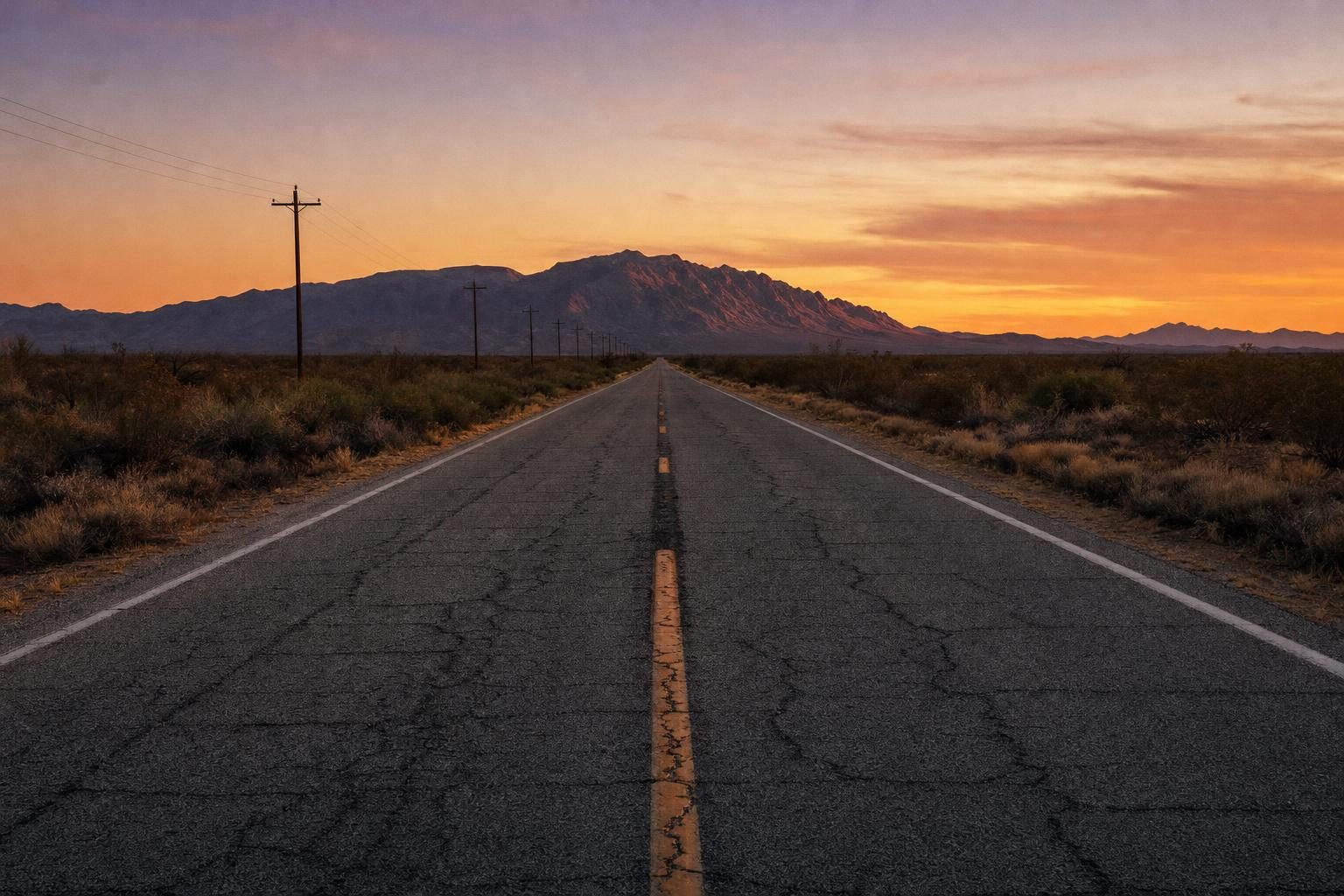
The road trip has its own literature. Anyone who has followed Route 66 across the American West will recognise the appeal of the long, empty highway to someone trying to start over.
Alaska was always the goal.
In April 1992 he hitchhiked north from South Dakota to Fairbanks, carrying little that suited a northern spring.
The Stampede Trail
The Stampede Trail began as a mining route in the 1930s. In 1961 a construction company working to upgrade it into a road hauled in an old Fairbanks city bus, a 1946 International Harvester, as a camp for its crew. The road was never finished. When the work stopped, the bus stayed where it stood, beside the Sushana River, a long day’s walk beyond the end of the drivable road.
For the next thirty years Bus 142 served as an emergency shelter for hunters, trappers and dog mushers. It had a bed frame, a stove and little else. McCandless reached it in early May 1992 and decided to stay.
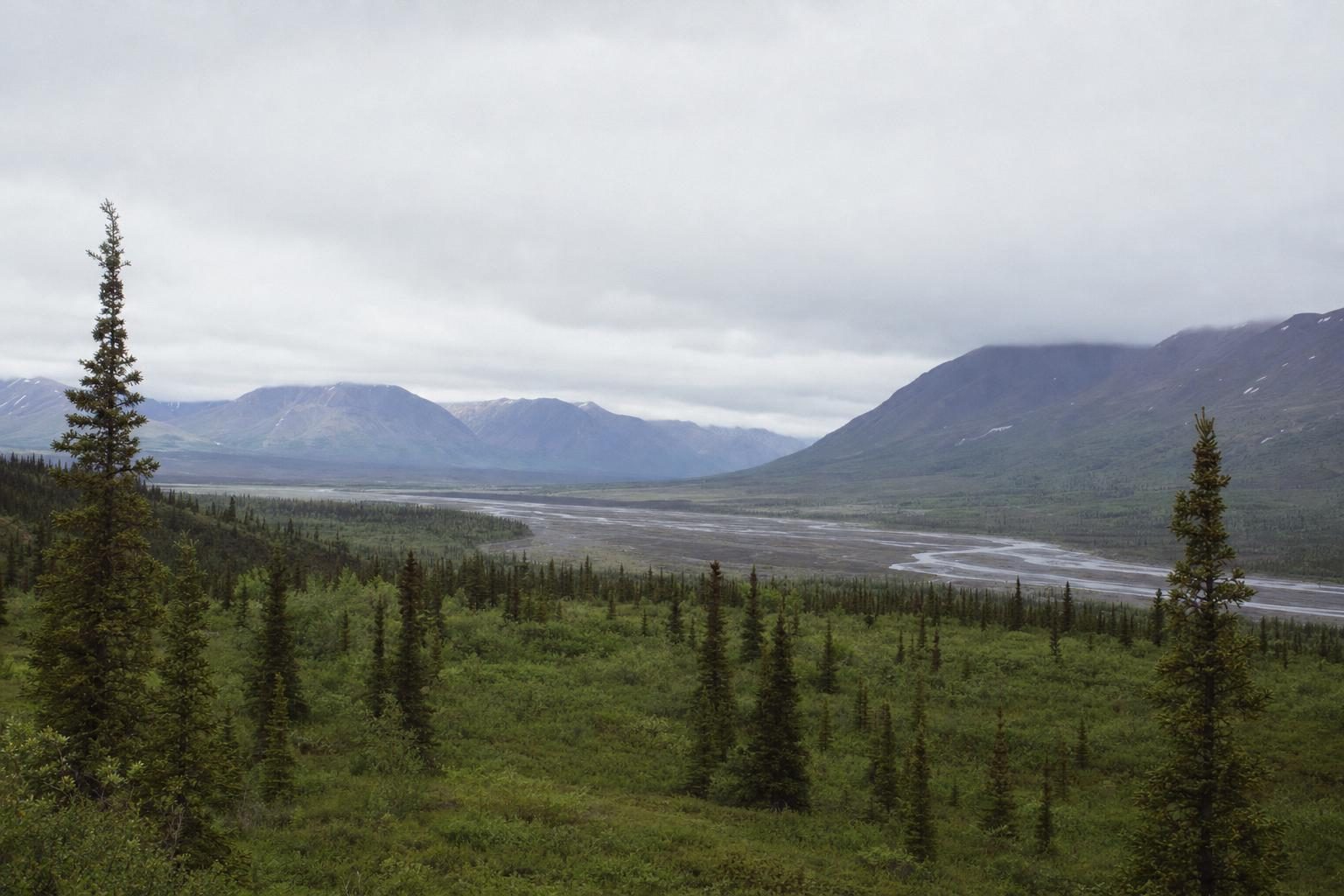
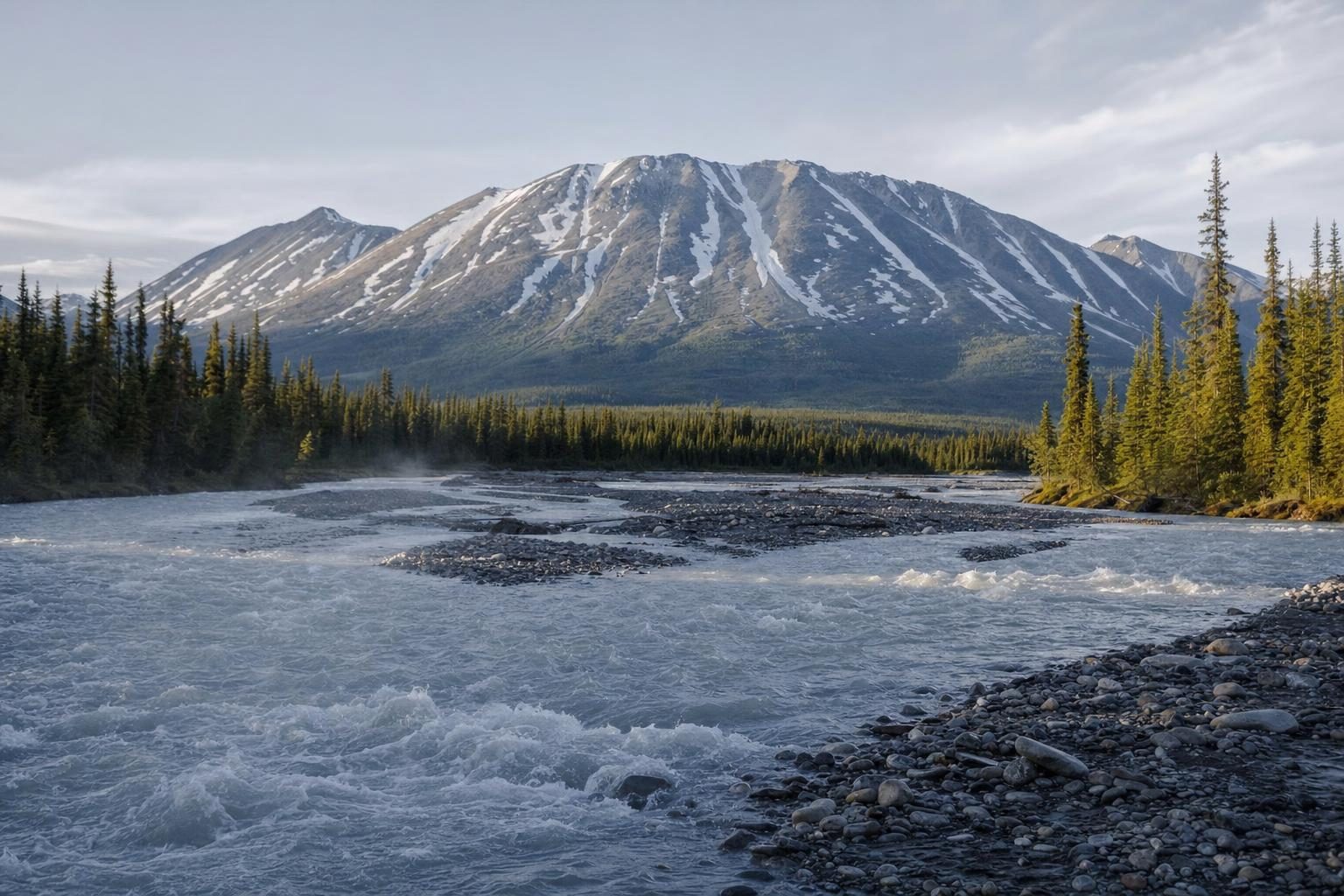
The country around it is boreal forest and muskeg: black spruce, willow and alder, braided gravel rivers and, to the south, the foothills of the Alaska Range. In early spring it is still frozen. By June the bugs are out and the ground is soft underfoot, and moose, caribou and bears move through the valleys.
The Teklanika
The trail crosses two significant rivers on the way to the bus, the Savage and the Teklanika. The Teklanika is the dangerous one. It drains glaciers in the Alaska Range, and its volume swings with the season and the weather: low and braided in spring, a fast, cold, silt-grey torrent during the summer melt or after heavy rain.
McCandless crossed it in late April without much trouble. In early July, after about two months at the bus, he packed up and walked back towards the road. When he reached the Teklanika it was in full flood. He did not attempt it. He returned to the bus, and his journal suggests he intended to wait for the water to drop.
He did not know that a hand-operated cable crossing spanned the river a short distance downstream. It was not on his map, and it could not be seen from where he stood.
The last weeks
The journal he kept on the bus is brief, a sentence or two per day. The entries grow shorter through July and August. His last dated entry, on day 107, reads “Beautiful blue berries”. At some point he wrote a note asking for help and pinned it to the bus door. The moose hunters who reached the bus on 6 September found the note and, inside, his body in a sleeping bag. He weighed about 30 kilograms.
The official cause of death was starvation. Jon Krakauer, whose January 1993 article in Outside magazine first told the story, has argued that toxic compounds in the seeds of the wild potato plant, Hedysarum alpinum, which McCandless was gathering, helped weaken him. A 2015 paper Krakauer co-wrote pointed to the amino acid L-canavanine; an earlier argument by Ronald Hamilton focused on a different neurotoxin, ODAP. None of this has been settled, and some Alaskans continue to argue that the simpler explanation, too few calories and too little preparation, is the right one.
Pilgrims on the trail
Krakauer expanded the article into the book Into the Wild in 1996. Sean Penn’s film followed in 2007, and after it the trickle of visitors to the bus turned into a steady flow. People came from every continent. They left notes, photos and journals inside, signed the walls, slept on the bed frame where McCandless died. For some it was a tribute; for others it resembled the long tradition of travelling to sacred places, with a bus standing in for a shrine.
Many of these visitors were poorly prepared for the walk. The irony was not lost on people in Healy. Local search and rescue teams and Alaska State Troopers were called out again and again, most often for hikers stranded on the wrong side of the Teklanika when the water rose. The Alaska Department of Natural Resources later counted 15 bus-related search and rescue operations by the state between 2009 and 2017 alone.
The safety record
Two of those trips ended in death. In August 2010 a 28-year-old Swiss hiker, Claire Ackermann, drowned while crossing the Teklanika with a French friend. The two had tied into ropes left across the river by earlier hikers; both lost their footing and the ropes held them under. He cut himself free and pulled her out about 300 yards downstream, too late. In July 2019 a 24-year-old woman from Belarus, married less than a month, was swept away in high water while crossing with her husband on the way back from the bus. He pulled her body from the river downstream.
The near-misses between those two deaths were frequent. In May 2013 three German hikers trying to reach the bus had to be rescued, and in 2016 two Americans who made it to the bus were swept downstream on their return before getting out of the water. Each case followed the same pattern as McCandless’s own: an easy crossing on the way in, an impossible one on the way out.
Not everyone in Alaska wanted the bus gone. Some saw it as part of the state’s history and argued that people are entitled to take their own risks. But the rescues put volunteers and troopers in danger too, and the second death settled the argument for the authorities.
Lifting out Bus 142
On 18 June 2020 a CH-47 Chinook helicopter of the Alaska Army National Guard hovered over the bus while soldiers rigged it with straps. The Department of Natural Resources had requested the removal, citing public safety. The bus was flown to Healy, set down on a flatbed and later driven to Fairbanks.
In September 2020 the University of Alaska Museum of the North at the University of Alaska Fairbanks announced it would become the bus’s permanent home. Professional conservators assessed it in 2021 and completed the main treatment between January and April 2023, stabilising rust, paint and the graffiti left by thirty years of visitors. A foundation set up in Chris McCandless’s memory gave US$125,000 in 2024 towards an open-air pavilion.
Where Bus 142 is now
As of September 2026 the bus was still in storage on the university campus in Fairbanks, according to local reporting on a new US$300,000 federal grant for the exhibit. The museum plans to show it outdoors in a wooded area north of the museum building, beside the parking lot, with a soft opening at the end of summer 2027 and a full opening in summer 2028. Around US$100,000 was still needed for power, lighting and security cameras.
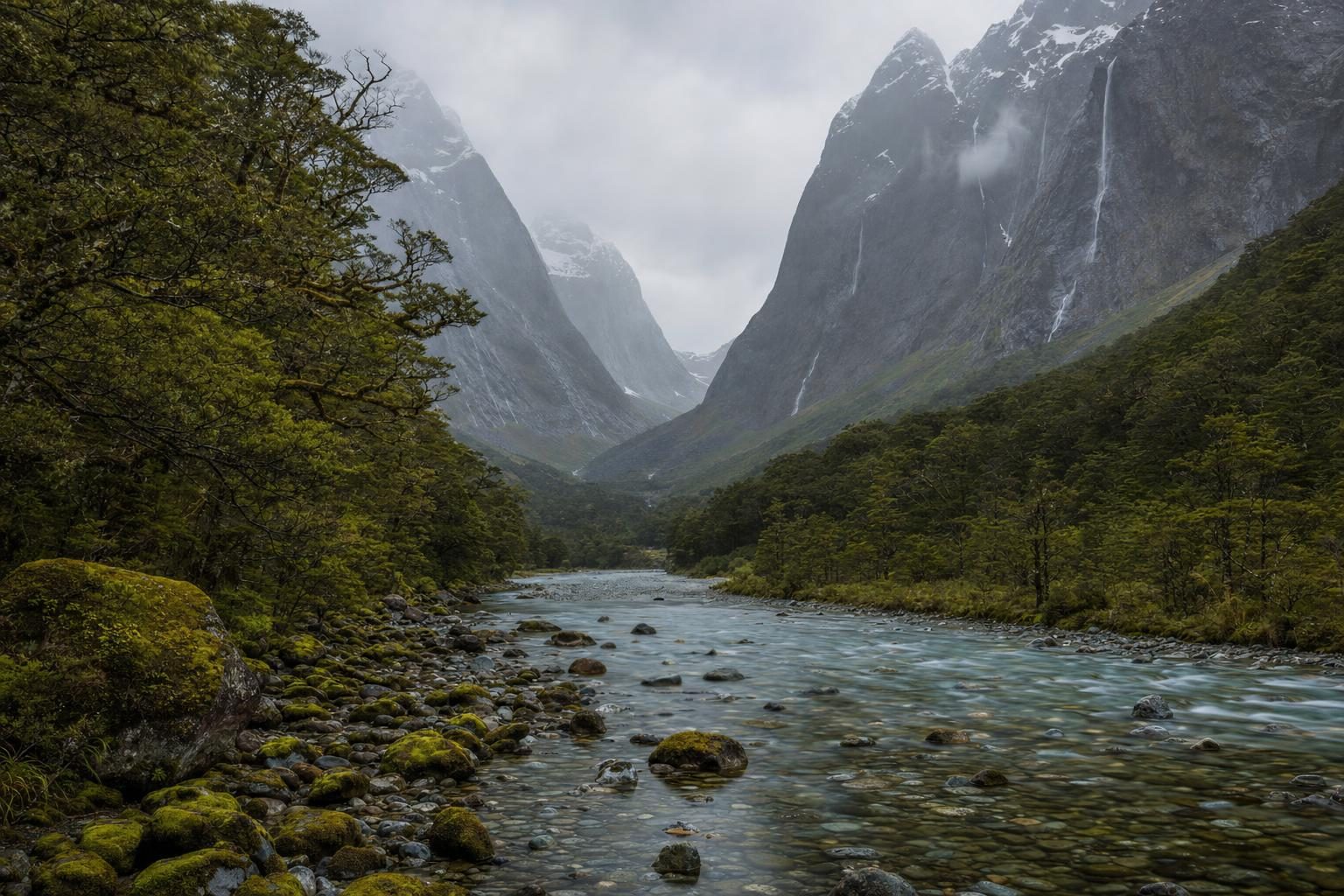
That means the place to see Bus 142 is Fairbanks, not the Stampede Trail. The trail itself still exists, and the Teklanika still floods every summer. If you are drawn to wild northern rivers for their own sake, you might do better on a guided trip, in Alaska or as far away as the fiords of New Zealand’s south, where the walking routes of Fiordland are bridged, hutted and patrolled.
The bus sat in the bush for 59 years, from 1961 to 2020. The Chris McCandless story has outlasted it there, and its last stop will be a stand of trees on a university campus, a few metres from the car park.
Questions before you go
Who was Chris McCandless?
Christopher Johnson McCandless was born on 12 February 1968 in El Segundo, California, and grew up in Annandale, Virginia. After graduating from Emory University in 1990 he gave away his savings, travelled across the American West as Alexander Supertramp and walked into the Alaskan bush in April 1992. He died there that summer, aged 24.
Where did Chris McCandless die?
He died inside an abandoned 1946 International Harvester bus, known as Bus 142, beside the Stampede Trail west of Healy, Alaska, near the northern boundary of Denali National Park. A road crew had left the bus there in 1961 and hunters used it as a shelter.
How did Chris McCandless die?
The official cause of death was starvation. Jon Krakauer has argued that toxic compounds in wild potato seeds he was eating, Hedysarum alpinum, contributed by weakening him; a 2015 paper co-written by Krakauer pointed to L-canavanine. The theories remain debated.
Why couldn't McCandless cross the Teklanika River in July 1992?
When he crossed in late April the river was low and partly frozen. By early July it was swollen with glacial meltwater and running too high and fast to wade. He turned back to the bus rather than risk it.
When was the Into the Wild bus removed?
The Alaska Army National Guard lifted Bus 142 out with a CH-47 Chinook helicopter on 18 June 2020, at the request of the Alaska Department of Natural Resources. It was taken to Healy and later to Fairbanks.
Where is Bus 142 now?
The University of Alaska Museum of the North in Fairbanks is its permanent home. Conservation work took place in 2023, and in September 2026 the museum reported a soft opening of an outdoor display planned for the end of summer 2027, with a full opening in summer 2028.
How many people have died trying to reach the bus?
At least two hikers drowned in the Teklanika River on the way to or from the bus: a Swiss woman in 2010 and a 24-year-old newlywed from Belarus in 2019. The state recorded 15 bus-related search and rescue operations between 2009 and 2017.
Is it worth hiking the Stampede Trail now the bus is gone?
There is no bridge over the Teklanika on the trail, and the river hazards that caused the rescues have not changed. Anyone hiking there needs serious backcountry and river-crossing skills, a plan for high water and a way to call for help.
What books and films tell the Chris McCandless story?
Jon Krakauer's Outside article of January 1993 and his 1996 book Into the Wild, Sean Penn's 2007 film of the same name, and Ron Lamothe's 2007 documentary The Call of the Wild. His sister Carine McCandless added the family side in her 2014 memoir The Wild Truth.