New Zealand · Architecture
Jagged Edge, Queenstown: A Glass House Above the Adventure Town
A triangle of glass hangs off a schist bluff above Lake Wakatipu. Below it, a former gold town has spent sixty years inventing new ways to frighten its visitors.
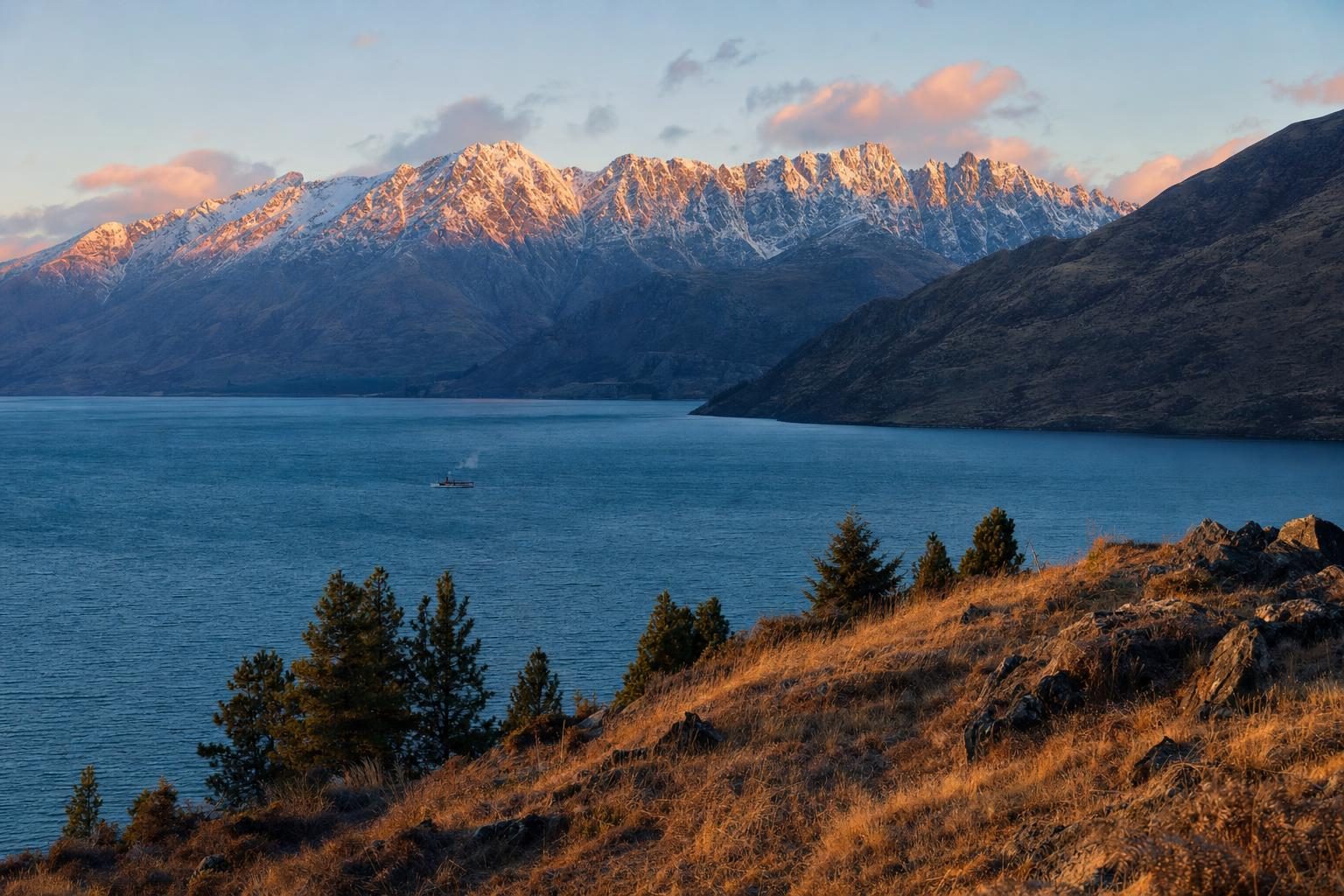
At 4.30 in the afternoon in winter, the Remarkables turn from grey to rose, and the light comes straight down the length of Lake Wakatipu. On a slope above the water, a building made almost entirely of glass catches that colour and throws it back. From across the lake the house reads as a sharp, pale triangle leaning out from the rock, and the people who first see it from the road often struggle to say what it is: a chapel, a sail, a shard of ice. It is called Jagged Edge, and it sits above Queenstown, a town that has made a business out of standing on edges.
A triangle hung from a cliff
Jagged Edge is a private house, built on a steep, south-facing site in the Lake Ridge area outside Queenstown, looking out over Lake Wakatipu towards the Remarkables and the long flanks of Cecil and Walter Peaks. Most of its living space is contained inside one tall glass triangle whose walls tilt outward towards the point. Inside, the main room rises to roughly eight metres.
The engineering is the surprise. The house is not propped up from below in the usual way; it hangs off the cliff behind it. Steel bars anchor back into the rock, and tension bars run parallel to the glass panes, letting the walls lean out into space without a heavy frame between the occupants and the view. A wine cellar has been tunnelled straight into the hillside at the rear, so the coldest room in the house is also the one cut into stone.
Its making was not smooth. Construction stopped in March 2009 when the building company went into liquidation owing local contractors, and for months several hundred thousand dollars’ worth of glass panels, made in Singapore, sat waiting in a garage on site. The owner took over the project, hired new glass contractors and finished it. A separate guest house was built nearby. The house was complete by 2012, and from 2016 it was marketed as an exclusive private rental, reached by a gated private road.
There are three bedrooms, with the main one upstairs facing the Remarkables. Interior choices were kept spare so the glass could do the talking. The building’s real material, in a sense, is the weather: snow on the peaks, low cloud dragging across the lake, the long gold evenings of a Central Otago summer.
Why Jagged Edge suits Queenstown
Glass on a cliff makes sense here more than in most places. Queenstown is a town built on a view and a dare. The mountains around Lake Wakatipu were cut by glaciers, which left steep, bare schist faces and a lake shaped like a bent lightning bolt, about 80 kilometres long and the third-largest in the country. Building anything on those slopes means fighting gravity, and Jagged Edge simply chose not to hide the fight.
Local building has always leant on the same two materials the house sits against: schist and timber. The miners’ cottages of the 1860s were built from rough stone because there was little else to hand. A short walk from the waterfront, Williams Cottage stands on a section bought by John Williams in 1866 and is believed to be the oldest remaining cottage in town. Its low walls and small windows are the opposite of a glass pavilion, built to keep heat in rather than let the view out. Many newer houses on the hills above Frankton and Kelvin Heights mix the two languages, with schist bases and big glazed upper floors, which is why the Jagged Edge triangle reads as an extreme version of a local habit rather than an alien object.
Gold first, then steam
Queenstown exists because of the Shotover River. Gold was found there in 1862, and within months the lakeshore was crowded with tents, stores and hotels. The rush faded within a decade, as rushes do, leaving behind a small town with an extraordinary setting and no obvious way to pay for itself.
Twenty minutes away, Arrowtown keeps a clearer record of those years. Its main street of stone and timber shopfronts survives almost intact, and beside the Arrow River the Department of Conservation looks after the restored huts of the Chinese miners who arrived from the late 1860s to rework the goldfields. The huts are tiny, built of schist, mud and corrugated iron into the bank, with a single doorway and barely room to stand. They are the most honest buildings in the district, and they make a sobering pair with a glass house worth millions.
Transport kept Queenstown alive. Before roads reached the head of the lake, steamers carried stock, wool and supplies between the high-country stations and the town. The TSS Earnslaw, launched on 24 February 1912, is the survivor of that era. The coal-fired twin-screw steamer still crosses the lake to Walter Peak several times a day, trailing black smoke, and its stokers can be watched feeding the furnaces from a gallery above the engine room. From the hillside around Jagged Edge it appears as a slow-moving dot with a plume, and residents have used it as a clock for a century.
A small aside on the lake itself.
Lake Wakatipu breathes. Its surface rises and falls in a seiche with a period of about 26.7 minutes, and at Queenstown Bay the level moves by roughly 200 millimetres. Scientists put it down to wind and changes in air pressure acting on the long, narrow basin. Ngāi Tahu tradition gives a better account: the lake fills the hollow left by the giant Matau, burned as he slept, and the rhythm is his heart still beating under the water. People who sit by the jetty long enough can see the water creep up the steps and slide back down.
The town that sold fear
Modern Queenstown began in 1967 with the Skyline gondola, which lifted visitors from the edge of town to Bob’s Peak and handed them the view that now appears on half the postcards in New Zealand. Then came speed.
Jet boats are a New Zealand invention, and the Kawarau Jet company, set up at Queenstown in 1958, is credited as the first commercial jet-boat business anywhere. From 1970, Shotover Jet began running boats through the narrow canyons of the Shotover, spinning them in water a few centimetres deep beside sheer rock walls. The design of the ride depends on the boat appearing to head straight for the cliff and turning at the last moment.
On 12 November 1988, A. J. Hackett and Henry van Asch opened a permanent commercial bungy site on the Kawarau Gorge suspension bridge, an 1880 structure that had long since lost its traffic. On the first day 28 people paid 75 dollars each to drop 43 metres towards the river. The site is still running, and bungy became the activity most people think of first when they hear the town’s name.
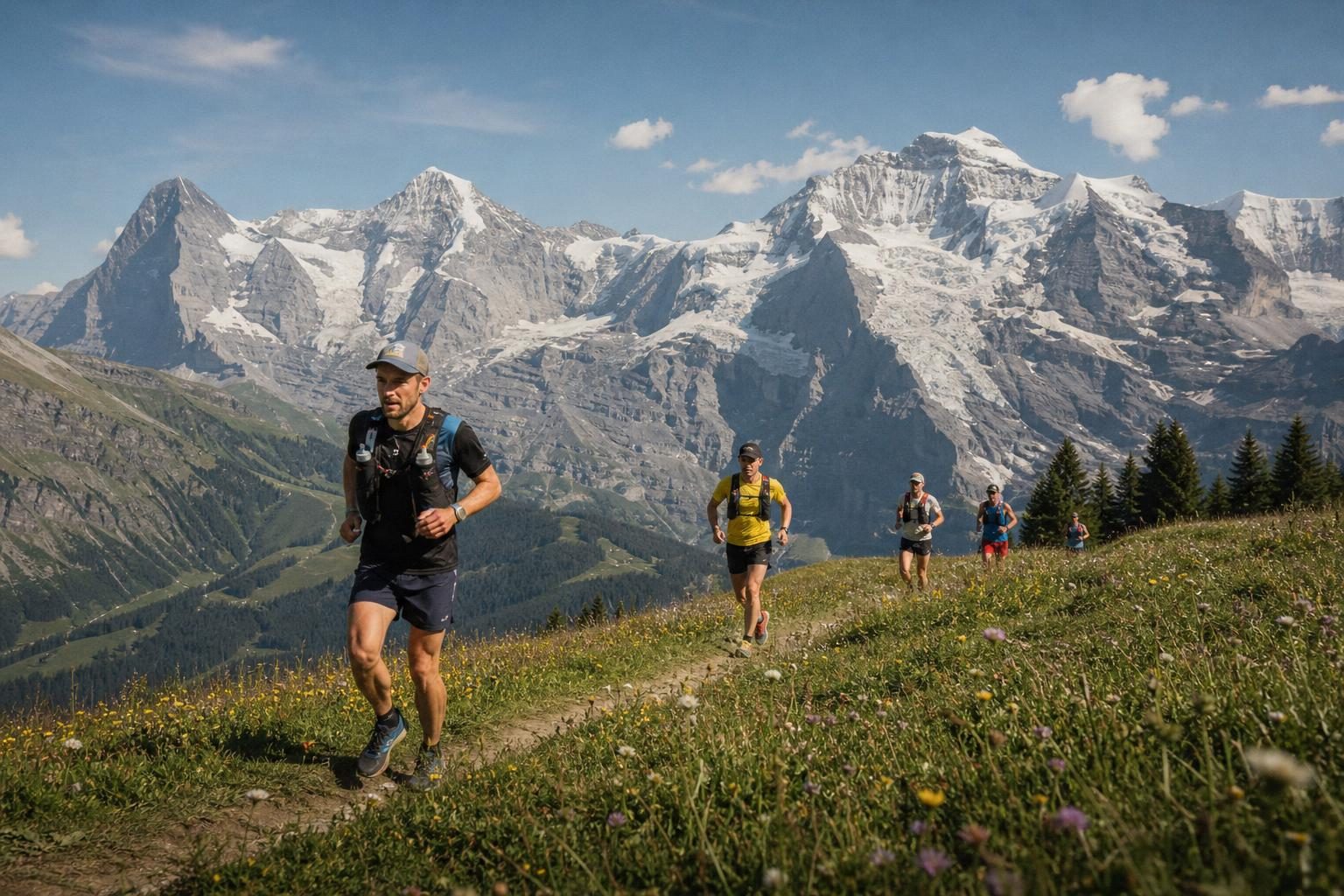
The rest followed: canyon swings, paragliding off Coronet Peak, skydiving above the lake, mountain-bike trails cut into the slopes around Skyline, rafting on the Shotover, heli-skiing in the ranges behind. In winter the town fills with skiers heading to the Remarkables and Coronet Peak. For many visitors the Queenstown adventure scene is the whole reason to come. Endurance events have drifted in too; the town now hosts a marathon, trail races and multisport challenges in the same spirit as alpine races elsewhere, such as the Jungfrau Marathon in the Bernese Oberland.
Seen from below
Most people never get closer to Jagged Edge than a glance from the water or the far shore, and that is the right distance. From a boat heading out of Queenstown Bay, the house is one bright angle against the brown hillside, catching the sun when everything around it is in shade. From the lakefront at Frankton, in the late afternoon, it can flash like a signal mirror.
Seen against the history of the town, the building is less eccentric than it first looks. Queenstown has always charged people for the sensation of hanging over a drop: off a bridge on a rope, in a jet boat beside a cliff, in a gondola cabin above the trees. A house that leans its glass walls out over a lake follows the same logic, only more slowly and with better coffee.
Beyond the lake
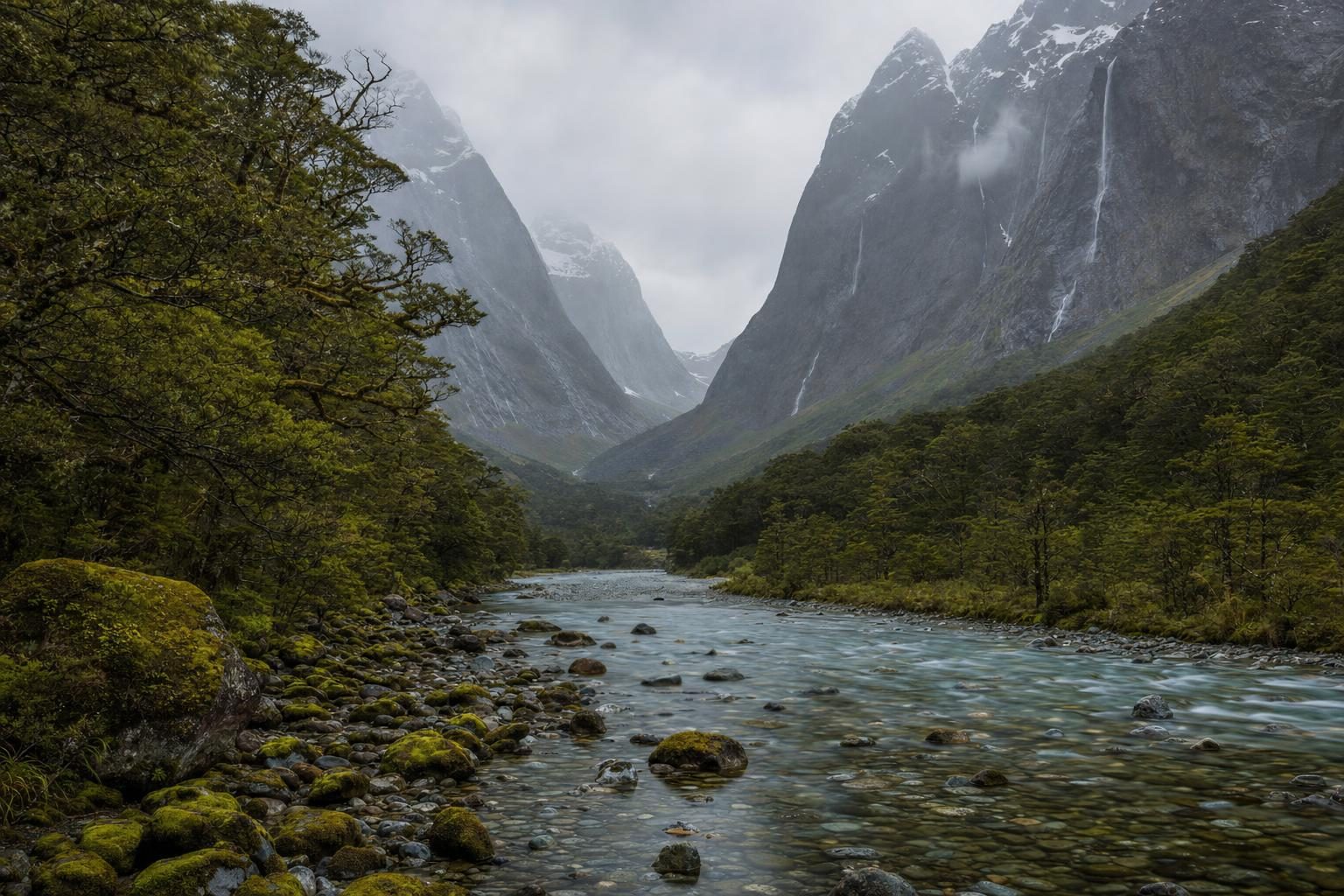
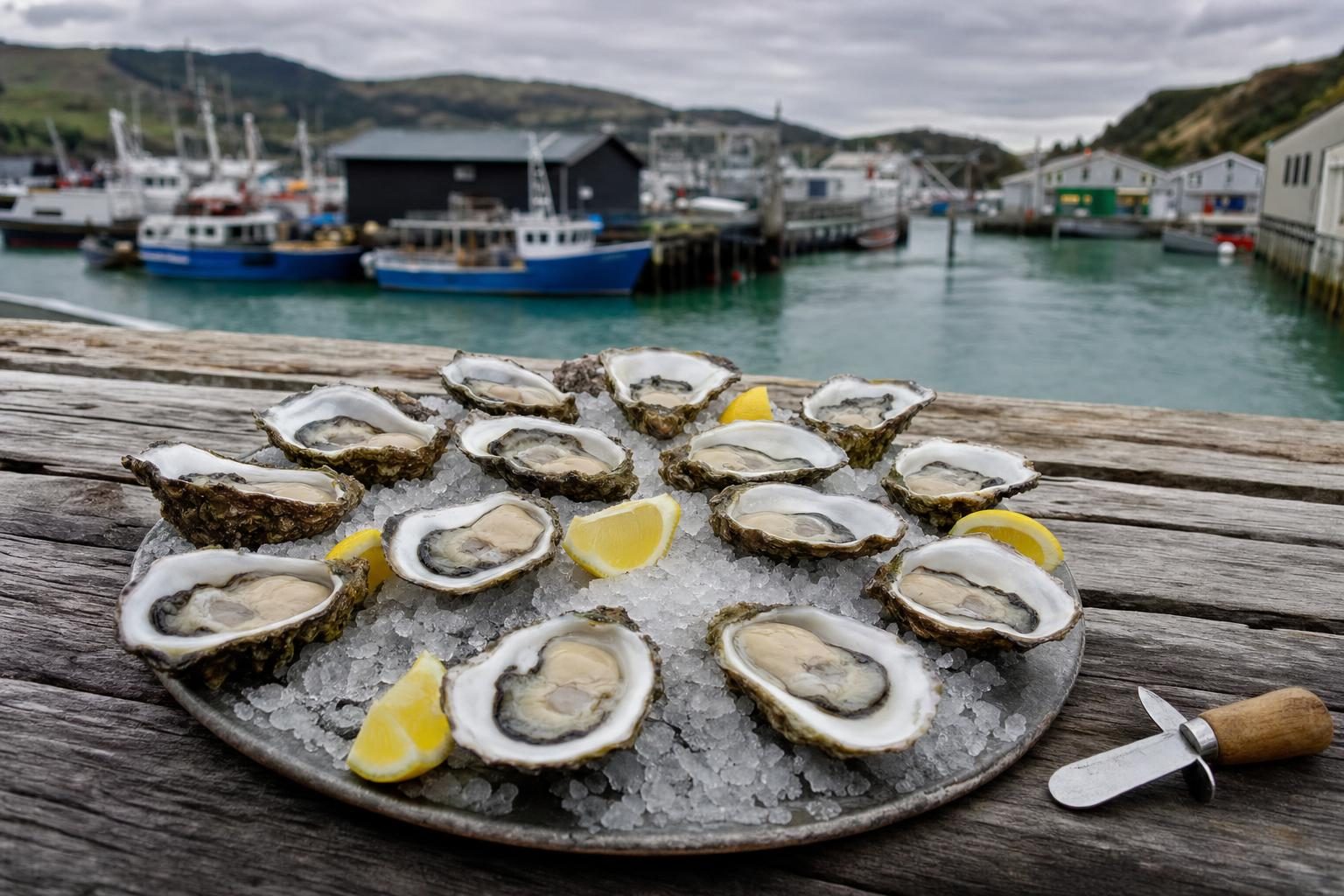
The town is also the gateway to a much wider south. The Milford Road leads from Te Anau into Fiordland National Park, where the Hollyford Valley and Milford Sound offer the opposite of Queenstown’s busy shore, as described in the pull of Fiordland’s valleys and coast. Further south, the port town of Bluff hosts the Bluff Oyster and Food Festival in the cold of May. In the North Island, the volcanoes that stand at the centre of the Māori legend of the battling mountains make a good counterpoint to the glacier-cut peaks here.
For a Queenstown adventure on a smaller budget than a private glass villa, the best free view of Lake Wakatipu is from the Queenstown Hill walking track, which climbs from the back of town to a sculpture called the Basket of Dreams. Allow two to three hours for the return walk. From the top, on a clear day, the whole bent arm of the lake lies below, and on the far slope, if the sun is low enough, a small triangle of glass lights up.
Questions before you go
What is Jagged Edge in Queenstown?
Jagged Edge is a privately owned glass house on a steep southern slope above Lake Wakatipu, in the Lake Ridge area near Queenstown. Most of the living space sits inside a tall triangle of glass that leans outward. It has been offered as high-end private holiday accommodation rather than operating as a public hotel.
How is the Jagged Edge house supported?
The building effectively hangs off the rock behind it. Steel bars anchor back into the cliff and tension bars run parallel with the glass panes, so the walls can lean out without a conventional frame in front of them. A wine cellar is tunnelled into the rock at the rear.
Can visitors tour Jagged Edge?
No public tours are run. It is a private residence on a gated private road, and access has been limited to guests renting it. The best public views of this part of the lake come from the Frankton side and from boats on the water.
Why is Queenstown called an adventure capital?
Several commercial thrill activities began or were popularised around the town. The Kawarau Jet company, set up in 1958, is credited as the world's first commercial jet-boat business, and the Kawarau Bridge site opened in November 1988 as the first permanent commercial bungy operation.
How high is the Kawarau Bridge bungy?
The jump from the old Kawarau Gorge suspension bridge is 43 metres to the river below. The site, about 20 minutes' drive from Queenstown towards Cromwell, still operates and remains one of the most visited adventure sites in the region.
What is the TSS Earnslaw?
The TSS Earnslaw is a coal-fired twin-screw steamer launched on Lake Wakatipu on 24 February 1912. It still carries passengers across the lake to Walter Peak, and its black smoke is a familiar sight from the Queenstown waterfront.
Why does Lake Wakatipu rise and fall?
The lake has a seiche, a slow rhythmic oscillation of the water surface, with a period of about 26.7 minutes. At Queenstown Bay the level moves up and down by around 200 millimetres. In Māori tradition the movement is the heartbeat of the giant Matau, whose body lies in the lake bed.
How big is Lake Wakatipu?
Lake Wakatipu is about 80 kilometres long and is the third-largest lake in New Zealand. Its long, bent outline, often compared to a lightning bolt, comes from the glaciers that carved the valley.
When did Queenstown begin?
The town grew up rapidly after gold was found in the Shotover River in 1862. A cottage on a section bought by John Williams in 1866 is believed to be the oldest remaining cottage in Queenstown and can still be seen near the waterfront.
When did the Skyline gondola open?
The Skyline gondola opened in 1967. It lifts passengers from the edge of town to Bob's Peak, where the view takes in the town, the lake, Cecil and Walter Peaks and the Remarkables.