Türkiye · Event
Mevlana Whirling Dervishes and the Şeb-i Arus Ceremonies in Konya
On the night of 17 December 1273 the poet Jalal al-Din Rumi died in Konya. His followers call that night his wedding, and each December the city fills for ten days of ceremonies that end on the anniversary.
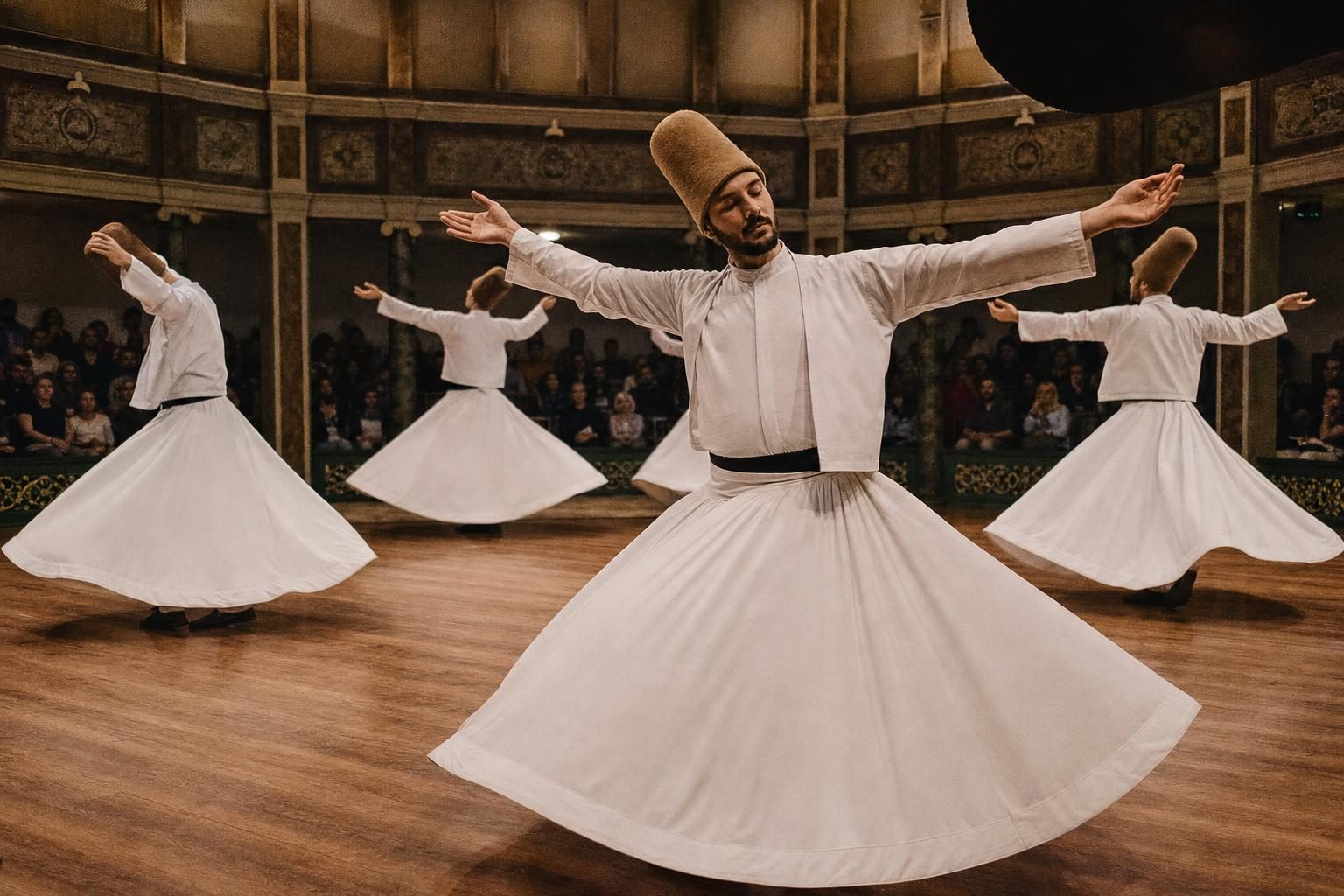
The ney sounds first. A long, breathy note from the reed flute fills the hall of the Mevlana Cultural Centre in Konya, and on the floor below a line of men in black cloaks and tall honey-coloured felt hats bow to a sheikh seated on a red sheepskin. For the next hour the Mevlana whirling dervishes will turn, slowly at first and then steadily, arms open, heads tilted, white skirts belled out around them. It is 17 December, and Konya is marking the anniversary of the night in 1273 when the poet Jalal al-Din Rumi died in this city.
His followers call it Şeb-i Arus, the wedding night. In the Sufi understanding that Rumi helped shape, death is a reunion with God, the beloved, and so the anniversary is kept as a celebration rather than a day of grief. Each year the commemoration runs from 7 to 17 December, with sema ceremonies every evening, and the city fills with pilgrims, students of Rumi’s poetry, Turkish families and visitors from abroad.
Plan your visit
- When
- 7 to 17 December every year; 17 December is the anniversary of Rumi's death in 1273 More
- Where
- The Mevlana Cultural Centre, a short walk from Rumi's tomb More
- Tickets
- Konya's official culture and tourism channels, usually in the autumn; the final nights sell out quickly More
- Getting there
- High-speed train from Ankara in under two hours; domestic flights, mainly from Istanbul More
Before December: the poet and the city
Rumi was born in 1207 in Central Asia, in the region of Balkh in present-day Afghanistan, and his family left the area as the Mongol armies advanced. After years of travel they settled in Konya, then the capital of the Seljuk Sultanate of Rum, where Rumi’s father taught. Rumi became a respected scholar and preacher in his own right.
The turning point in his life came in 1244, when he met a wandering mystic, Shams of Tabriz. The friendship that followed changed Rumi from a teacher of religious law into a poet of divine love. Shams disappeared a few years later, and much of Rumi’s poetry grew out of that loss. His great work, the Masnavi, runs to some 25,000 couplets in Persian and is still read and studied across the world, in Persian, Turkish and in many translations.
Mevlana, an Arabic-derived honorific meaning master, is the title by which Rumi is known in Türkiye. After his death his son Sultan Walad and his successors organised his followers into the Mevlevi order, and its lodges spread across the Ottoman Empire. The turning ceremony, the sema, became its best-known practice.
7 to 16 December: the evenings in Konya
The first ten nights of Şeb-i Arus follow a regular rhythm. Each evening a sema ceremony is performed at the Mevlana Cultural Centre, a large hall built for the purpose a short walk from Rumi’s tomb. Around it, the city stages talks on Sufi thought, concerts of classical Turkish music, recitations from the Masnavi, calligraphy exhibitions and book fairs. Hotels fill, and restaurants near the Mevlana Museum stay busy late into the evening.
The ceremony itself follows a fixed order. It opens with a hymn in praise of the Prophet Muhammad, sung solo. A strike on the kudüm, a pair of small kettledrums, follows, then an improvised passage on the ney. The dervishes then walk three times around the floor in a slow procession, bowing to one another each time they pass the sheikh’s post, a gesture of greeting between souls.
The red sheepskin on which the sheikh sits, the post, is placed on one side of the floor and stands for the place of Mevlana himself. An invisible line runs from it across the hall, and the dervishes are careful never to step over it during the ceremony. Every movement on the floor, from the angle of a bow to the direction of the walk, follows rules handed down through the Mevlevi lodges over more than seven centuries. Visitors who sit close to the floor can see how precise the spacing is: each dervish spins on the spot while the whole group drifts slowly around the hall, the way planets circle a sun, an image that Mevlevi teachers themselves have long used to describe the ceremony.
The turning comes in four parts called selams. The dervishes let their black cloaks fall, cross their arms over their chests and bow, then unfold their arms and begin to turn on the left foot, pushing round with the right. The right palm faces upwards and the left faces downwards, a posture usually explained as receiving grace from God and passing it on to the earth. The head tilts slightly. The eyes stay open but unfocused. A senior dervish, the semazenbaşı, moves quietly between them to keep the spacing even.
The music for each ceremony, the ayin, combines voice and instruments in four sections. At least a singer, a ney player, a kudüm player and a cymbal player take part, and larger ensembles add the tanbur lute, the kemençe fiddle and other instruments. The pace builds through the third selam, then settles in the fourth. A recitation from the Quran and a prayer close the ceremony.
The symbolism of the dress
| Garment | What it is | Stands for |
|---|---|---|
| Sikke | Tall felt hat | The tombstone of the ego |
| Tennure | White skirt | The shroud of the ego |
| Hırka | Black cloak | The grave; letting it fall means rebirth |
Each part of the dervish’s dress carries a meaning in Mevlevi teaching. The tall felt hat, the sikke, is said to represent the tombstone of the ego. The white skirt, the tennure, is its shroud. The black cloak, the hırka, stands for the grave, and when the dervish lets it fall before turning, the gesture represents leaving the grave and being reborn into truth.
Traditionally, Mevlevi dervishes trained for 1,001 days in a lodge, learning ethics, prayer, music, poetry and the turning itself. Before a ceremony they would fast for several hours. Few performers today follow that full path, but the ceremonies in Konya during Şeb-i Arus are staged by experienced groups with deep roots in the tradition.
17 December: the wedding night
The last night is the reason many people travel to Konya.
The hall is full, the programme often includes a longer ceremony, and many in the audience come for religious rather than cultural reasons. Some spend the earlier part of the day at Rumi’s tomb, which sits beneath a fluted green-tiled dome at the heart of the old lodge, now the Mevlana Museum.
The tomb chamber is lined with the coffins of Rumi’s family and his successors, each topped with a carved turban. Glass cases hold manuscripts of the Masnavi, prayer rugs, musical instruments and the dervishes’ robes. On a normal day the museum is one of the most visited in Türkiye; in mid-December the queue can stretch along the outside wall well before opening time.
A note for anyone expecting a party: the mood on 17 December is serious and quiet. Applause is held until the end, many in the audience pray, and the dervishes leave the floor without bows to the crowd.
A century of the Mevlana whirling dervishes in public
The ceremonies have not always been public. In 1925 the new Turkish Republic closed all Sufi lodges, including the Mevlevi houses, as part of its secularisation laws, and the Mevlana lodge in Konya reopened in 1927 as a museum. For decades the tradition survived quietly, with music, more than spiritual practice, passing from teacher to student.
From the 1950s the government allowed public performances again, at first around the December anniversary in Konya, and restrictions eased further in the 1990s. In 2005 UNESCO proclaimed the Mevlevi Sema Ceremony a Masterpiece of the Oral and Intangible Heritage of Humanity, and in 2008 it was inscribed on the Representative List of the Intangible Cultural Heritage of Humanity. UNESCO’s own description notes the tension that came with popularity: many sema performances are now shortened and simplified for tourists, while some groups work to keep the ceremony’s spiritual and intimate character.
That distinction matters to a visitor. Whirling dervish shows are staged in Istanbul and in hotels in Cappadocia all year round, some of them faithful and some of them dinner entertainment. The December ceremonies in Konya are the commemoration that the rest of the year’s performances are drawn from.
Konya beyond the sema
Konya rewards an extra day. The city was the capital of the Seljuk Sultanate of Rum from the late eleventh century, and some of its finest buildings date from that period. The Alaeddin Mosque crowns a low hill in the centre. The Karatay Madrasa, a thirteenth-century theological school, now displays Seljuk tiles beneath a dome decorated in turquoise and black. The İnce Minareli Madrasa, with its elaborately carved stone portal, houses a museum of stone and wood carving.
Konya is a conservative city, and visitors should dress modestly, especially around the museum and mosques. Women cover their hair inside mosques and the tomb chamber.
A short aside on food. Konya’s best-known dish is etli ekmek, a very long, thin flatbread spread with minced meat and baked in a wood oven, cut into strips and eaten with a squeeze of lemon. Another local speciality, fırın kebabı, is lamb slow-roasted in a deep oven until it falls apart. Neither has anything to do with Rumi, but both are a fixture of the evenings before the ceremonies.
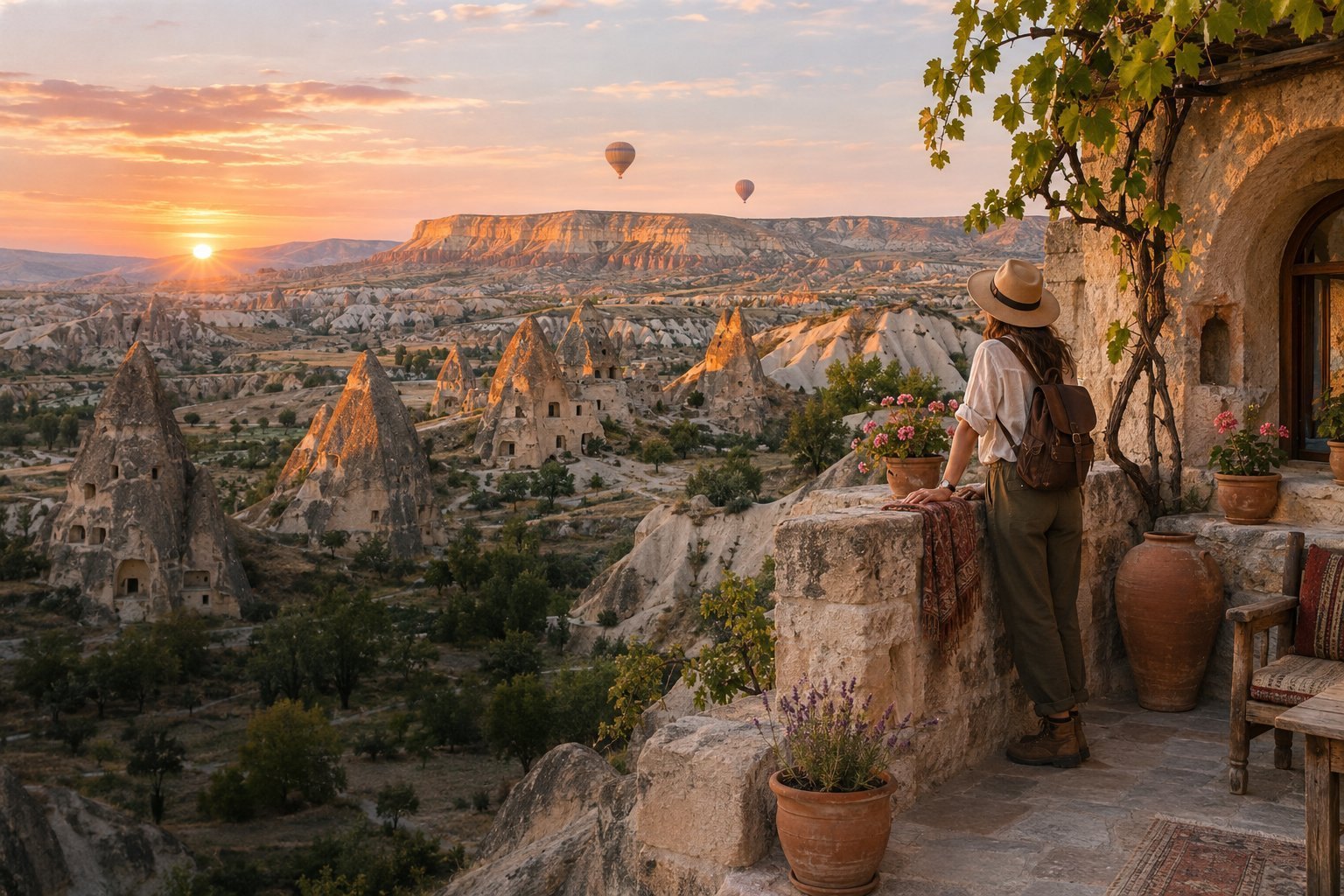
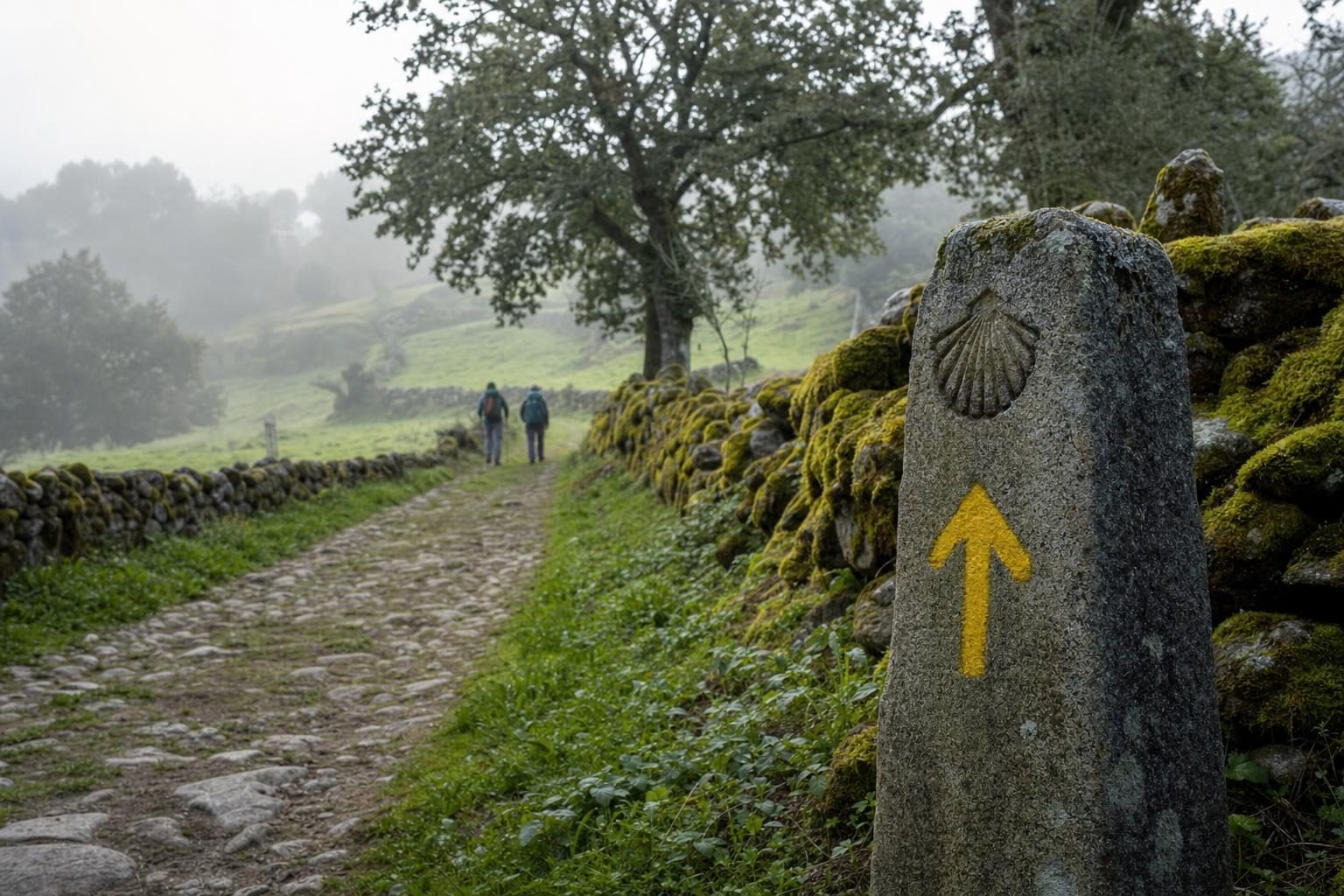
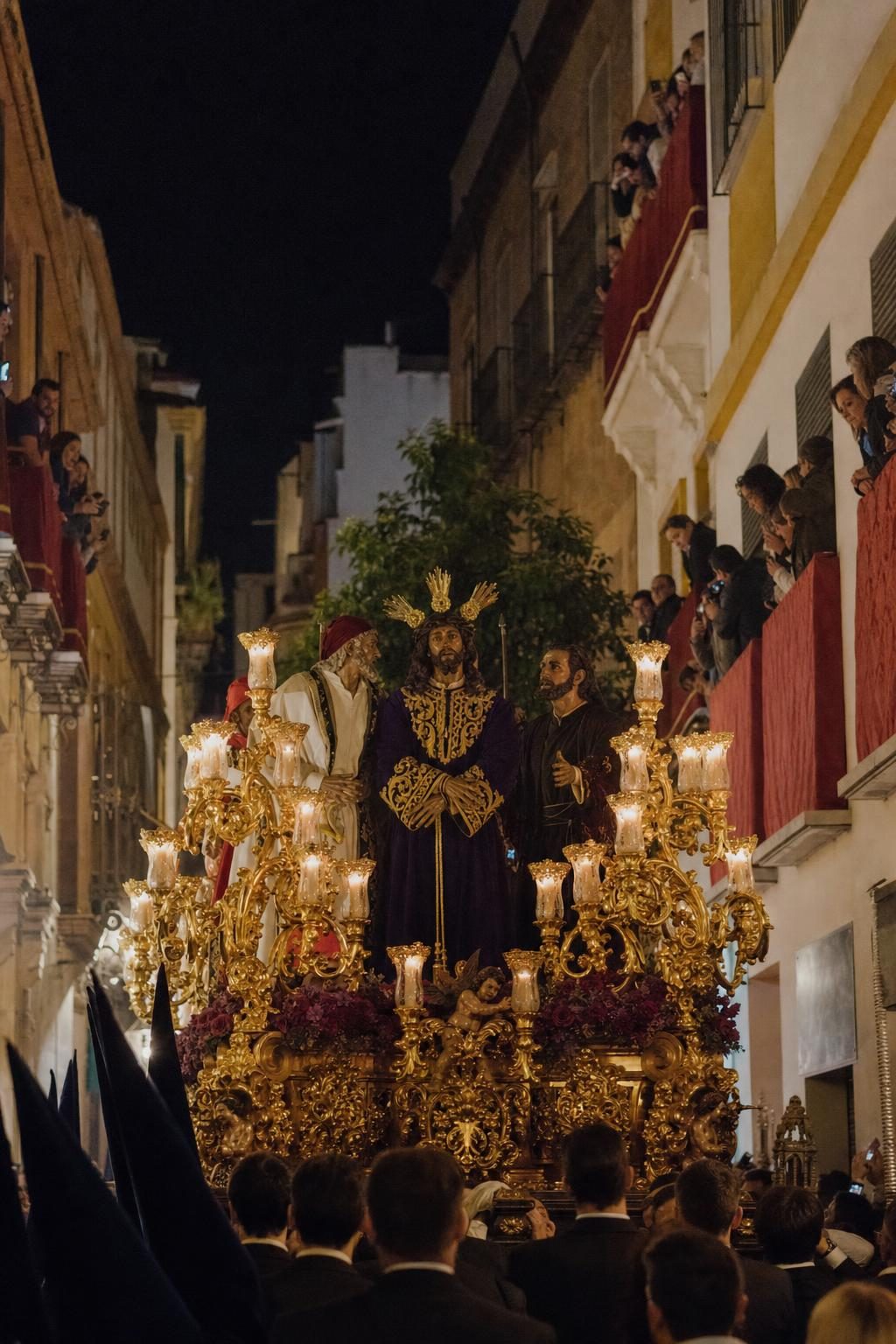
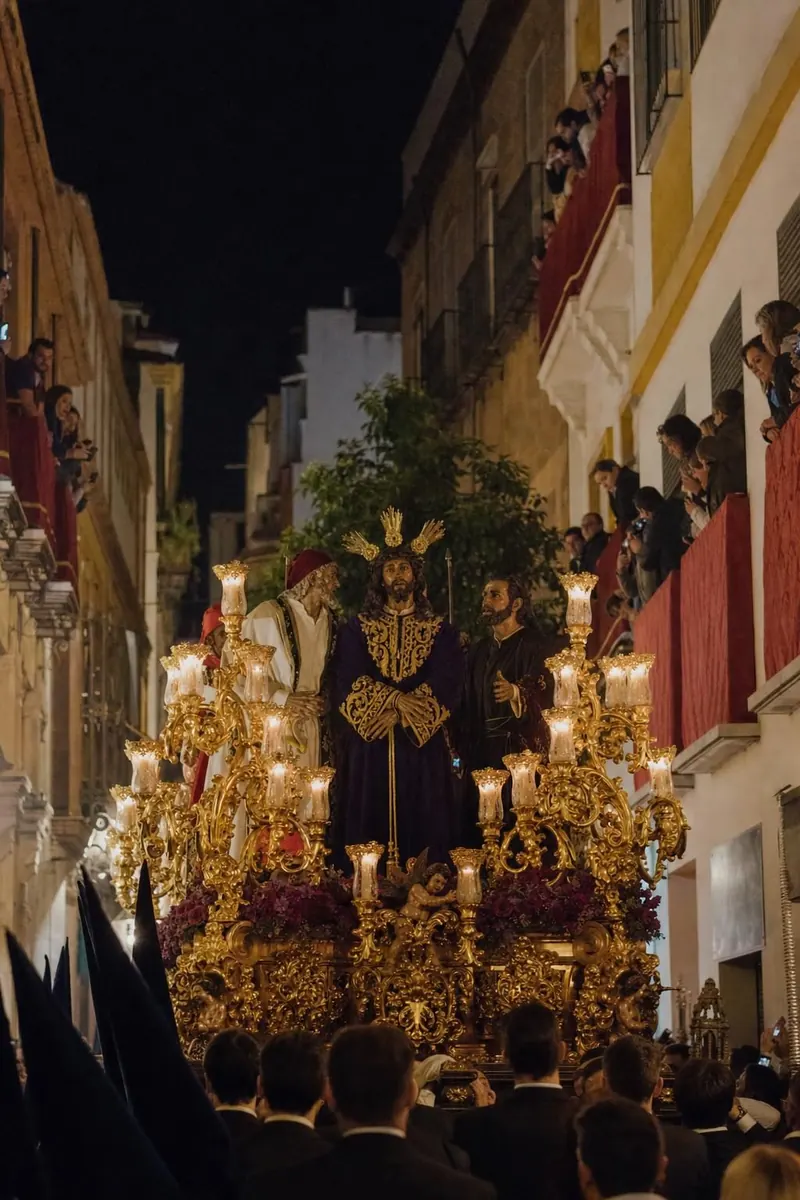
Travellers combining Konya with central Anatolia often continue east to the rock villages described in Cappadocia with the locals, around three hours away by road. For readers interested in other religious calendars and the crowds they draw, the processions of Semana Santa in Spain and the longer tradition traced in the history of pilgrimage offer useful comparisons. More dates can be found on the events page.
Practical notes for Şeb-i Arus
Tickets for the Mevlana whirling dervishes ceremonies in December are released through Konya’s official culture and tourism channels, usually in the autumn, and the final nights sell out quickly. Tour operators also sell packages with seats included, often combined with a visit to Cappadocia. Hotel rooms and train seats should be booked well in advance for the second week of December.
Konya is linked to Ankara and Istanbul by high-speed train; the ride from Ankara takes under two hours. The city’s airport has regular domestic flights, mainly from Istanbul. December in Konya is cold and often dry, with night temperatures below freezing, so warm clothes are needed for the walk back from the cultural centre.
On the last evening, the area around the Mevlana Museum stays lit late. Visitors walk past the green dome after the ceremony, and some stop at the tomb gate to say a short prayer before heading back through the frosty streets.
Questions before you go
When is Şeb-i Arus held?
The Şeb-i Arus commemoration takes place in Konya every year from 7 to 17 December. The final night, 17 December, marks the anniversary of Rumi's death in 1273 and is the most sought-after performance.
What does Şeb-i Arus mean?
Şeb-i Arus means wedding night. Rumi's followers regard his death as a union with God, the beloved, so the anniversary is treated as a celebration rather than a day of mourning.
Where do the Şeb-i Arus ceremonies take place?
The main sema ceremonies are staged at the Mevlana Cultural Centre in Konya, a large purpose-built hall a short walk from the Mevlana Museum. Talks, concerts and exhibitions are held at other venues around the city during the same period.
How can visitors get tickets for the whirling dervishes in Konya?
Tickets for the December ceremonies are sold through the official channels of Konya's culture and tourism authorities, usually from the autumn, and the final nights sell out early. Tour operators also sell packages that include seats.
Who founded the whirling dervishes?
The Mevlevi order grew out of the circle around Rumi in Konya and was organised after his death by his son Sultan Walad and his successors. The order takes its name from Mevlana, an honorific meaning master, the title by which Rumi is known in Türkiye.
What does the whirling dervishes' dress symbolise?
In Mevlevi teaching the tall felt hat, the sikke, stands for the tombstone of the ego, the white skirt, the tennure, for its shroud, and the black cloak, the hırka, for the grave. Dropping the cloak before turning represents a spiritual rebirth.
Is the sema recognised by UNESCO?
Yes. The Mevlevi Sema Ceremony was proclaimed a Masterpiece of the Oral and Intangible Heritage of Humanity in 2005 and inscribed on UNESCO's Representative List of the Intangible Cultural Heritage of Humanity in 2008.
Can visitors photograph the ceremony?
Rules vary by venue and performance. Flash photography is generally discouraged during the sema because it is a religious ceremony, and announcements before the start usually explain what is allowed.
How do you get to Konya?
Konya has an airport with domestic flights, mainly from Istanbul, and high-speed trains link the city with Ankara and Istanbul. The train from Ankara takes under two hours.
What else is there to see in Konya?
Apart from the Mevlana Museum, Konya has Seljuk monuments from the period when it was capital of the Sultanate of Rum, including the Alaeddin Mosque, the Karatay Madrasa with its tile collection and the İnce Minareli Madrasa, now a museum of stone and wood carving.