California · Waterfront life
Living Afloat: The Sausalito Houseboats of San Francisco Bay
Across the Golden Gate from San Francisco, a few hundred homes float on the edge of Richardson Bay. Their story runs from a wartime shipyard through squatters, artists and court battles to one of the most unusual neighbourhoods in California.
Halfway across the Golden Gate Bridge on a summer morning, the fog usually gives up. Behind, San Francisco sits under a grey lid; ahead, the Marin Headlands are bright and dry, and by the time the road reaches Vista Point at the northern end the jackets are coming off. The temperature difference across the strait can be startling. Locals have learned to dress in layers and expect anything, and the residents of the Sausalito houseboats, a few miles further on, have learned it better than most.
From the bridge, the road drops down the hill into Sausalito, a small town of steep streets and waterfront restaurants facing Richardson Bay. Most visitors stay along Bridgeway, the main street, where ferry passengers spill out between galleries and ice cream shops. A mile or two further north, the waterfront changes. Here is the floating neighbourhood, a community of a few hundred homes that is among the most unusual places to live anywhere on San Francisco Bay.
Plan your visit
- Getting there
- Ferry from the Ferry Building or Fisherman's Wharf, a crossing of around half an hour More
- Where
- The floating homes line docks around Waldo Point Harbor, off Bridgeway More
- Getting around
- The public shoreline on foot or by bicycle, or the water by kayak or paddleboard More
- Tickets
- Occasional public tours by the residents' association; tickets tend to sell quickly More
Down the hill into Sausalito
The town has an old reputation as a refuge. In the late nineteenth century it was a ferry and railway terminus and a weekend escape for San Franciscans; during Prohibition it was known for rum-running. Its hillsides are covered in shingled houses, and the views from the higher streets across the water to the city skyline are some of the best in the Bay Area.
The ferry is still the most pleasant way to arrive. Boats run from the Ferry Building and from Fisherman’s Wharf, a crossing of around half an hour, passing Alcatraz and Angel Island. Cycling across the bridge and taking the ferry back is a popular combination, and on fine weekends the bike racks near the terminal are full.
Marinship and the floating aftermath
The houseboats exist because of a shipyard. In 1942, a few months after the United States entered the Second World War, the Bechtel company built a yard on the Sausalito waterfront called Marinship. At its peak about 20,000 people worked there, and in roughly three years the yard launched 93 vessels: Liberty ships, then tankers and oilers for the Pacific war.
When the war ended, the yard closed almost as quickly as it had opened. It left behind piers, warehouses, slipways and a great deal of surplus material, including hulls, barges and landing craft. Some of the land and the leftovers were bought by a local boatyard owner, Donlon Arques, who let people live on the old craft cheaply. Returning servicemen came first, then artists, writers, musicians and people with very little money, and by the 1950s and 1960s a ramshackle community of converted boats, barges and improvised floating houses had grown up along the mudflats.
One of the old Marinship warehouses now houses the Bay Model, a working hydraulic model of San Francisco Bay and the Sacramento-San Joaquin Delta built by the US Army Corps of Engineers in 1957. It covers well over an acre, with tides that rise and fall in minutes, and it was used for decades to test how the bay would respond to dams, dredging and landfill. The visitor centre is free and also tells the story of the shipyard.
Bohemians, songs and the Houseboat Wars
In the 1960s, the waterfront became a magnet for the counterculture. The rents were low, the rules were loose and the views were magnificent. Alan Watts, the writer who did more than most to introduce Zen to Western readers, lived and worked on the Vallejo, a retired paddle-wheel ferry that he shared for years with the collage artist Jean Varda. Varda was famous for his parties and for sailing guests around the bay in a boat with a home-made sail, and the Vallejo became a salon for poets, painters and visiting teachers. The cartoonist and children’s author Shel Silverstein also kept a houseboat in Sausalito.
The most famous visitor stayed only briefly. In 1967 the soul singer Otis Redding rented a houseboat in Sausalito while performing in San Francisco, and on that dock he began writing (Sittin’ On) The Dock of the Bay. He died in a plane crash in December of that year, and the song, released after his death, became his biggest hit.
The bohemian years did not last without a fight. In the 1970s, plans to regulate the moorings, connect the boats to sewers and replace the improvised waterfront with modern marinas collided with residents who had built their lives on the mud. What followed became known as the Houseboat Wars: years of protests, lawsuits, pile-driver blockades and clashes with sheriff’s deputies. Eventually most of the boats were brought into regulated berths with utilities and leases. Some residents left; others stayed and paid.
Walking the docks of the Sausalito houseboats
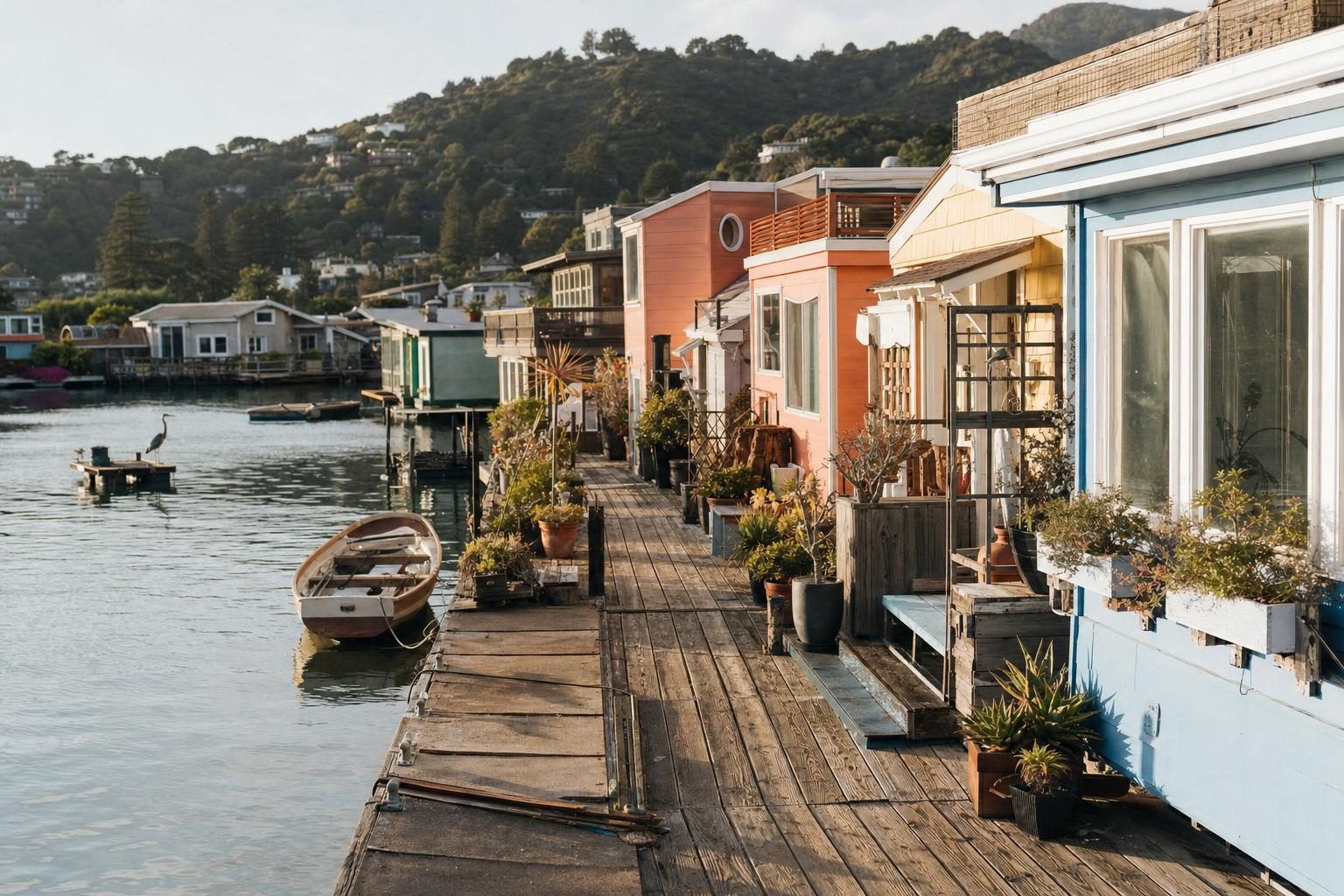
Today the Sausalito floating homes are moored along a series of docks on the northern waterfront, around Waldo Point Harbor and its neighbours off Bridgeway. The variety is astonishing. Some homes are converted boats or former ferries; others are two-storey houses built on concrete floats; a few are elaborate architect-designed pieces with roof terraces and walls of glass. There is no single style. Owners have painted their homes every colour imaginable, filled the decks with potted plants and hung wind chimes from every railing. Herons fish beside the gangways, and seals sometimes haul out on the floats.
The street names still carry the shipyard. Gate 5 Road, which runs behind the docks, is named after one of the old Marinship entrances. Walking along it, past boatyards, workshops and studios in old wartime sheds, gives a sense of the working waterfront that the Sausalito houseboats grew out of, before the galleries and restaurants of the town centre arrived.
It needs saying clearly that these are homes, not an attraction. Many docks are private, and residents have understandably grown tired of strangers peering through their windows. The best way to see the area is from the public shoreline, on foot or by bicycle, or from the water by kayak or paddleboard, which gives the best view of all.
The residents’ association has organised occasional public tours of selected Sausalito floating homes, and these are the only reliable way to step inside one. Tickets tend to sell quickly.
Life on the water
Floating homes are subject to a long list of rules on mooring, sewage and safety, and they are mostly owner-occupied or let on longer leases rather than as short holiday rentals. Life on the docks is closer to a small village than to a suburb. Neighbours share walkways, help with mooring lines in storms and know each other’s dogs by name. Many residents are retired, self-employed or working from home, and the communal docks encourage the kind of daily contact that streets of detached houses rarely do.
For visitors, the town centre makes up for the closed doors. Bridgeway is lined with seafood restaurants and cafés with terraces over the water, and the walk between the ferry terminal and the docks passes small parks, public art and benches facing the city skyline. Fresh fish, clam chowder and oysters from Tomales Bay further north in Marin are local staples, best eaten outside on a bright afternoon.
That life has its own practicalities. Homes move gently with the tides, and on the shallower berths some settle onto the mud at the lowest tides. Everything that comes aboard, from furniture to groceries, travels by trolley down the dock. Winter storms test the moorings.
Prices have followed the rest of Marin County upwards. What began as the cheapest housing in the area is no longer cheap, and the Sausalito houseboats now include floating homes that sell for prices close to those of houses on land, moored a few metres from homes that still look much as they did in the 1970s.
Beyond the regulated marinas, a separate population of anchor-outs has long lived on boats moored freely in Richardson Bay, and their future has been a subject of argument between residents, regulators and local governments for years.
A sail back across San Francisco Bay
The finest view of the whole scene is from the water. Sailing charters, sunset cruises and kayak rentals leave from the Sausalito waterfront, and an evening on San Francisco Bay offers a sequence of views that no road can match: the town and its floating homes, Angel Island, Alcatraz from behind, the Golden Gate Bridge with the sun setting beyond it, and the city lights coming on across the water. On game nights, some charters sail into McCovey Cove outside the San Francisco Giants’ ballpark, where kayakers wait in hope of catching a home run ball that clears the right-field wall.
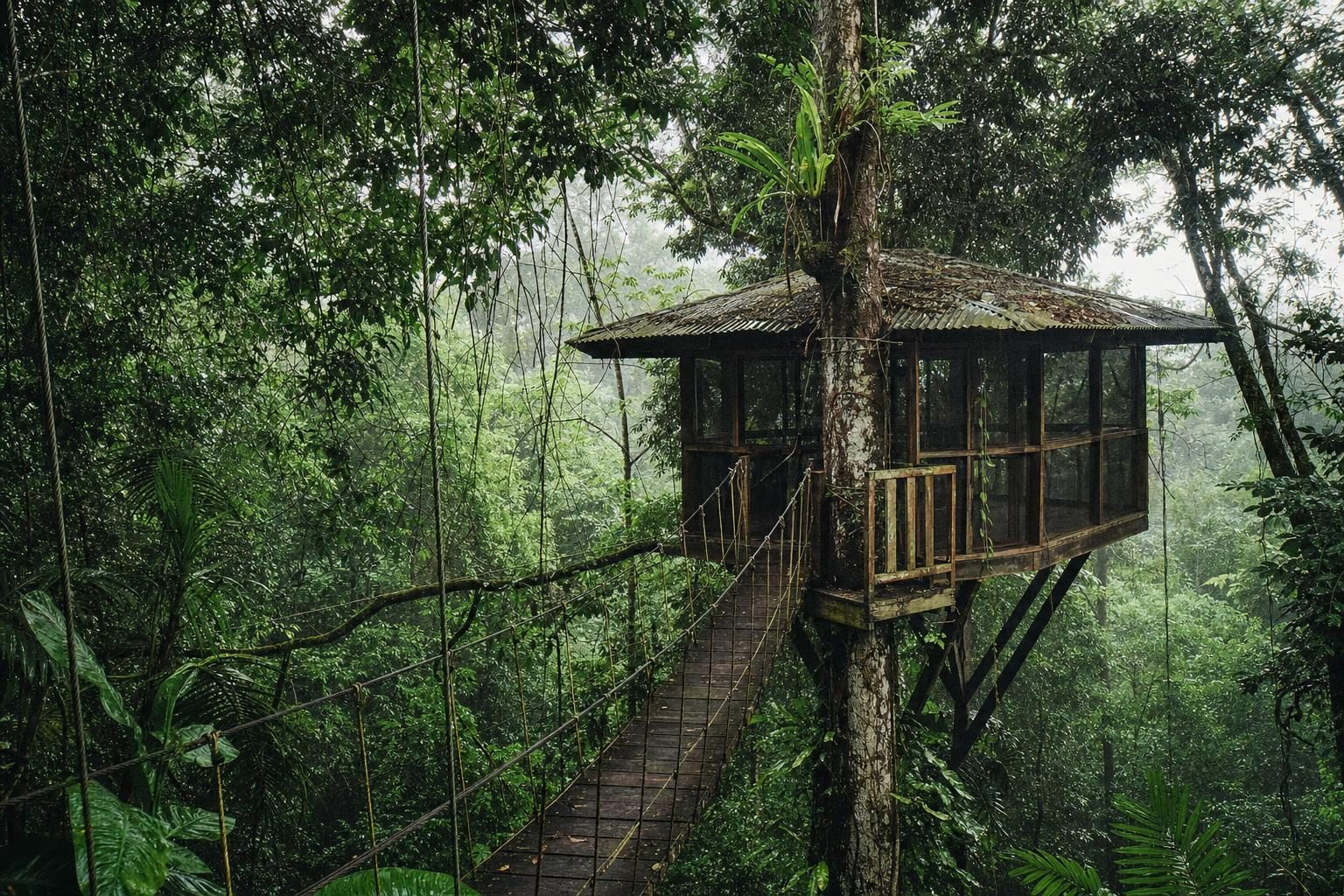
Communities that choose an unusual way of living, close to nature and to each other, appear elsewhere on this site too: the tree houses of Finca Bellavista in Costa Rica’s rainforest are an obvious cousin. For more coastal travel in North America, see Isla Holbox and Río Lagartos, or the road story of Route 66, which ends a day’s drive down the coast in Santa Monica.
Practical advice is simple. Bring layers, since the weather may change three times in a day; take the ferry at least one way; and if you walk along the floating home docks, keep your voice down. The people on the other side of those windows are at home.
Questions before you go
Where are the Sausalito houseboats?
Most of the floating homes are moored along the northern waterfront of Sausalito, beside Richardson Bay in Marin County, in marinas around Waldo Point Harbor and the neighbouring docks off Bridgeway. The area is a short drive or bike ride north of the town centre.
Can you visit the Sausalito houseboat docks?
The docks are residential and many are private, so visitors should look from public walkways and the shoreline rather than walk onto them uninvited. Some docks have signs welcoming quiet visitors; others are closed. The residents' association has held occasional public tours of selected homes.
How did the houseboat community in Sausalito begin?
It grew out of the Marinship yard, which built 93 ships for the Second World War. When the yard closed, its land and surplus hulls and barges were bought cheaply and turned into homes by veterans, artists and others looking for an affordable life on the water.
What were the Houseboat Wars?
In the 1970s, plans to regulate the waterfront and replace the improvised moorings with modern marinas led to years of protests, legal fights and confrontations between residents, developers and the authorities. Eventually most boats were brought into regulated berths with utilities and leases.
Did Otis Redding write Dock of the Bay in Sausalito?
Yes. Otis Redding began writing (Sittin' On) The Dock of the Bay in 1967 while staying on a houseboat in Sausalito. He died in a plane crash in December that year, and the song became his biggest hit when it was released in 1968.
How do you get to Sausalito from San Francisco?
Ferries run from the San Francisco Ferry Building and Fisherman's Wharf, a crossing of roughly half an hour. Many visitors cycle across the Golden Gate Bridge and take the ferry back, and buses and cars cross the bridge on Highway 101.
What is the Bay Model in Sausalito?
The Bay Model is a large working hydraulic model of San Francisco Bay and the Sacramento-San Joaquin Delta, built by the US Army Corps of Engineers in a former Marinship warehouse in 1957. It is now a free visitor centre with exhibits on the bay and the shipyard.
Can you rent a houseboat in Sausalito?
Short holiday rentals are uncommon. Floating homes are mostly owner-occupied or let on longer leases, and local rules have limited short stays to protect the quiet of the docks. Anyone hoping to stay on the water should look for longer-term listings.
Why is Sausalito often sunnier than San Francisco?
Sausalito sits on the sheltered, east-facing side of the Marin Headlands, which block much of the fog that pours through the Golden Gate. On summer days it is common to leave a grey, chilly San Francisco and find sunshine on the other side of the bridge.