Switzerland · Event
Montreux Jazz Festival on the Shore of Lake Geneva
Every July a small resort on Lake Geneva turns into one of the world's best-known music festivals, with headline concerts indoors and free music along the shore.
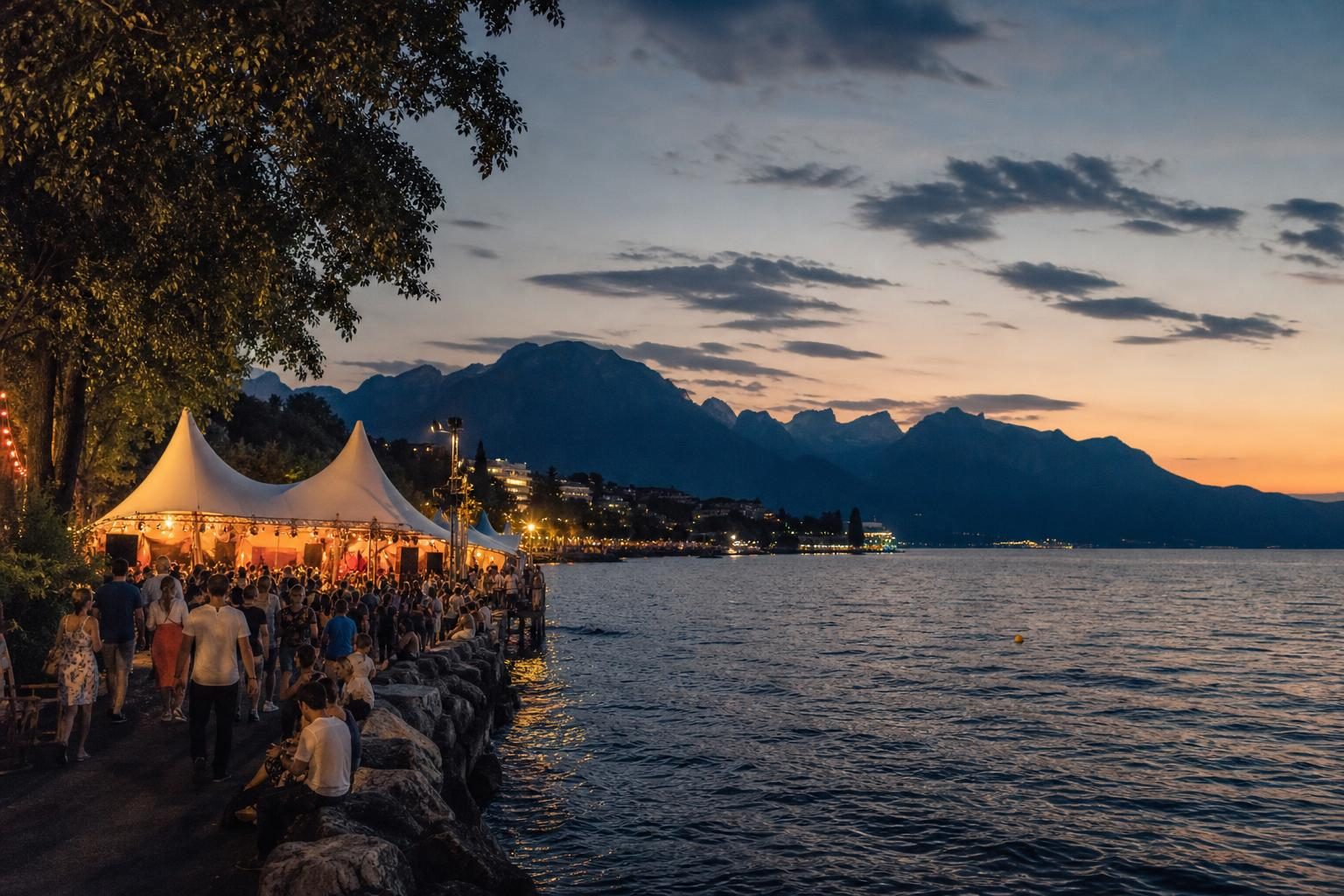
By six in the evening in mid-July, the lakeside promenade in Montreux is a slow-moving river of people. Food stalls smoke, a brass band works its way between the palm trees, and from somewhere along the quay comes the thump of a sound check. Out on the water, paddle steamers cross towards the French shore, where the Alps drop straight into Lake Geneva. The Montreux Jazz Festival is about to begin another evening, and most of the crowd has no ticket for anything.
That is part of its character. The festival is famous for its headline concerts, but a large share of what happens is free and outdoors, spread along a few kilometres of shoreline.
Plan your visit
- When
- About two weeks in the first half of July; 3 to 18 July for the 2026 edition More
- Getting there
- About an hour by direct train from Geneva Airport, around 20 minutes from Lausanne More
- Base
- Hotels in town fill early; many stay in Vevey, Lausanne or villages along the line More
- Tickets
- Main halls sold online when the programme is announced in spring; lakeside music mostly free More
How the Montreux Jazz Festival began
Montreux was a lakeside resort long before it had a festival, known for grand hotels, a mild climate and the palms that grow along its quay. In 1967, Claude Nobs, who worked at the local tourist office, set up a jazz festival with Géo Voumard and René Langel, helped by contacts at Atlantic Records. The first edition lasted three days and was held in the old Montreux Casino.
It grew quickly. Bill Evans recorded a live album at the 1968 festival that went on to win a Grammy, and other musicians followed. Through the 1970s, the programme stretched to take in blues, soul, rock and Brazilian music. Nobs, a charismatic host who often joined musicians on stage with a harmonica, ran the festival for more than four decades until his death in 2013. Since then, Mathieu Jaton has directed it.
In the early 1990s, Quincy Jones co-produced the festival for three years. His best-remembered moment at Montreux came in 1991, when he conducted an orchestra behind Miles Davis in a performance of the Gil Evans arrangements Davis had recorded decades earlier, one of the trumpeter’s last major concerts.
Smoke on the water
The best-known story about Montreux happened by accident. On 4 December 1971, during a concert by Frank Zappa and the Mothers of Invention, someone in the audience fired a flare into the ceiling of the Montreux Casino, and the building burned down. Deep Purple, who had come to Montreux to record with a mobile studio, watched the smoke spread across the lake from their hotel. They turned the evening into Smoke on the Water, with its line about “Funky Claude” running in and out to pull people from the fire, a nod to Nobs, who helped get young fans out of the building.
The casino was rebuilt and reopened a few years later. The song made Montreux a household name among rock fans who had never heard of its jazz festival, and Deep Purple have returned to the festival several times since, including for the 60th edition in 2026.
Concerts that became records
Montreux has a habit of ending up on album covers. Because Nobs had shows recorded and filmed with care, many artists released their sets from the festival. Ella Fitzgerald’s Montreux ‘75, Nina Simone’s 1976 concert, Marvin Gaye’s set from 1980 and many others circulate as live recordings, and for some musicians a Montreux album became one of the defining documents of their career. Rock and blues followed, with B.B. King, Carlos Santana, Leonard Cohen and David Bowie among the names who appeared on its stages over the decades.
The pattern still holds. Artists who play Montreux know the cameras are running and that the sound will be carefully recorded, and some shape their sets with that in mind. For the audience, it lends the main concerts a sense of occasion that a typical summer festival rarely has.
Afternoon by the lake
The festival runs for about two weeks in the first half of July. For the 60th edition in 2026, it took place from 3 to 18 July. Over that period, it draws more than 200,000 visitors.
Many of them spend their afternoons outdoors, and that is the best way to begin a day at the Montreux Jazz Festival. The quay between the convention centre and the town centre becomes a festival mile of food stands, bars and open-air stages, with DJ sets, local bands and student ensembles. Music also moves off the shore. Jazz boats take passengers out on the lake with bands on deck, and special trains carry musicians and audiences up into the hills behind the town. Most of this is free, and much of the audience is local families, students and day-trippers from Lausanne and Geneva.
Here the festival keeps its competitions too. Young pianists, singers and guitarists from around the world compete in international contests held during the festival, and several musicians who won or reached the final have since built international careers.
Evening in the halls
The headline concerts happen indoors at the Montreux Music and Convention Centre on the lakefront, which contains the Auditorium Stravinski, the largest hall, and the smaller Miles Davis Hall. The building closed for renovation in July 2023, and for several editions the biggest concerts moved to a temporary stage built over the lake. The festival returned to the renovated centre in 2026 with redesigned stages.
Line-ups mix jazz greats with rock, pop, soul, hip-hop and electronic acts. The 2026 programme included Nick Cave and the Bad Seeds, Sting, Raye, James Taylor and Van Morrison alongside jazz artists. Tickets for the main halls are sold online when the programme is announced in spring, and the best-known names sell out fast. Smaller shows, sometimes with seated audiences of a few hundred, are often where long-time visitors find the most memorable evenings.
If you are going for one particular artist, buy as soon as the line-up is announced.
Jam sessions after midnight
When the main concerts end, the festival keeps going. Late-night jam sessions, open to musicians who turn up with an instrument, run into the small hours, and festival artists have been known to drop in after their own shows. The lakeside bars stay busy, and at two in the morning there are still people on the quay, listening to whatever is playing.
The festival has also kept a record of most of what has happened on its stages. Nobs had concerts filmed and recorded from the early years, and the result is a huge audiovisual collection of live performances. In 2013, it was added to UNESCO’s Memory of the World Register.
The morning after in Montreux
Montreux is pleasant even without music. A walk south along the lake leads to the Château de Chillon, a medieval castle built on a rock in the water. Its dungeon, where the Genevan monk François Bonivard was held in the sixteenth century, inspired Lord Byron’s poem The Prisoner of Chillon, and Byron’s name is carved into one of the pillars.
A short aside, since visitors keep stopping there to take photographs: on the quay near the market hall stands a bronze statue of Freddie Mercury, arm raised, facing the lake. Queen recorded at Mountain Studios in Montreux, which the band owned for years, and Mercury spent long periods in the town. The statue was unveiled in 1996 and fans still leave flowers at its base.
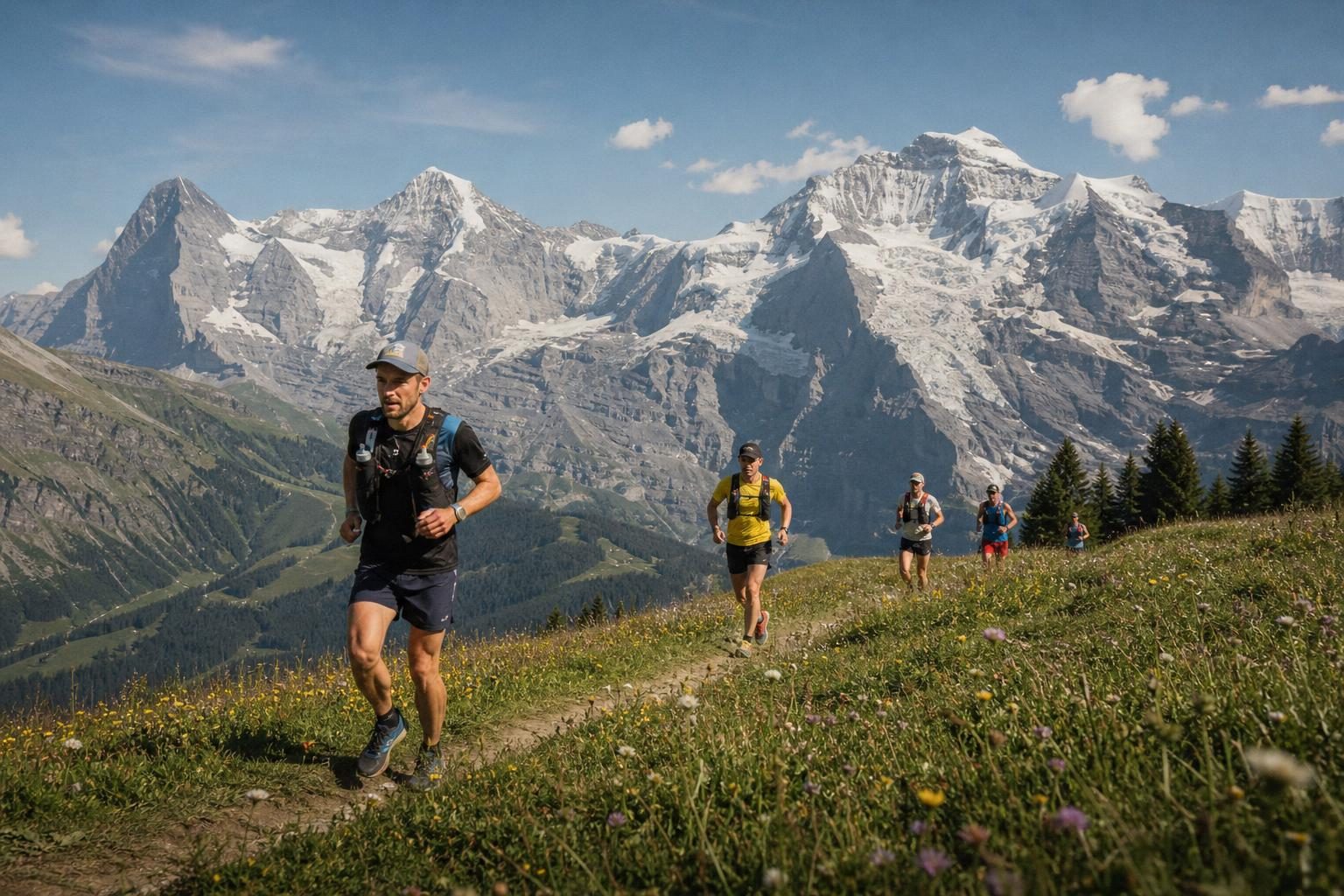
West of the town, the Lavaux vineyard terraces climb the hillside above the lake towards Lausanne. They have been a UNESCO World Heritage Site since 2007, and walking paths link the wine villages, with tastings in cellars along the way. In the other direction, scenic trains climb into the hills and towards the Bernese Oberland, where the Jungfrau Marathon takes runners up to the Eiger glacier each September.
Planning a festival trip
Montreux is on the main railway line along the north shore of Lake Geneva, about an hour by direct train from Geneva Airport and around 20 minutes from Lausanne. Hotels in town fill up early for the festival, and many visitors stay in Vevey, Lausanne or in villages along the line, returning by train in the evening. Swiss trains run late during the festival period, but checking the last connection is worthwhile.
Getting around during the festival is simple. The convention centre, the lakeside stages and the town centre lie along the same stretch of quay, so most visitors walk everywhere and only use buses or trains to reach their beds. Vevey, a few stops west, is a calmer base with its own lakefront and market square. Charlie Chaplin spent the last decades of his life in Corsier-sur-Vevey, just above the town, and his former home is now a museum, Chaplin’s World, while a statue of him stands by the water.
Families are well catered for. Daytime concerts by the lake suit children, and the promenade is pedestrian for most of its length, though it becomes very crowded on weekend evenings.
July weather on the lake is usually warm, with occasional thunderstorms in the afternoon; a light jacket helps for evenings on the water. Food at the stalls ranges from Swiss raclette to dishes from around the world.
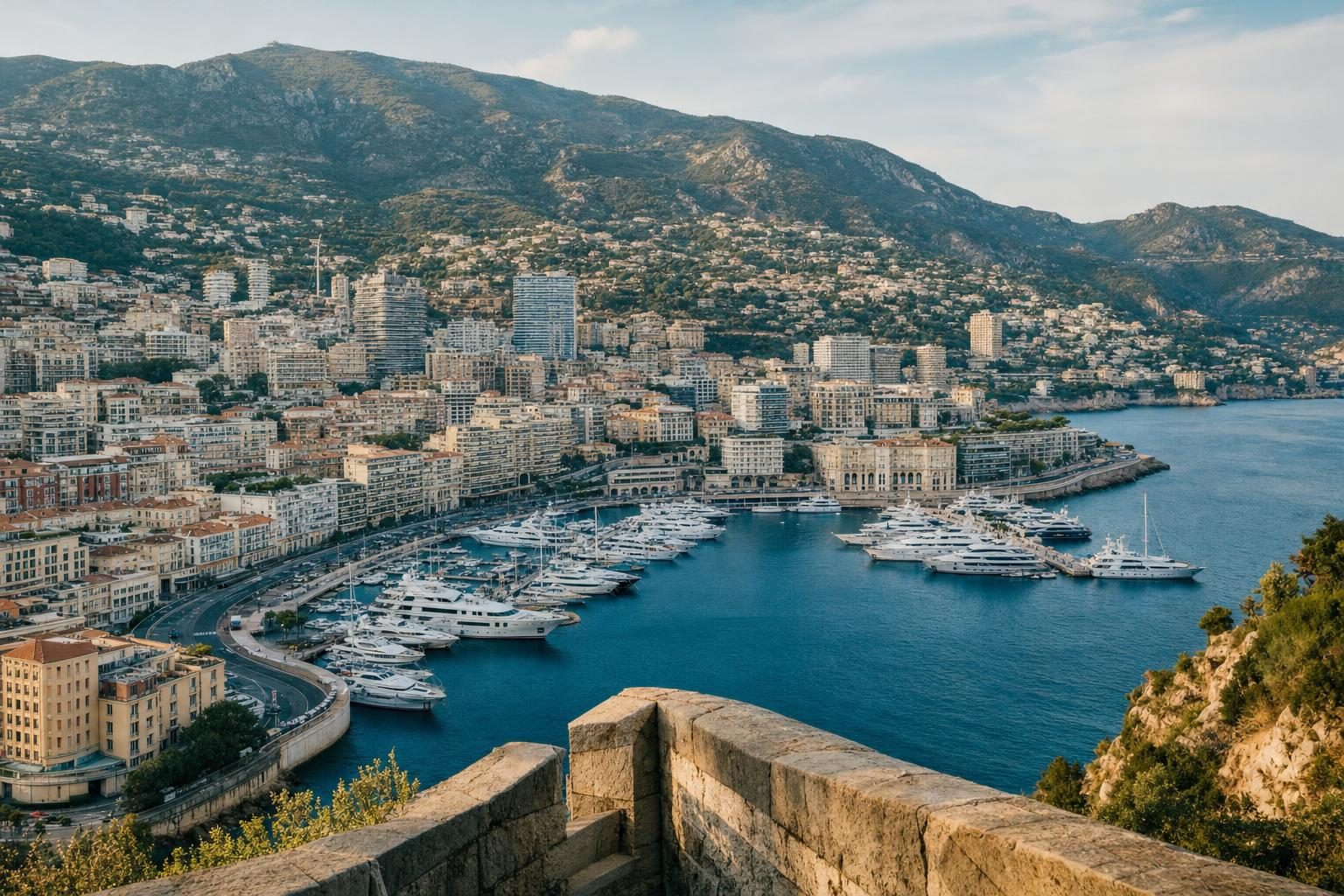
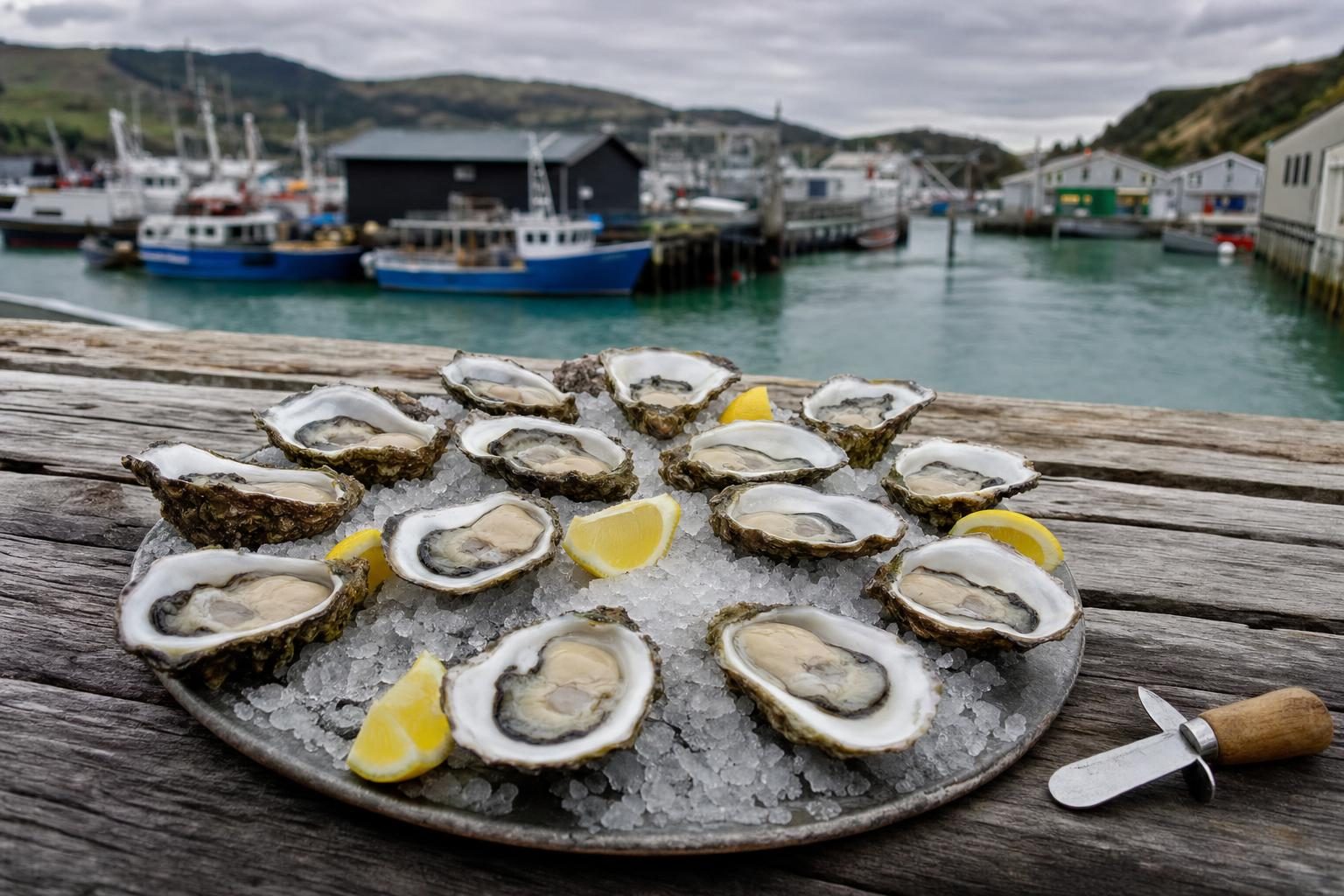
For readers who like their festivals small and unusual, the Bluff Oyster and Food Festival in New Zealand is a very different kind of gathering, and the Mediterranean glamour of Monte Carlo and Monaco Ville is a long day’s train ride to the south. More events are collected in the events section.
The official programme for each year is published on the festival website, usually in spring, and ticket sales open the same day.
Questions before you go
When is the Montreux Jazz Festival held?
The festival runs for about two weeks in the first half of July. The 60th edition took place from 3 to 18 July 2026, and dates for each year are announced by the organisers in advance.
Who founded the Montreux Jazz Festival?
Claude Nobs founded the festival in 1967 together with Géo Voumard and René Langel. Nobs led it until his death in 2013, and Mathieu Jaton has run it since.
Is the Montreux Jazz Festival only jazz?
No. Jazz remains at its heart, but the programme has long included blues, soul, rock, pop, hip-hop and electronic music. Recent line-ups have mixed jazz musicians with rock bands and pop stars.
Are there free concerts at the Montreux Jazz Festival?
Yes. A large part of the programme is free, including open-air stages and DJ sets along the lakeside promenade, jam sessions, and music on boats and trains. Headline concerts in the main halls require tickets.
What are the main venues?
The main ticketed concerts take place at the Montreux Music and Convention Centre, which houses the Auditorium Stravinski and the smaller Miles Davis Hall. The centre reopened for the festival in 2026 after renovation; during the works, major concerts moved to a temporary stage on the lake.
What happened at Montreux in 1971?
In December 1971, the Montreux Casino burned down during a concert by Frank Zappa and the Mothers of Invention. Deep Purple, who were in town to record, wrote Smoke on the Water about the fire.
How many people attend the festival?
The festival draws more than 200,000 visitors over its two weeks, many of them for the free concerts by the lake rather than the ticketed shows.
How do you get to Montreux?
Montreux is on the main railway line along Lake Geneva, about an hour from Geneva Airport by direct train. Lausanne is around 20 minutes away, and boats link Montreux with other lakeside towns in summer.
What else is there to see near Montreux?
The Château de Chillon, a medieval castle on a rock in the lake, is a short walk or bus ride away. The Lavaux vineyard terraces, a UNESCO World Heritage Site, lie between Montreux and Lausanne.