Wyoming, USA · Festival
Cheyenne Frontier Days: The Daddy of 'em All in Wyoming
Every July, Wyoming's capital turns itself over to cowboys, carnival rides and the largest outdoor rodeo in the world. The festival has been running since 1897 and still follows the rhythm of a ranching town.
By half past six on a breakfast morning in late July, the line on the streets of downtown Cheyenne already stretches for blocks. It moves quickly. At the end of it, volunteers flip pancakes on a long griddle, sometimes tossing them high into the air for the crowd to catch on paper plates, while a band plays country tunes and a few horses stand patiently by the kerb. Breakfast is free, the coffee is hot, and by the time the sun clears the rooftops thousands of people have eaten. Cheyenne Frontier Days has begun another day.
The festival is held every summer in Cheyenne, the capital of Wyoming, over ten days centred on the last full week of July. It bills itself as the world’s largest outdoor rodeo and western celebration, and it has a nickname that it has gone as far as registering as a trademark: the Daddy of ‘em All. Nearly 200,000 people come each year, in a city whose own population is far smaller.
Plan your visit
- Where
- The afternoon rodeo is held in the arena at Frontier Park More
- Getting there
- Fly into Denver International Airport and drive up, around an hour and a half to two hours More
- Tickets
- Rodeo and night shows sold separately; breakfasts, parades and the Indian Village are free More
- Time
- At least two or three days for a breakfast, a parade, a rodeo and a night show More
A roundup that never stopped
Cheyenne Frontier Days began in 1897 as a one-day event, a cowboy roundup intended to celebrate the ranching life of the high plains and to bring visitors to a railway town on the Union Pacific line. It was a success, and it grew. Native American performers joined in 1898. Within a few years the festival had become a multi-day affair with bronc riding, races and parades, and special trains brought crowds from Denver for decades.
The festival’s long history is one of its draws. It has been held every year since 1897 except 2020, when the pandemic forced its cancellation, and it returned the following summer. The rodeo was inducted into the ProRodeo Hall of Fame in 2008 and has repeatedly been named the best large outdoor rodeo of the year by the Professional Rodeo Cowboys Association.
Mornings: pancakes and parades
The rhythm of the ten days is set by the mornings. The free pancake breakfasts, organised by the local Kiwanis club since 1952, are held on three mornings, usually the Monday, Wednesday and Friday of rodeo week. They are an extraordinary piece of logistics: well over 100,000 pancakes are served across the week, along with ham, syrup and coffee, by volunteers who come back year after year. The single-day record, set in the 1990s, is more than 39,000 diners.
On the mornings without breakfasts, the Grand Parade rolls through the centre of town. Much of it is horse-drawn: antique carriages, stagecoaches, wagons and buggies brought out from museums and private collections, alongside marching bands, riders and floats. Spectators bring folding chairs early to claim a spot on the kerb.
The festival actually starts before any of this. On the Sunday before the opening, a cattle drive moves a herd through the streets, watched by crowds behind barriers, a small reminder of what the city was built on.
Afternoons in the Frontier Days rodeo arena
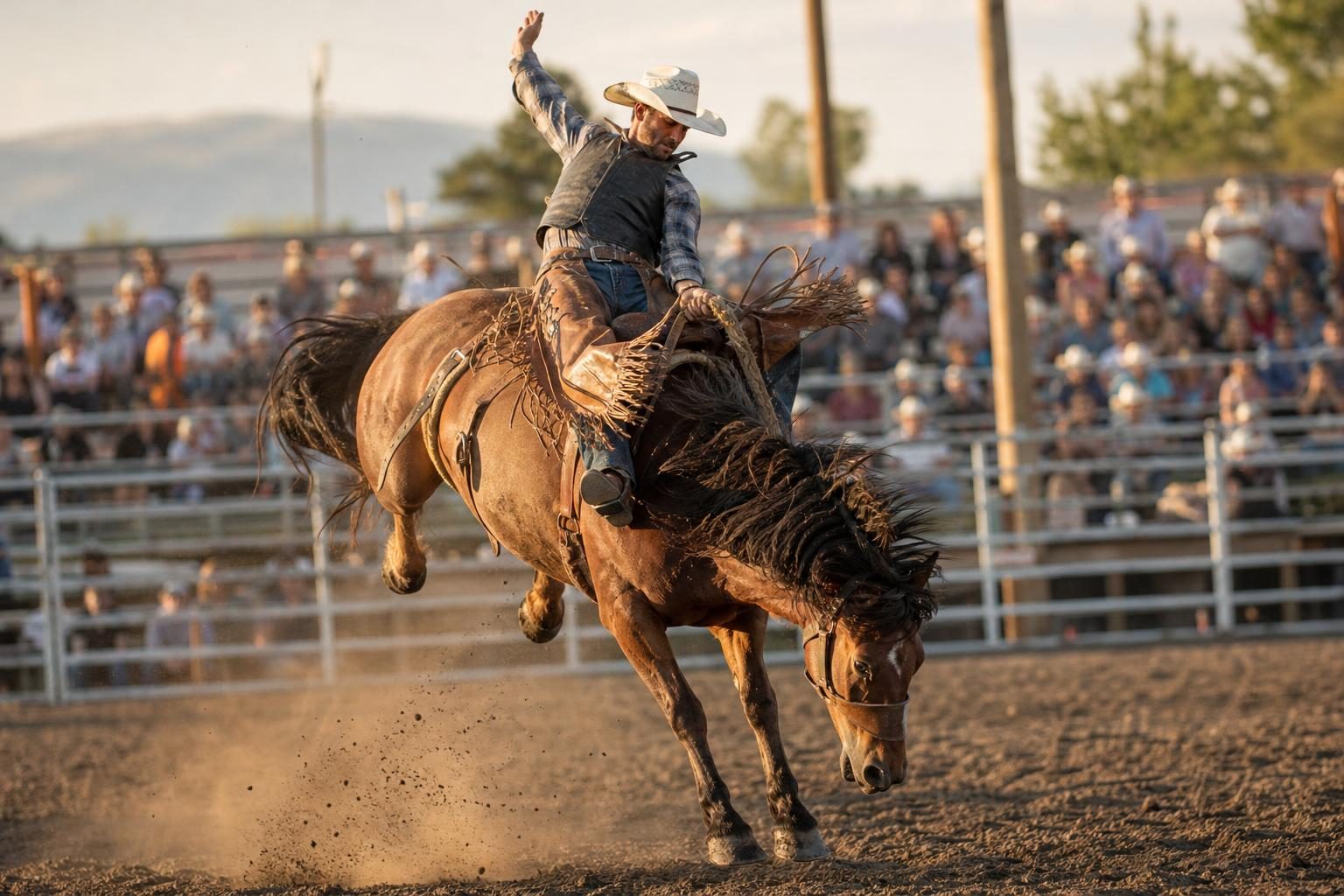
The heart of Cheyenne Frontier Days is the afternoon rodeo in the arena at Frontier Park. Sanctioned by the Professional Rodeo Cowboys Association, it pays out more than one million dollars in cash and prizes, and draws many of the best competitors in professional rodeo. The schedule includes the rough-stock events, bareback riding, saddle bronc riding and bull riding, as well as timed events such as tie-down roping, steer wrestling, team roping and barrel racing.
One event unique in feel to a few old rodeos is the wild horse race, in which teams of three try to catch, saddle and ride an unbroken horse across a line. It is chaotic, dusty and often very funny, and it says more about the improvised origins of rodeo than any of the scored events.
The Frontier Days rodeo also attracts criticism. Animal rights organisations have long objected to rodeo events, and some of the timed events in particular. The rodeo operates under the PRCA’s animal welfare rules, which require veterinary care at sanctioned events, and the organisers stress their commitment to the welfare of the stock.
Visitors will reach their own conclusions.
A darker memory hangs over the arena. In July 1989 the bull rider Lane Frost, the 1987 world champion, was fatally injured there after a ride, struck by the bull as he got to his feet. He was 25. A bronze statue of Frost riding a bull now stands at Frontier Park, and many competitors still stop beside it during rodeo week.
The winners of the Frontier Days rodeo go home with prize money and buckles, but the one honour every rider understands is a good draw: being matched with an animal that bucks hard enough to score well. The best bucking horses and bulls are famous in their own right, bred and raised for the job by specialist stock contractors, and their names are listed in the programme alongside the riders.
The Indian Village and Frontier Town
Away from the arena, Frontier Park has quieter corners. The Indian Village, where Native American families share dance, drumming, storytelling, food and crafts, has been a part of the festival grounds for decades, and entry is free. Dance performances are held several times a day, and artisans sell beadwork, jewellery and other handmade goods.
Nearby, Frontier Town recreates a western settlement with a saloon, a blacksmith, a general store and staged gunfight re-enactments, and the Old West Museum holds one of the region’s important collections of horse-drawn carriages and western art. The museum is open all year, and outside the festival it is one of the better reasons to stop in Cheyenne.
Steamboat, the horse on the licence plate
One side-track belongs to a horse. Among the bucking broncs of the early 1900s, a black horse called Steamboat became a legend, named, it is said, for the whistling noise he made through a broken nose. He bucked at Cheyenne Frontier Days in the festival’s early years and was so hard to ride that few cowboys stayed on. He was named the worst bucking horse of the year at Cheyenne in 1907 and 1908, a title meant as the highest praise, and was inducted into the festival’s hall of fame in 2002. Since 1936, a silhouette of a cowboy on a bucking horse has appeared on Wyoming licence plates, the longest-running plate design in the world. The artist said he had no particular horse in mind, but most people in the state will tell you it is Steamboat, and visitors who notice it on every car in Cheyenne, Wyoming, soon hear the story.
Thunderbirds over the plains
On the Wednesday of rodeo week, traditionally, the US Air Force Thunderbirds perform an air show over the city. Their connection with Cheyenne goes back to 1953, the team’s first season, and the nearby F.E. Warren Air Force Base adds to the sense of home ground. On a clear day, the jets roaring low over the grasslands and the grandstand make an unlikely but memorable pairing with the horses below.
Nights, carnival lights and country music
When the arena empties, the second festival starts. The night shows in the arena bring major names from country music, along with rock and comedy acts, and the carnival midway, which runs the full length of the festival, keeps its rides and food stalls going late into the evening. Downtown bars and restaurants fill with people in new boots and old hats. Each year the festival also crowns a Miss Frontier, a young woman who rides in the parades and represents the event through the year, a tradition dating back to the early 1930s. The western wear on show ranges from the purely functional to the theatrical, and much of it is bought in Cheyenne the week before.
Planning a visit to Cheyenne, Wyoming
Cheyenne, Wyoming, sits at about 1,850 metres above sea level on the high plains, roughly 100 miles north of Denver on Interstate 25. Most visitors fly into Denver International Airport and drive up, a trip of around an hour and a half to two hours depending on traffic. Accommodation in the city is limited and fills fast during the festival; many people book months ahead or stay in Fort Collins, Laramie or smaller towns nearby.
July days are usually hot and dry, with strong sun at altitude, and afternoon thunderstorms can roll in quickly across the plains. Sunscreen, a hat and something for the rain are all worth carrying, and at this altitude it is easy to underestimate how quickly the sun burns and how much water the body needs. Tickets for the rodeo and the night shows are sold separately, while the breakfasts, the parades and the Indian Village are free. The official programme and dates are published each year on the Cheyenne Frontier Days website.
Cheyenne is also a natural stop on a longer drive across the American West; the story of Route 66 follows an older road further south. For anyone who has never been, Cheyenne Frontier Days is best seen over at least two or three days, so that a breakfast, a parade, an afternoon rodeo and a night show can all fit in without rushing. Readers interested in other gatherings rooted in long tradition may enjoy the pieces on Semana Santa and on the Jungfrau Marathon, and more festivals are collected in the events section.
On breakfast mornings, arrive before seven, bring a hat for the sun, and keep your plate ready. The pancakes really do fly.
Questions before you go
When is Cheyenne Frontier Days held?
The festival runs for ten days centred on the last full week of July each year, with a cattle drive through town on the Sunday before. Exact dates for each year are published by the organisers well in advance.
How old is Cheyenne Frontier Days?
The first event was held in 1897 as a one-day cowboy roundup. It has been held every year since except 2020, when it was cancelled because of the pandemic.
Why is it called the Daddy of 'em All?
The nickname, which the organisers have registered as a trademark, reflects its status as one of the oldest and largest rodeos in the United States. It bills itself as the world's largest outdoor rodeo and western celebration.
How much prize money is at stake in the rodeo?
The professional rodeo, sanctioned by the Professional Rodeo Cowboys Association, pays out more than one million dollars in cash and prizes, which draws many of the best competitors in the sport.
Are the pancake breakfasts really free?
Yes. Free pancake breakfasts have been served downtown since 1952, organised by the local Kiwanis club with volunteers, on three mornings of the festival. More than 100,000 pancakes are typically served over the week.
What is the Indian Village at Frontier Days?
The Indian Village is an area of the festival grounds where Native American performers and artisans share dance, music, storytelling, food and crafts. Native performers have been part of the event since 1898, and entry to the village is free.
When do the Thunderbirds fly at Cheyenne Frontier Days?
The US Air Force Thunderbirds have performed at the festival since 1953, traditionally with an air show on the Wednesday of rodeo week. Their appearance depends on the Air Force schedule and is confirmed by the organisers each year.
Where is the rodeo held?
The rodeo and most festival events take place at Frontier Park, on the north side of Cheyenne. The park is also home to the Old West Museum, which is open all year.
How do you get to Cheyenne for Frontier Days?
Cheyenne is about 100 miles north of Denver on Interstate 25, and most visitors fly into Denver International Airport and drive up, which takes roughly an hour and a half to two hours. Hotels in Cheyenne fill quickly during the festival, so many people book months ahead.
Are animals protected at the Frontier Days rodeo?
The rodeo operates under the animal welfare rules of the Professional Rodeo Cowboys Association, which require veterinary care to be available at sanctioned events. Animal rights groups nonetheless remain critical of rodeo as a sport.