New Zealand · Food festival
The Bluff Oyster Festival: Southland's Winter Feast by Foveaux Strait
Once a year, usually in May, a small port at the bottom of the South Island pipes in a plate of oysters, reads it a poem and then eats more than twenty thousand of them.
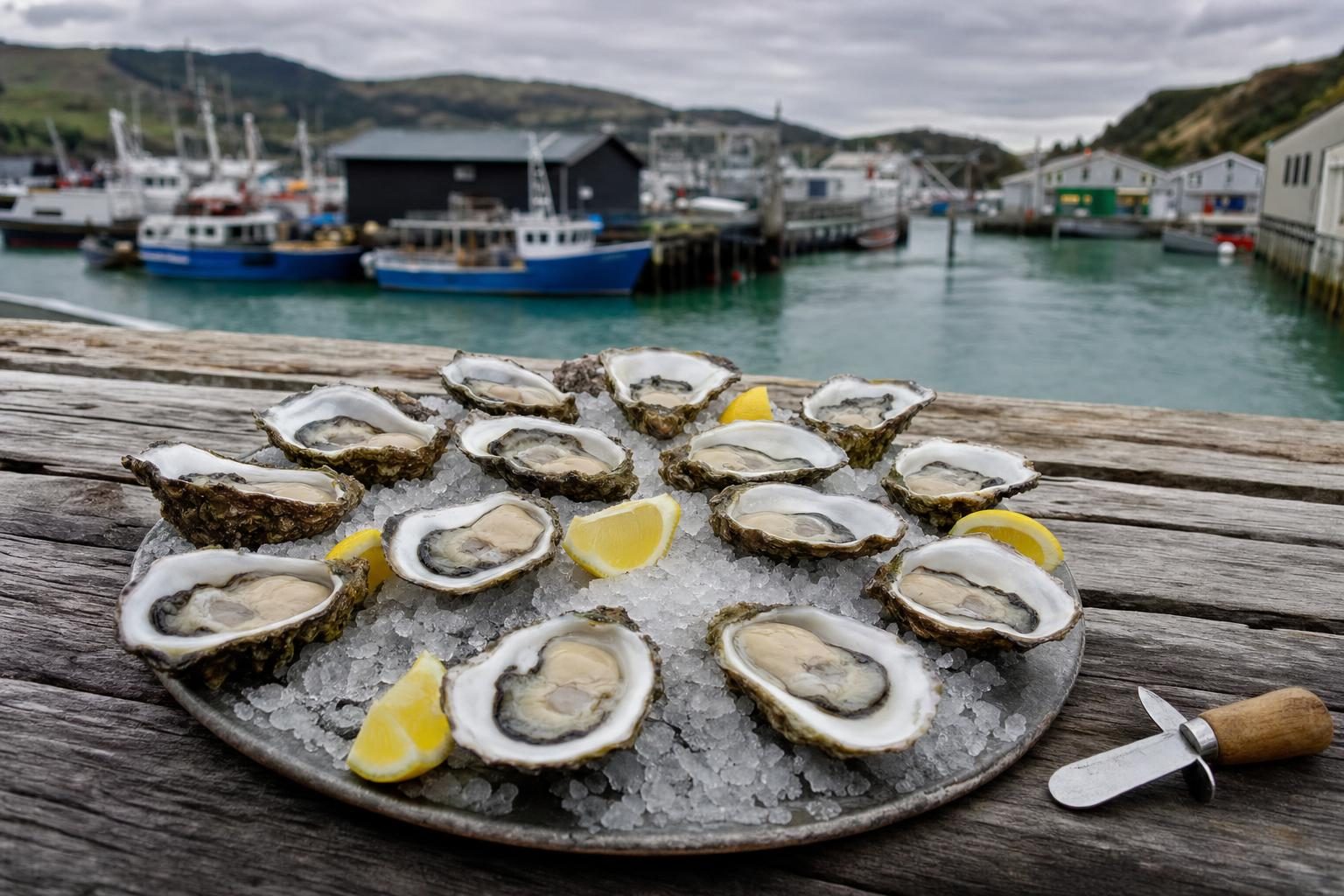
The piper comes first. Behind the bagpipes, someone carries a platter of oysters through the crowd, and before anyone is allowed to eat, the oyster is formally welcomed and a poem is read in its honour. Then the queues start. This is the Bluff Oyster Festival, held most years on a Saturday in May in a working port at the very bottom of the South Island, and its organisers describe it in four words that are hard to improve on: unsophisticated and proud of it.
Plan your visit
- When
- Usually a Saturday in May; the date is set each year and the festival has skipped years More
- Where
- Bluff, about 30 km south of Invercargill at the end of State Highway 1 More
- Base
- Invercargill for many visitors, as beds in Bluff are limited; bus or taxi down on the day More
- Tickets
- Sold online in advance and, in some years, at the gate; the festival has sold out before More
A small town at the end of the road
Bluff sits about 30 kilometres south of Invercargill, where State Highway 1 runs out of land. It is a port first and a tourist stop second. Fishing boats, an aluminium smelter’s wharf across the harbour at Tiwai Point and the ferry terminal for Stewart Island share the waterfront. The town is small, windblown and frank about it.
Bluff’s fame rests almost entirely on one thing it pulls out of the sea. The waters of Foveaux Strait, between the mainland and Stewart Island, hold natural beds of a wild flat oyster, Ostrea chilensis, and the town has dredged them commercially since the 1860s. To New Zealanders the name of the town and the name of the oyster have become the same word.
What makes a Bluff oyster
The oysters grow slowly in cold, fast-moving water on the floor of the strait. They are not farmed. Every one sold as a Bluff oyster has been dredged from wild beds by a licensed boat, and each is opened by hand. The texture is firm and the taste strong: sweet and meaty at first, then a long rush of salt. People who grew up on Pacific oysters often find them startling.
The season generally runs from early March to the end of August. The opening of the season is reported around the country, and fish shops far from Southland put up signs when the first sacks arrive. By May, when the festival is held, the oysters are in good condition and the cold has settled in properly.
Supply is never guaranteed. Bonamia, a parasite that kills oysters, has ravaged the beds more than once. Outbreaks in the late twentieth century shut the fishery for several seasons, and another in the early 2000s killed a large share of the remaining oysters. A second species of the parasite, first found in farmed oysters elsewhere in New Zealand, has since been detected in wild beds in part of the strait. Each season’s catch is watched closely, and in a poor year prices rise to match.
Out on the strait
Before any oyster reaches a festival plate, it has come up through some of the roughest water in the country. Foveaux Strait lies open to the westerlies that sweep in from the Southern Ocean, and the oyster boats work it through autumn and winter, towing heavy steel dredges along the bottom and hauling them aboard to be sorted by hand on deck. Undersized oysters and shell go back over the side to keep the beds going.
The fishery has a long and uneven history. The first beds worked in the 1860s were small and soon exhausted. A much larger bed in the eastern strait, found in the late 1880s, carried the industry for most of the following century. The number of boats is now capped by a limited set of licences, and catch limits are reviewed in light of surveys of the beds.
Back in port, the sacks go to the opening sheds, and from there the oysters are trucked and flown to fish shops and restaurants around the country. The festival is, in part, a celebration of that work, and plenty of the people in the crowd have done it.
How the Bluff Oyster Festival day runs
The Bluff Oyster and Food Festival is run by a group of Bluff locals, and the structure has stayed simple. Gates open in the morning, a marquee and rows of stalls fill the venue, and the day runs through to the late afternoon with live music from Southland bands, kapa haka and the pipes.
The opening ceremony sets the tone. The oyster is piped in with full ceremony and the Ode to the Oyster is read to the crowd, a performance taken both seriously and not seriously at all.
After that, the competitions.
Opening and eating
Oyster opening is a trade skill in Bluff, and the professional openers’ contest is the fastest thing at the festival. Working with short, stubby knives on a shell that is designed to resist exactly that, the best openers can clear dozens of oysters in a couple of minutes, leaving each one intact in its half-shell. The town’s own tourism site claims the top openers can open 50 in a little over two minutes. Watching closely is the only way to see the twist of the wrist that does it.
The eating contest is less skilled and more popular. Competitors are picked from the crowd and given a dozen oysters each, and the first to finish wins. Some years have added harder variations, including a challenge in which the oysters arrive dressed in wasabi and chilli oil, which has a predictable effect on the times.
The rest of the menu
Oysters are the headline but not the whole programme. The stalls work through most of what Southland catches, shoots and farms: blue cod, scallops, pāua, kina, smoked and grilled salmon, crayfish and chowder from the sea; venison, lamb and pork from the land. Muttonbird, tītī, appears too. The chicks of the sooty shearwater are harvested each autumn by Rakiura Māori on islands around Stewart Island, and their oily, salty flesh is one of the most distinctive things to eat in the south. Southern craft beers and New Zealand wines are poured alongside.
The festival’s own estimate, repeated by the regional tourism body, is that more than 20,000 oysters are eaten over the day. Raw is the purist choice. Battered and fried, with a squeeze of lemon, is the southern one.
Timing, tickets and the weather
The Bluff Oyster Festival is not quite an annual fixture. It has skipped years, and it returned in 2024 after a three-year break. When it does run it is usually on a Saturday in May, and the date is set each year, so the organisers’ festival website is the only reliable source for the next one.
Tickets have been sold in advance online and, in some years, at the gate. The festival has sold out before, and accommodation in Bluff itself is limited, so many visitors stay in Invercargill and take a bus or taxi down. Driving back after a day of craft beer is not an option worth considering.
May weather in Southland is cold and changeable. The festival runs under cover and outdoors, and rain blowing in off the strait is part of the experience. Warm layers and a waterproof jacket make more difference to the day than anything else.
Around Bluff
Most visitors walk out to Stirling Point at some stage, to stand under the yellow signpost that gives distances to cities around the world. The sculpture beside it is the side-track worth knowing about. A huge stainless-steel anchor chain lies on the ground there and appears to run straight into the sea. Its partner piece stands at Lee Bay on Stewart Island, where the chain seems to come back out of the water. In Māori tradition Stewart Island, Rakiura, is the anchor stone of Māui’s canoe, the South Island, and the two halves of the sculpture tie the island to the mainland across the strait.
Above the town, the road up Motupōhue, Bluff Hill, leads to a lookout with views over the harbour, the strait and on a clear day the low line of Stewart Island. The ferry crossing to the island takes about an hour and can be rough.
On the waterfront, the Bluff Maritime Museum tells the story of the port, its whaling and shipping past and the oyster fleet. It makes a sensible first stop on the morning of the Bluff Oyster Festival, before the crowds arrive, because it explains what the day is actually celebrating: a hard, cold, seasonal trade that has kept a small town going for well over a century. Visitors who come down a day early can also watch the boats come in at the end of a working day, which gives the festival’s oysters a context no stall can.
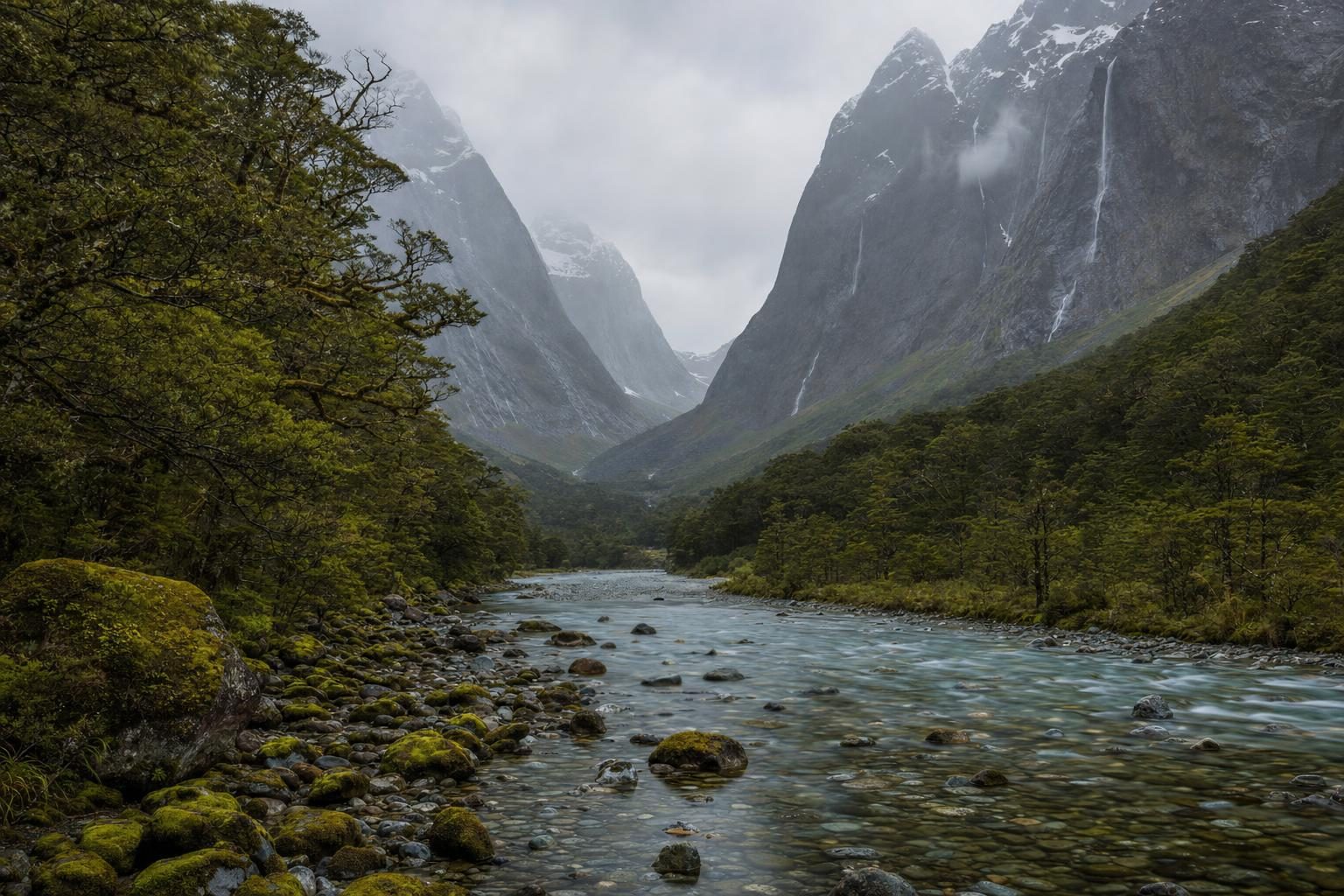
From Bluff, Fiordland lies a few hours’ drive to the north-west, and walks such as the Hollyford, described in a feature on the pull of Fiordland, make a natural extension of a trip to the far south. Queenstown, and the glass house and bungy bridges covered in a feature on the Jagged Edge and Lake Wakatipu, is roughly three hours’ drive away.
Other festivals with a local accent
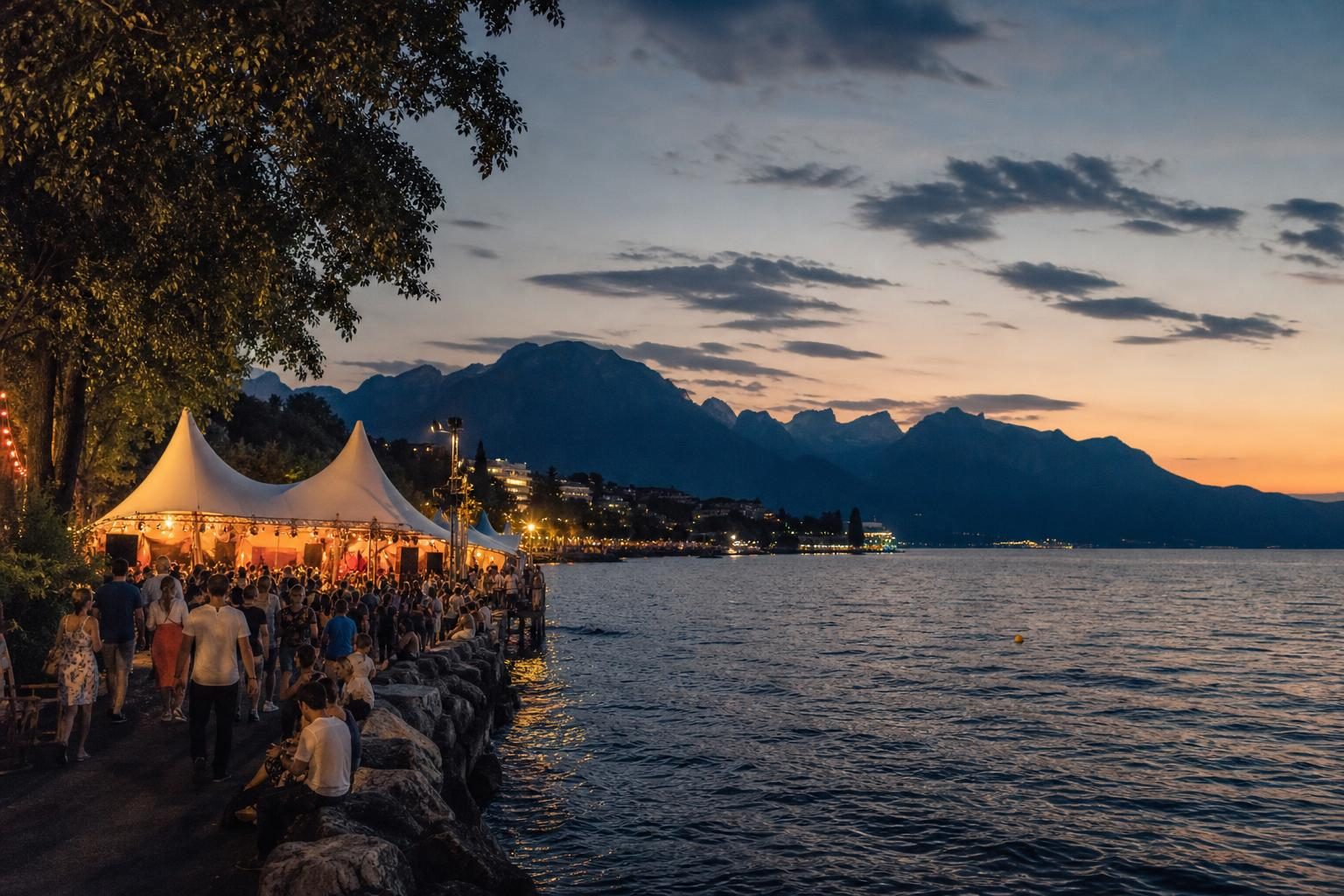
Food and music festivals that belong to one town tend to keep their character better than the large ones. The Montreux Jazz Festival on Lake Geneva began as a small local event before it grew to fill two weeks every July, and Cheyenne Frontier Days in Wyoming has kept its rodeo roots for well over a century. Bluff’s festival is far smaller than either, a single day in a single port, and it intends to stay that way.
For those who miss the date, the oysters themselves are on sale through the season at fish shops in Bluff and Invercargill. Ask for them freshly opened, eat them standing up outside, and drop the empty shells in the bin rather than the harbour.
Questions before you go
When is the Bluff Oyster Festival held?
The Bluff Oyster and Food Festival is held on a Saturday in May, in the middle of the oyster season. The exact date changes from year to year and the festival has not run every year, so the organisers' website is the place to confirm the next date.
Where does the festival take place?
It is held in Bluff, the port town about 30 kilometres south of Invercargill at the southern end of State Highway 1. Bluff looks out across Foveaux Strait to Stewart Island.
What are Bluff oysters?
Bluff oysters are wild flat oysters, Ostrea chilensis, dredged from natural beds in Foveaux Strait. They grow slowly in cold water and are known for a firm texture and strong, briny flavour. Locals call them Bluffies.
When is Bluff oyster season?
The commercial season generally runs from early March to the end of August. Opening dates and catch limits are set each year, and poor weather or disease can shorten a season, so supply varies.
What competitions are held at the festival?
The best-known events are the oyster opening contests, where professional openers race against the clock, and the oyster eating contest, where competitors chosen from the crowd try to down a dozen oysters in the fastest time. A wasabi and chilli oyster challenge has also featured.
What food is served besides oysters?
Stalls offer southern seafood such as blue cod, pāua, scallops, kina, salmon and crayfish, along with muttonbird, venison, lamb and pork. Southern craft beers and New Zealand wines are served alongside.
Are tickets needed for the Bluff Oyster Festival?
Yes, entry is ticketed. Tickets have been sold online in advance and, in some years, at the gate on the day. The festival has sold out in the past, so buying early is sensible.
How many oysters are eaten at the festival?
Southland's regional tourism body estimates that more than 20,000 oysters are eaten at the festival each year, raw, battered, in chowder and in other dishes.
What has threatened the Bluff oyster fishery?
The main threat has been the parasite Bonamia. Outbreaks in the 1980s and 1990s, and again in the early 2000s, killed a large share of the oysters in Foveaux Strait and led to closures. The fishery has recovered in stages but is monitored closely.
What else is there to see in Bluff?
Stirling Point has the well-known signpost and an anchor-chain sculpture, the Motupōhue Bluff Hill lookout gives views over the strait, and ferries cross to Stewart Island in about an hour.