Monaco · Story
Simple Pleasures in Monte Carlo and Monaco Ville
Under the yachts and the chandeliers, the world's second-smallest country is easy to explore on foot, and its best moments cost almost nothing.
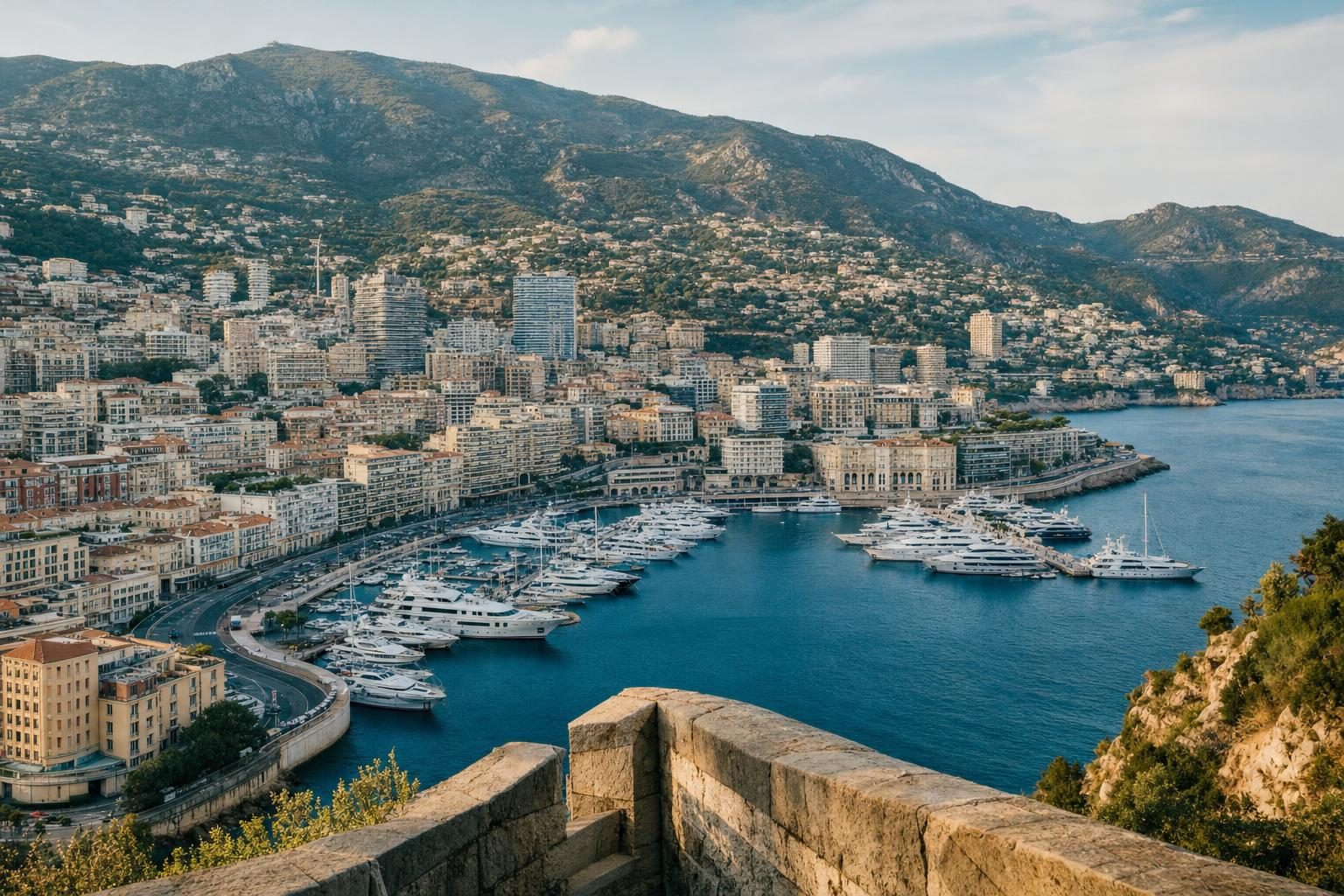
The coastal train from Nice runs in sight of the sea almost the whole way, then dives into a tunnel just before Monaco and stops in a station carved inside the mountain. Passengers step off in fluorescent light, under rock, with no view of anything. It takes a lift, a long walkway and another lift to reach daylight, and when it arrives it comes all at once: the harbour below, apartment towers climbing the slopes, and the Rock of Monaco sticking out into the water like a ship’s prow. Monte Carlo is behind, Monaco Ville is ahead, and the whole country is visible from one railing.
Monaco covers about two square kilometres. Most of it is built on a steep slope that curves around a single bay, so the city reads like an amphitheatre with Port Hercule as its stage. Lifts, escalators and stairways link the levels, and they are free. A visitor with comfortable shoes can cross it in an hour.
Plan your visit
Morning in Monte Carlo
Monte Carlo smells of bread before it smells of money. Early in the morning, delivery vans idle outside cafés, and the pastry counters fill with croissants and slices of fougasse, the sweet Monégasque flatbread scattered with aniseed sugar. The cooking here borrows from both neighbours, France on one side and Liguria on the other, and many restaurant menus are as Italian as they are French.
The district grew around the Casino de Monte-Carlo, which opened in the 1860s when the ruling Grimaldi family needed a source of income. The present building owes much of its look to Charles Garnier, architect of the Paris Opera, who designed the theatre hall that bears his name. Bright and ornate, the building is open as a sight during the day, and a dress code still applies to the gaming rooms. The casino gardens slope down in front of it, and the square, the Hôtel de Paris and the Café de Paris complete a set that has appeared in films for decades.
The glamour is real, but it is also a backdrop. Locals cut through the gardens on their way to work, and behind the casino a quieter Japanese garden sits on the seafront, laid out with streams, stone lanterns and clipped pines. Further east lies Larvotto, the public beach, rebuilt in recent years with new sand and a long promenade.
Down through La Condamine
Between Monte Carlo and the Rock sits La Condamine, the old harbour quarter, and it is where Monaco feels most like an ordinary Riviera town. The covered market on the Place d’Armes has been trading since the late nineteenth century. Its stalls sell vegetables and cheese, and food counters inside serve socca, a thin chickpea pancake, and barbagiuan, small fried parcels of chard, rice and cheese that count as the national dish. If you arrive by ten, there is time to eat here before walking up for the changing of the guard.
At the head of the harbour, squeezed into a ravine beneath a road bridge, stands the small church of Sainte-Dévote, dedicated to the principality’s patron saint. Legend says her body was carried here by boat in the fourth century, guided by a dove after a storm. Every year on the evening of 26 January, a fishing boat is set alight in front of the church in her memory, with the prince’s family watching, and the next day is a public holiday. It is a strange sight in a place known for keeping boats polished.
It is also a reminder of scale. Everything in Monaco is close.
From the market, the quay curves around Port Hercule. Superyachts tie up stern-first along the outer berths, so their crews can be seen polishing chrome and hosing decks a few metres from the promenade. A small electric boat bus crosses the harbour for anyone who does not want to walk around it.
Each year in late spring, much of this waterfront becomes part of the Formula One circuit. The cars race through the same streets, past the swimming pool and around the harbour, and the stands go up weeks before the race.
Up to Monaco Ville
Monaco Ville, the old town, sits on the Rock, a limestone headland about 62 metres high. Its cliffs are the reason the country exists. On 8 January 1297, François Grimaldi took the fortress by entering it disguised as a Franciscan friar, then opening the gates to his men. A statue of a monk gripping a sword, near the palace, nods to the episode, and the Grimaldi family has ruled ever since, with interruptions.
The ramp from Place d’Armes climbs to the palace square in about ten minutes. Every day at 11:55, the Carabiniers of the Prince change the guard in front of the Prince’s Palace, in white uniforms in summer and black in winter. The square fills well before the ceremony, and the low wall on its edge gives a view over Port Hercule and Monte Carlo that explains Monaco’s shape better than any map.
In the warmer months, part of the palace itself opens to visitors. The State Apartments, reached through a courtyard with a double horseshoe staircase of white marble, hold frescoed galleries, throne room furnishings and portraits of the princes, and an audio guide leads the way through. The palace is still a working residence, so the visit is short and the rooms are formal rather than lived-in.
Behind the palace, Monaco Ville is a grid of narrow lanes lined with ochre and pink houses, small restaurants and shops selling postcards of Princess Grace. Some street signs carry names in both French and Monégasque, the local Ligurian dialect. Monégasque has been taught in the principality’s schools since the 1970s and is compulsory for younger pupils, although it is rarely heard spoken on the street.
The Cathedral of Our Lady Immaculate is a white stone church built in the late nineteenth century in a Romanesque-Byzantine style. Inside, a line of tombs behind the altar holds members of the Grimaldi family, including Prince Rainier III and Princess Grace, the former Grace Kelly. Visitors leave flowers on her slab most days.
The museum on the cliff
At the far end of the Rock, the Oceanographic Museum stands at the edge of a sheer drop. Prince Albert I, a scientist who spent much of his life on research voyages, founded it, and it opened in 1910. From the land side it looks like a grand public building. From the sea it is extraordinary: the facade rises straight out of the cliff, its base dropping far below the level of the street, so the building and the rock seem to be one structure. Jacques-Yves Cousteau directed the museum for around three decades from 1957, and its aquarium in the basement holds thousands of marine species, from Mediterranean fish to tropical reef coral.
Below the museum, the cliffs drop to the water, and a path known as the Chemin des Pêcheurs follows the cliffs along the side of the Rock. It is cool and shaded, with sea spray in rough weather and the sound of water slapping on stone.
Afternoon swim
There is a very Monégasque way to spend a hot afternoon, and it costs little. On the harbour front, the Stade Nautique Rainier III is an Olympic-size open-air pool filled with heated seawater, open in the warmer months. Office workers come in at lunchtime, swim lengths a stone’s throw from the yachts and go back to work with wet hair. In winter it is usually turned into an ice rink.
It is a good place to understand the city-state’s oddness. Billionaires’ yachts are moored across the water, and the people in the next lane are bank clerks and schoolchildren. In a country obsessed with luxury, the most popular way to cool off in July is a swim and an ice cream.
A short detour that leads nowhere in particular: the Fontvieille district, on the other side of the Rock, was built on land reclaimed from the sea in the 1970s. Monaco kept going. In December 2024 it inaugurated Mareterra, a six-hectare extension beside the Grimaldi Forum, next to Larvotto, adding about three per cent to the country’s area. It is unusual for a nation to grow by a few streets.
Evening on the Rock
By early evening the day-trippers have gone back to Nice, and Monaco Ville empties. The restaurants on the Rock put out tables in the lanes, the palace square is almost deserted, and the sun sets behind Cap d’Ail to the west. Back in Monte Carlo, the casino lights come on and the cars outside it get more expensive by the hour.
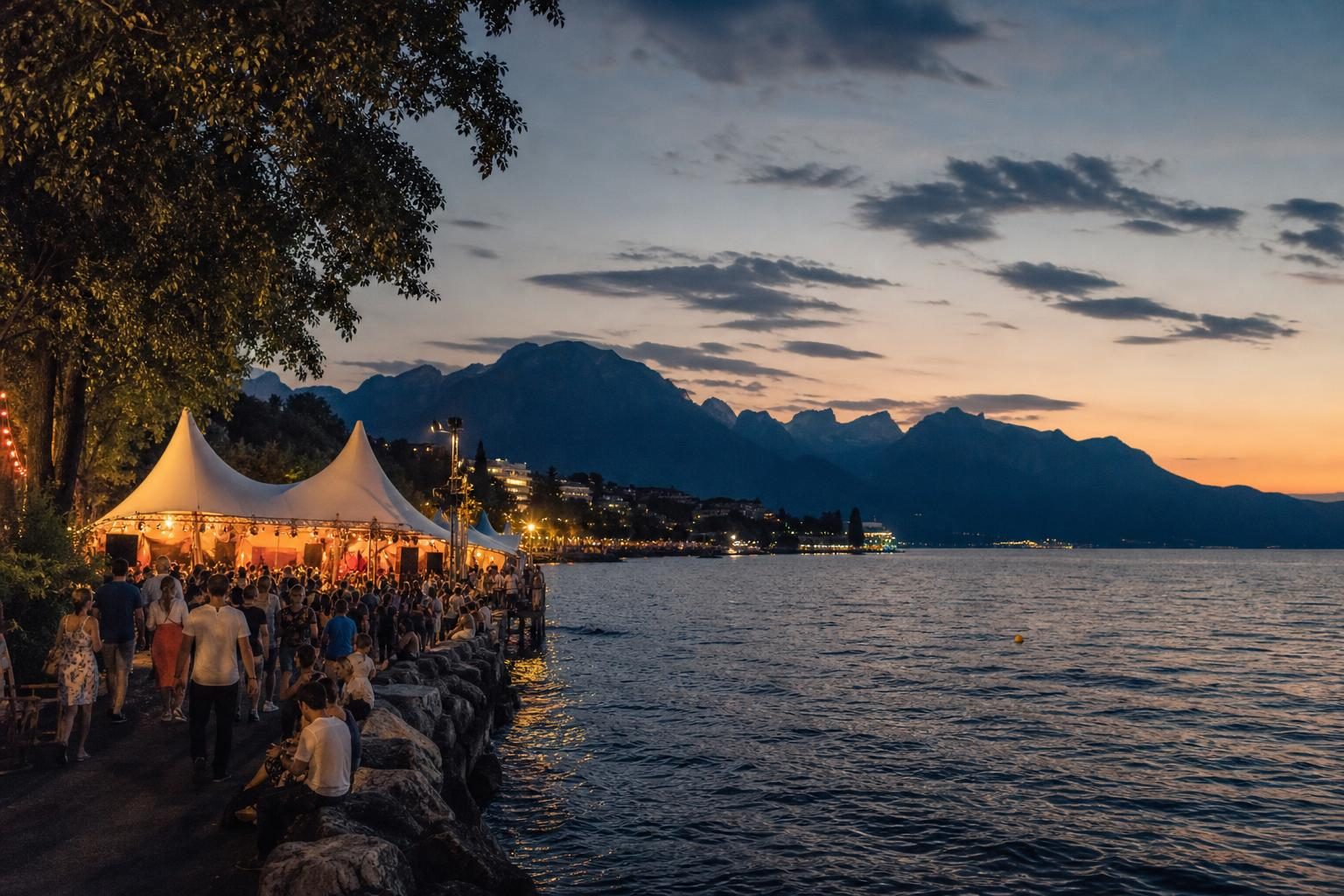
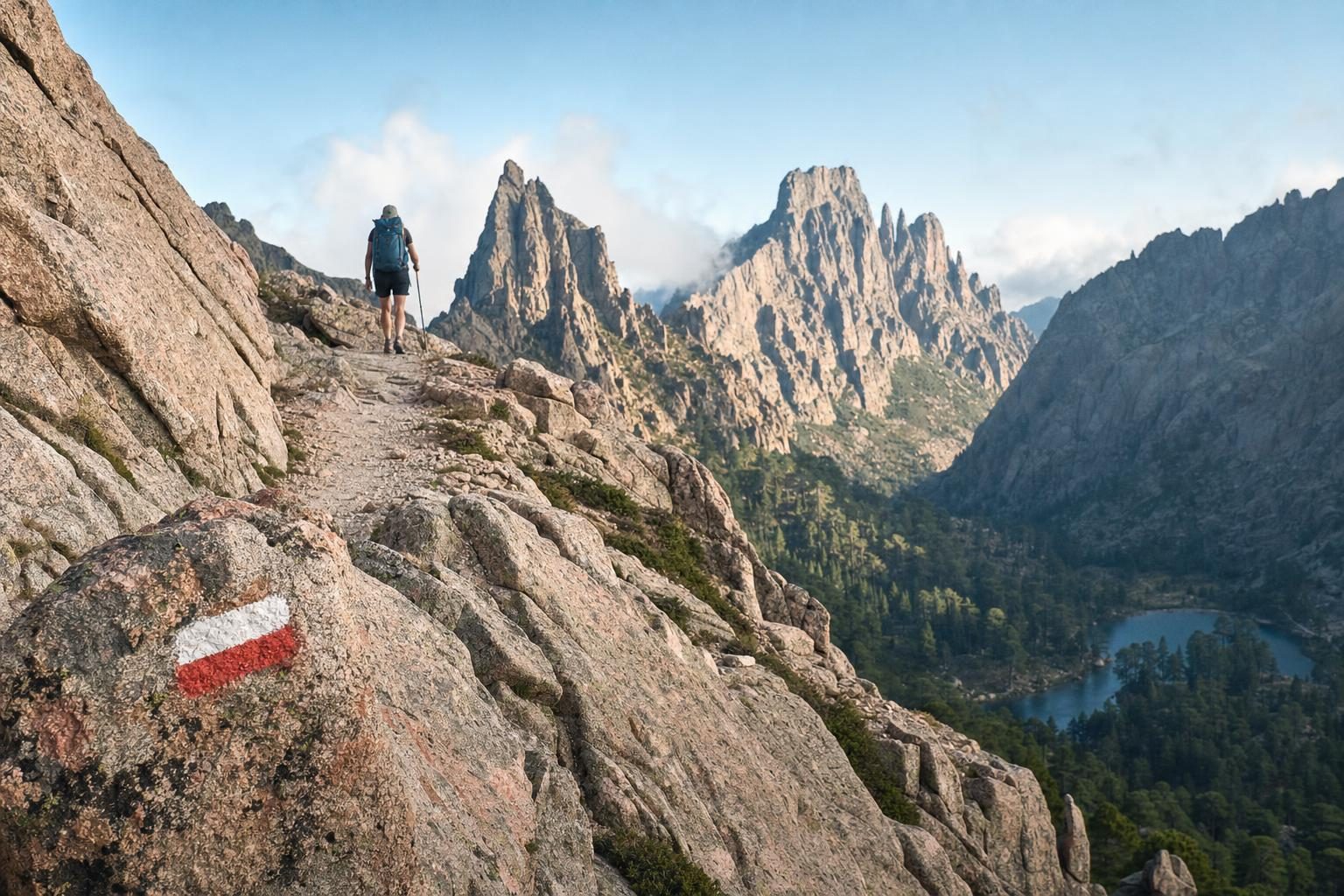
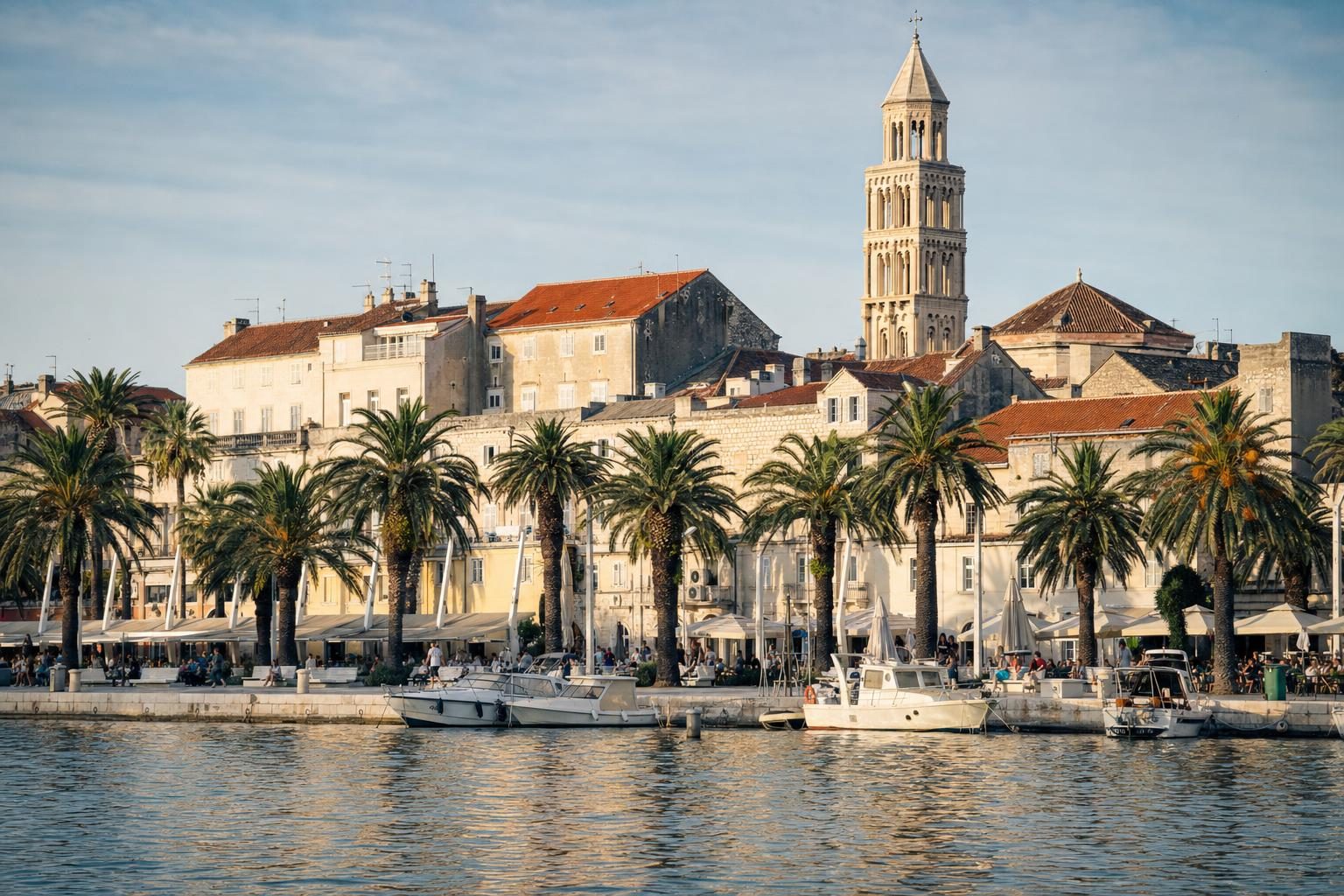
Monaco makes a natural stop on a longer tour of the Mediterranean. Ferries from Nice and Toulon reach Corsica, where the GR20 trail crosses the island’s mountains, and further east, the Dalmatian coast of Croatia offers a slower version of the same blue water. For anyone heading north by train, Monaco shares something with the Montreux Jazz Festival on Lake Geneva: a small town that once turned itself into a stage, and never fully stepped off it. More pieces like this one are collected under stories.
The last direct trains back to Nice leave in the late evening, and the walk down to the station from Monaco Ville takes about fifteen minutes, mostly by lift.
Questions before you go
What is the difference between Monte Carlo and Monaco Ville?
Monaco is a city-state, and Monte Carlo and Monaco Ville are two of its districts. Monte Carlo, to the east of the harbour, holds the casino, grand hotels and shopping streets. Monaco Ville is the old town on the Rock, with the Prince's Palace, the cathedral and the Oceanographic Museum.
How big is Monaco?
Monaco covers about two square kilometres, making it the second-smallest country in the world after Vatican City. It has grown through land reclaimed from the sea, most recently the six-hectare Mareterra district, inaugurated in December 2024.
When is the changing of the guard at the Prince's Palace?
The Carabiniers of the Prince change the guard every day at 11:55 on the square in front of the palace. Arriving a little early is worthwhile, because the square fills quickly in summer.
How do you get to Monaco by train?
Regional trains on the line between Nice and Ventimiglia stop at Monaco-Monte-Carlo station, which is built inside the hillside. The ride from Nice takes around 20 minutes, and lifts and walkways connect the station to the streets above and below.
Can you visit the Casino de Monte-Carlo without gambling?
Yes. The atrium and parts of the building can be visited during the day as a sight, and the surrounding gardens and square are public. Visitors must be adults, carry identification and follow a dress code, which is stricter in the evening.
Who is buried in Monaco Cathedral?
The Cathedral of Our Lady Immaculate in Monaco Ville holds the tombs of many members of the Grimaldi family, including Prince Rainier III and Princess Grace, the former actress Grace Kelly.
Who ran the Oceanographic Museum of Monaco?
The museum was founded by Prince Albert I and opened in 1910. Jacques-Yves Cousteau was its director for around three decades, from 1957 until the late 1980s.
Where can you swim in Monaco?
Larvotto is the main public beach, on the eastern side of Monte Carlo. In the harbour, the Stade Nautique Rainier III is an open-air heated seawater pool used in the warmer months, and it becomes an ice rink in some winters.
What food is typical of Monaco?
Barbagiuan, a small fried pastry filled with chard, rice and cheese, is considered the national dish. Socca, a thin chickpea pancake shared with Nice, is also common at markets such as the one at La Condamine.