California · Wellness
Build Your Own Urban Spiritual Retreat in Los Angeles
Los Angeles has been importing, inventing and exporting spiritual practice for a century. Its temples, gardens and bathhouses make it possible to put together a retreat without leaving the city.
At eight on a weekday morning the fire road above the Griffith Observatory is already busy: runners, dog walkers, a woman doing slow tai chi beside a bench and, on clear days, a view over the whole grid of Los Angeles towards the ocean. The city’s reputation is for traffic, money and the film industry. Yet a century of teachers, temples and seekers has given it another identity, and a spiritual retreat in Los Angeles can be built entirely from places that are open to anyone.
The roots go back to the early twentieth century. Swami Vivekananda lectured in Los Angeles and Pasadena around 1900. Paramahansa Yogananda, the yoga teacher whose Autobiography of a Yogi became one of the most widely read spiritual books of the century, made Los Angeles his base in the 1920s. Vedanta monks, Zen teachers, Theosophists and the founders of countless alternative health movements followed, and the city has been exporting its fashions in wellness ever since, from yoga studios to cold-pressed juice.
What follows is a day, arranged in the order it might be lived, that draws on that history.
Plan your visit
Morning: walking above the city
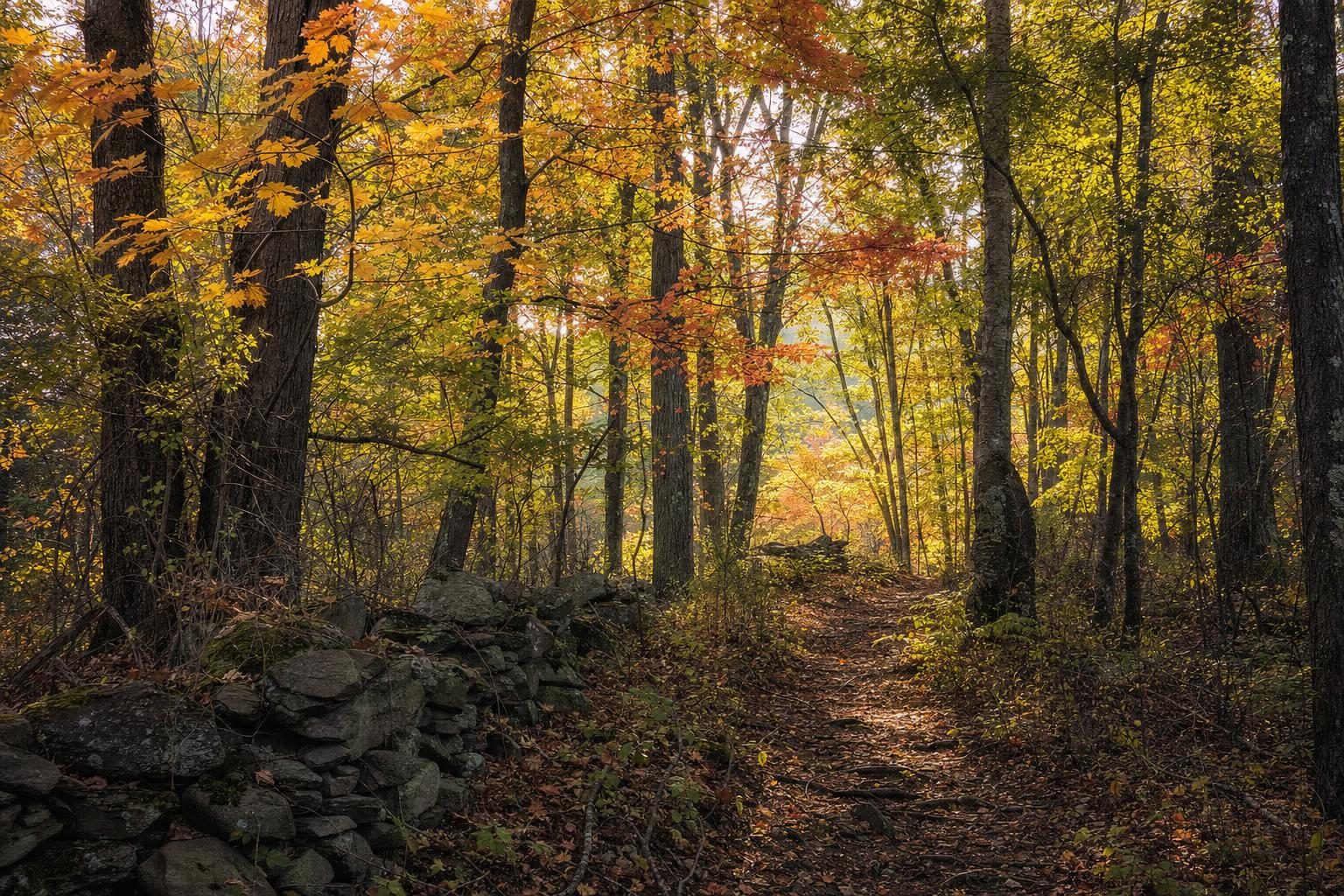
Starting high makes sense. Griffith Park, one of the largest urban parks in the United States, has a network of trails through dry chaparral and oak, with the observatory and the Hollywood sign as landmarks. An hour’s walk before the heat builds clears the head, and at that hour the air smells of sage and eucalyptus rather than exhaust. For those staying further west, the trails of Runyon Canyon or the fire roads of Topanga State Park in the Santa Monica Mountains offer the same idea with a view of the sea.
Some walkers bring the practice with them. Small groups gather in the park for sunrise yoga or seated meditation in Los Angeles parks and on its beaches most mornings, usually announced on studio noticeboards and community websites rather than advertised. Joining one costs little or nothing, and it sets the tone for a spiritual retreat in Los Angeles better than any brochure could.
Breakfast can be as austere or as indulgent as the retreat demands. Los Angeles has taken juice seriously for decades, and juice bars and smoothie counters are found on almost every commercial street, from Abbot Kinney Boulevard in Venice to Sunset Boulevard in Silver Lake.
The Vedanta Temple in Hollywood
Just off Franklin Avenue, below the Hollywood Hills, a small white building with three domes looks as though it has been lifted from northern India and set down among apartment blocks. This is the Hollywood Temple of the Vedanta Society of Southern California, completed in 1938. The society had been founded at the end of the 1920s by Swami Prabhavananda, a monk of the Ramakrishna Order, and over the following decades it attracted a remarkable circle of writers: Aldous Huxley, Christopher Isherwood and Gerald Heard all spent time there, and Isherwood worked with Prabhavananda on English translations of the Bhagavad Gita and other texts.
The temple is simple inside, with rows of seats facing a shrine. Visitors are welcome to sit quietly, and lectures and readings are held regularly. Next door, a bookshop sells works on Vedanta, yoga philosophy and the religions of India.
Mount Washington: a hotel turned headquarters
A short drive north-east, the hill neighbourhood of Mount Washington holds the international headquarters of Yogananda’s Self-Realization Fellowship. The building began life around 1909 as the Mount Washington Hotel, reached by a funicular railway from the valley below. When the railway closed and the hotel failed, Yogananda bought the property in 1925 and turned it into the centre of his organisation, which it remains a century later.
The grounds are terraced into the hillside, with lawns, old trees and benches looking out across the city towards downtown. Visitors may walk in the gardens on most days. It is one of the few places in Los Angeles where the loudest sound is often birdsong.
The Lake Shrine at midday
From Mount Washington the retreat crosses the whole width of the city, a drive that can take an hour or more, to the Self-Realization Fellowship Lake Shrine in Pacific Palisades, a few blocks from the beach on Sunset Boulevard. Yogananda dedicated it in 1950 on land bought from its previous private owners, and it remains one of the most peaceful places in Southern California.
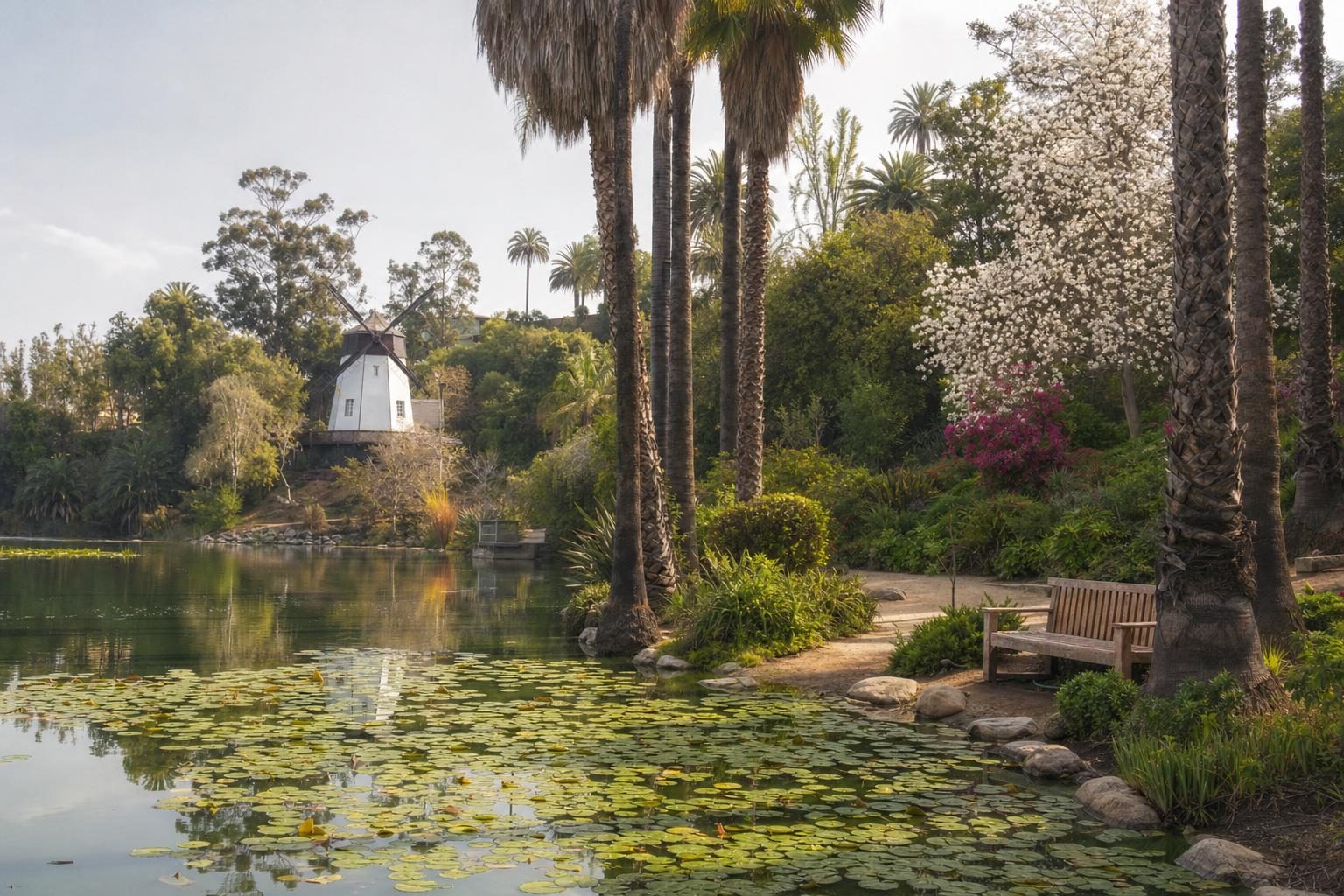
About ten acres of gardens surround a spring-fed lake, shaded by palms and full of koi, turtles and the occasional swan. A path circles the water past small shrines and fountains, and a golden lotus archway frames the view across it. The windmill chapel, a replica of a sixteenth-century Dutch windmill built by the previous owners, was turned into a chapel for meditation and restored after earthquake damage; it reopened in 2015.
The most surprising object at the Lake Shrine is the Mahatma Gandhi World Peace Memorial, where a portion of Gandhi’s ashes rests in a stone sarcophagus said to be about a thousand years old. Visitors walk past in silence, and many sit on the benches nearby for a long time.
Moored on the lake is an old Mississippi-style houseboat called the Adeline, brought from Lake Mead by the previous owners and restored in 2007. It has no spiritual function whatsoever. It is simply there, a white riverboat with a red trim, floating in a meditation garden a few hundred metres from the Pacific, and it says a great deal about Los Angeles that no one finds this strange.
Afternoon: heat, water and stillness
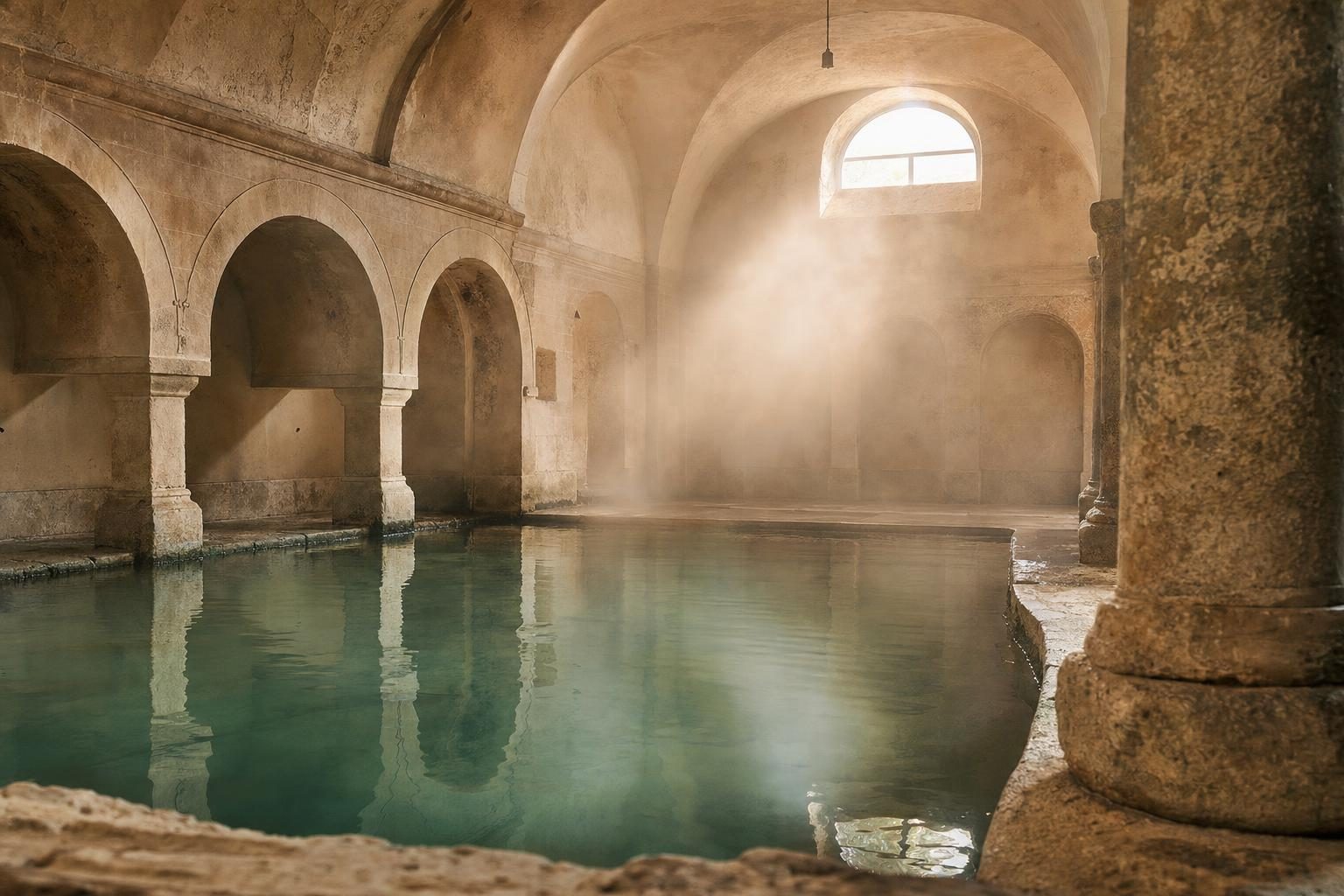
After a morning of temples, the afternoon belongs to the body. Koreatown, west of downtown, is home to a concentration of Korean-style bathhouses and jjimjilbang, day spas built around hot and cold plunge pools, saunas, steam rooms and heated floors where guests lie on mats in loose cotton uniforms. Some are open late into the night. The best are noisy, communal and entirely unpretentious, a reminder that the oldest form of wellness is often just a hot bath, as the long story of spa culture from ancient public baths to modern spas shows.
Those who prefer something quieter can find meditation in Los Angeles in short, practical doses, and the choice is wider than almost anywhere else in the country. Unplug, which opened on Wilshire Boulevard in 2014 as a meditation-only studio, pioneered the idea of a thirty- or forty-five-minute drop-in class for people with no experience at all, and similar studios have opened across the city since. Several yoga schools, Buddhist centres and the Vedanta temple also hold public meditation sessions.
In Silver Lake and Echo Park, metaphysical shops sell crystals, tarot decks, sage bundles and books on energy healing, and some offer sound baths, in which participants lie still while a practitioner plays large crystal or metal bowls. Opinions on the claims made for such sessions vary widely. As an hour lying in the dark listening to slow, overlapping tones, it is undeniably relaxing.
Stretching the spiritual retreat in Los Angeles over a weekend
A longer spiritual retreat in Los Angeles might give a whole day to gardens. In San Marino, near Pasadena, The Huntington has a Japanese garden laid out in the early twentieth century, with a moon bridge, a koi pond and a traditional house, and a large Chinese garden with lakes and pavilions. In Brentwood, the Getty Center’s Central Garden, designed by the artist Robert Irwin, descends in a spiral of planting and water towards a maze of azaleas. Both are best visited early on weekdays, before the crowds arrive.
Another day could head east into the San Gabriel Valley. In Hacienda Heights, the Hsi Lai Temple of the Taiwanese Buddhist order Fo Guang Shan opened in 1988 and is often described as one of the largest Buddhist temples in the western hemisphere. Its courtyards, halls and terraces climb a hillside in the style of a Ming-dynasty monastery, and visitors are welcome to walk through, join a meditation session or eat a vegetarian lunch in the dining hall.
The city once had a famous meeting point for all of this. The Bodhi Tree Bookstore in West Hollywood, opened in 1970, sold books on religion, philosophy and the occult from a pair of cottages on Melrose Avenue for four decades, and generations of seekers browsed its shelves before it closed in 2011. Nothing has quite replaced it, and former customers still speak of it fondly.
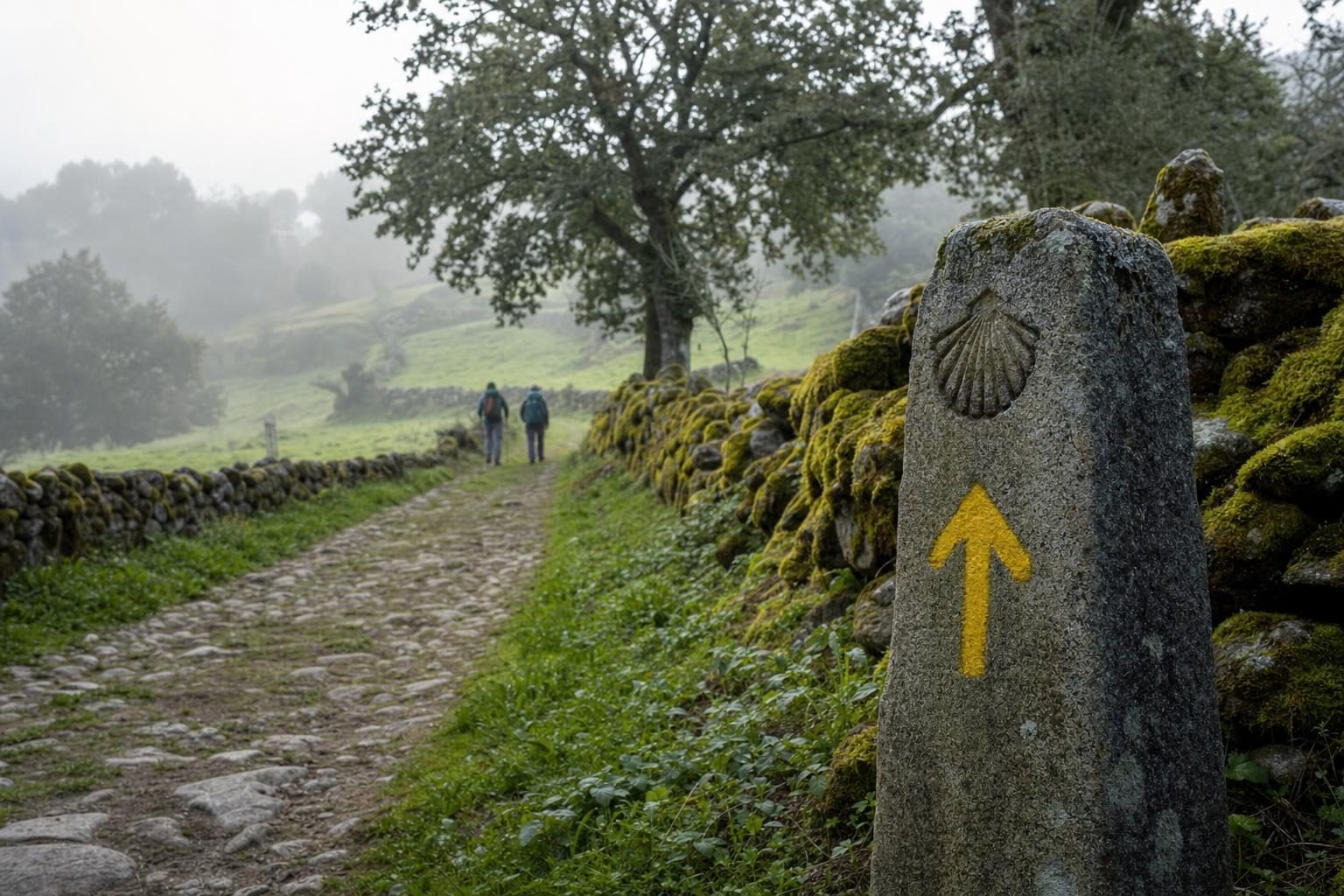
The retreat takes visitors through a city that has also inspired artists drawn to the visionary and the sacred, among them the painter Alex Grey, whose work circles similar questions in a very different medium. Readers curious about the older roots of travel for the spirit will find them in the history of pilgrimage.
Sunset on the beach
The end of the day is the easiest part to plan. From the Lake Shrine, Sunset Boulevard runs downhill to the Pacific Coast Highway and Will Rogers State Beach, a wide, plain stretch of sand that is quieter than Santa Monica or Venice. Watch the sun drop into the ocean, wade in to the ankles and let the cold water do the rest.
A practical note: Los Angeles traffic decides the shape of any day here. Group the stops by area, east in the morning and west in the afternoon, and allow far more time than the map suggests for the drive across town.
Questions before you go
What is the Self-Realization Fellowship Lake Shrine?
The Lake Shrine is a garden and meditation centre in Pacific Palisades, dedicated by the yoga teacher Paramahansa Yogananda in 1950. Around ten acres of gardens surround a spring-fed lake, with a windmill chapel, a temple and a memorial holding a portion of Mahatma Gandhi's ashes.
Is the Lake Shrine free to visit?
Entry to the grounds has traditionally been free and open to people of all faiths, with quiet expected throughout. Opening days and hours change from time to time, so it is worth checking the shrine's official site before going.
Where is the Vedanta Temple in Hollywood?
The Hollywood Temple of the Vedanta Society of Southern California stands on a side street just off Franklin Avenue, below the Hollywood Hills. The small white temple with three domes was completed in 1938 and is open for quiet sitting and services.
Who was Paramahansa Yogananda?
Paramahansa Yogananda was an Indian yoga teacher who settled in the United States in 1920 and founded the Self-Realization Fellowship. His book Autobiography of a Yogi, published in 1946, introduced meditation and yoga philosophy to millions of Western readers.
What is the Self-Realization Fellowship headquarters on Mount Washington?
It is a former hotel on Mount Washington in north-east Los Angeles, bought by Yogananda in 1925 as the international headquarters of his organisation. Its terraced gardens look out over the city.
Where can you find Korean bathhouses in Los Angeles?
Koreatown, west of downtown, has a number of Korean-style spas with hot and cold pools, saunas and heated rooms. Many are open long hours and some admit only one gender to their bathing areas, so it is worth checking the rules in advance.
Where can you meditate in Los Angeles without joining a group?
Drop-in meditation studios, temples and gardens all welcome visitors. Unplug, which opened on Wilshire Boulevard in 2014 as a meditation-only studio, offers short classes for beginners, and both the Lake Shrine and the Vedanta temple allow quiet sitting.
What are good quiet gardens in Los Angeles?
Beyond the Lake Shrine, the Japanese and Chinese gardens at The Huntington in San Marino and the Central Garden at the Getty Center are among the calmest green spaces in the region.
Is Los Angeles a good place for a wellness trip?
The city has a long history of yoga, meditation and alternative health, from the arrival of Indian teachers in the early twentieth century to today's juice bars and studios. Its mild climate also makes outdoor walks, beaches and gardens possible most of the year.