New York · Artist profile
Alex Grey and the Chapel of Sacred Mirrors in the Hudson Valley Woods
On a wooded hillside above the Hudson, a painter and his wife have spent close to two decades turning forty acres and an old carriage house into a sanctuary for visionary art.
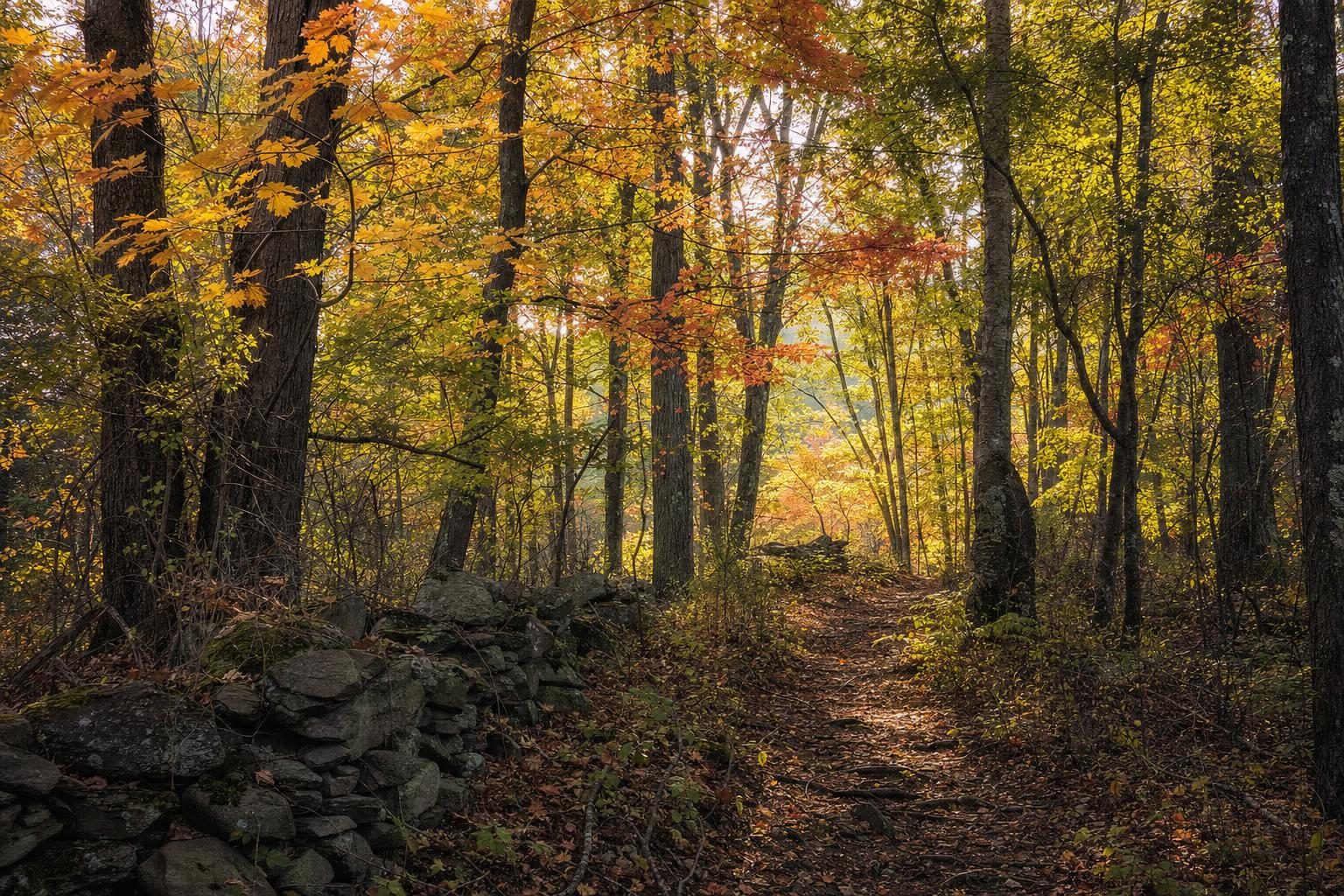
Deer Hill Road runs through second-growth woods of oak, maple and hickory, the kind of Dutchess County hillside where a stone wall in the undergrowth is often the only sign that the land was once farmed. Somewhere along it, behind the trees, stands a 19th-century carriage house that now holds 21 life-size paintings of the human body. They are the work of Alex Grey, and the building is the latest stage of a project he and his wife, Allyson Grey, first sketched in 1985.
The Chapel of Sacred Mirrors, known by its initials CoSM, is part gallery, part retreat, part community meeting place. It has been on this 40-acre wooded property in the town of Wappinger since 2008. Understanding why it is here, and why people travel to it, means going back to Ohio and a medical school basement in Boston.
Plan your visit
- Where
- A 40-acre wooded property on Deer Hill Road in Wappinger, Dutchess County More
- Getting there
- About two hours by car from Manhattan; Metro-North's Hudson Line, then a car or taxi More
- Time
- Generally open from midday into the early evening on a handful of days each week More
- Base
- Beacon and Poughkeepsie, both a short drive, with galleries, places to eat and rooms More
Alex Grey before the paintings
Alex Grey was born Alexander Velzy in Columbus, Ohio, on 29 November 1953. He spent two years at the Columbus College of Art and Design before leaving, and in 1975 enrolled at the School of the Museum of Fine Arts in Boston. There he met Allyson, a fellow student, and the two have worked side by side ever since.
The unusual part of his training came next. For five years Grey worked in the anatomy department at Harvard Medical School, preparing cadavers for dissection. He followed that with about a decade as a medical illustrator, and later taught anatomy and figure sculpture at New York University for ten years. Few contemporary painters know the inside of the body as literally as he does.
That knowledge is the base layer of his best-known work. On 3 June 1976 the Greys took a large dose of LSD together, an experience they have described publicly as the starting point of their shared practice. From then on, Grey’s painting tried to put the body he knew from the dissection room together with the inner experience he had found in that state: muscle, bone and nerve drawn with clinical precision, then overlaid with fields of light.
The Sacred Mirrors
Between 1979 and 1988 he painted the Sacred Mirrors, 21 life-size panels in which a standing figure is shown layer by layer. One shows the skeleton, another the nervous system, others the circulation, the lymph, and finally the body as a field of energy. The idea is that visitors would stand in front of each panel at full height and find themselves looking into a mirror of their own anatomy.
In 1999 the Museum of Contemporary Art San Diego held a mid-career retrospective titled Sacred Mirrors: The Visionary Art of Alex Grey. The same year, Adam Jones, guitarist with the band Tool, came across Grey’s work. Tool used his art on Lateralus in 2001, on 10,000 Days in 2006 and on Fear Inoculum in 2019, and that association introduced his imagery to a far larger audience than galleries usually reach.
Grey has also written and illustrated a shelf of books: Sacred Mirrors in 1990, The Mission of Art in 1998, Transfigurations in 2001, Art Psalms in 2008, and with Allyson, CoSM in 2007 and Net of Being in 2012.
A small aside from those years: the full moon gatherings that still mark the CoSM calendar did not start in the woods at all. They began in 2003 in the couple’s loft in Brooklyn and moved north with them when they left the city.
From Chelsea to the Hudson Valley
In 1985 the Greys imagined a round, domed chapel built to hold the Sacred Mirrors so that visitors would walk among them. For almost twenty years it stayed on paper. In 2004 they opened a first Chapel of Sacred Mirrors in Chelsea, Manhattan’s gallery district. It lasted four years and closed in 2008.
That same year the non-profit bought 40 acres in Wappinger, a town on the east bank of the Hudson roughly halfway between New York City and Albany, for US$1.8 million. The property was wooded, hilly and already had a cluster of old buildings, including the carriage house. The move was not entirely smooth. CoSM was initially denied a property-tax exemption, and the courts eventually ruled in the chapel’s favour. Early full moon events, with fire performers and crowds arriving after dark, also drew complaints from neighbours; the organisers responded by working with the county sheriff’s department and training staff in first aid and medical response.
Over the following years the site grew into a working community. A report in the New York Times in 2023 counted a staff of 17, six of whom lived on the property.
Entheon opens
The carriage house took longest. Converting a 19th-century farm building into a 12,000-square-foot museum cost far more than the couple’s own resources, and benefactors and collectors carried much of the funding. The building opened as Entheon on 3 June 2023, 47 years to the day after the experience that started it all.
Inside, the Sacred Mirrors finally hang as intended, in a space designed around them. A separate gallery is given to Allyson Grey’s paintings, built from thousands of minute coloured squares that resolve into geometric fields; one of her titles is Chaos Order Secret Writing. Other rooms carry work by visionary artists from several continents, and changing group exhibitions have brought in names such as Judy Chicago and Bo Bartlett.
One room is closer to a reliquary than a gallery. It holds objects associated with the history of psychedelic culture, among them a pair of glasses that belonged to the Swiss chemist Albert Hofmann, a lock of hair from the teacher Ram Dass and a portion of Timothy Leary’s ashes, alongside ancient Mesoamerican mushroom stones.
The building’s exterior is still unfinished. The Greys have published plans for sculpted faces, murals and dragons across the façade, and the 2023 estimate for completing it was around US$3 million.
Other painters on the same river
The Greys are not the first artists to treat this valley as a place where painting and the sacred meet. In the 1820s Thomas Cole began painting the Catskills and the Hudson as scenes charged with religious feeling, and the loose group that followed him became known as the Hudson River School, the first American landscape movement with a name. Cole’s house and studio in Catskill, on the west bank, is now the Thomas Cole National Historic Site. A short way north, his pupil Frederic Church built Olana, a Persian-inspired villa on a hilltop above the river, laid out so that its windows framed the views like canvases.
Two centuries on, the valley still pulls artists out of the city. Dia Beacon, a museum of large-scale contemporary work, opened in 2003 in a former Nabisco box-printing plant on the riverbank at Beacon, only a few miles from Wappinger. On a long weekend it is possible to see a minimalist steel sculpture in the morning and the Sacred Mirrors in the afternoon.
The contrast is sharp. Cole wanted the landscape to carry the spiritual message; Grey puts the message inside the human figure and leaves the trees outside the window. Both chose the same river.
Visiting the Chapel of Sacred Mirrors
The Chapel of Sacred Mirrors describes itself as an art church, and the programme reflects that: monthly Art Church gatherings on Sunday afternoons, full moon ceremonies, painting workshops, exhibition openings and seasonal festivals around the equinoxes. Day visitors can see Entheon and walk parts of the grounds on the days the site is open, which have generally been from midday into the early evening on a handful of days each week. Ticket prices vary between ordinary days and special exhibitions, and some areas are reserved for members or event guests, so the official calendar at cosm.org is the place to check before setting out.
The setting is half the experience. The property sits among the oak and hemlock woods typical of the lower Hudson Valley, and in October the hillsides around Wappinger turn copper and red. Anyone driving up from Manhattan can expect about two hours on the road; Metro-North’s Hudson Line runs along the river below, though the last stretch needs a car or taxi. If you are making a weekend of it, the river towns of Beacon and Poughkeepsie are both within a short drive and have galleries, places to eat and rooms to stay.
A place built as a destination
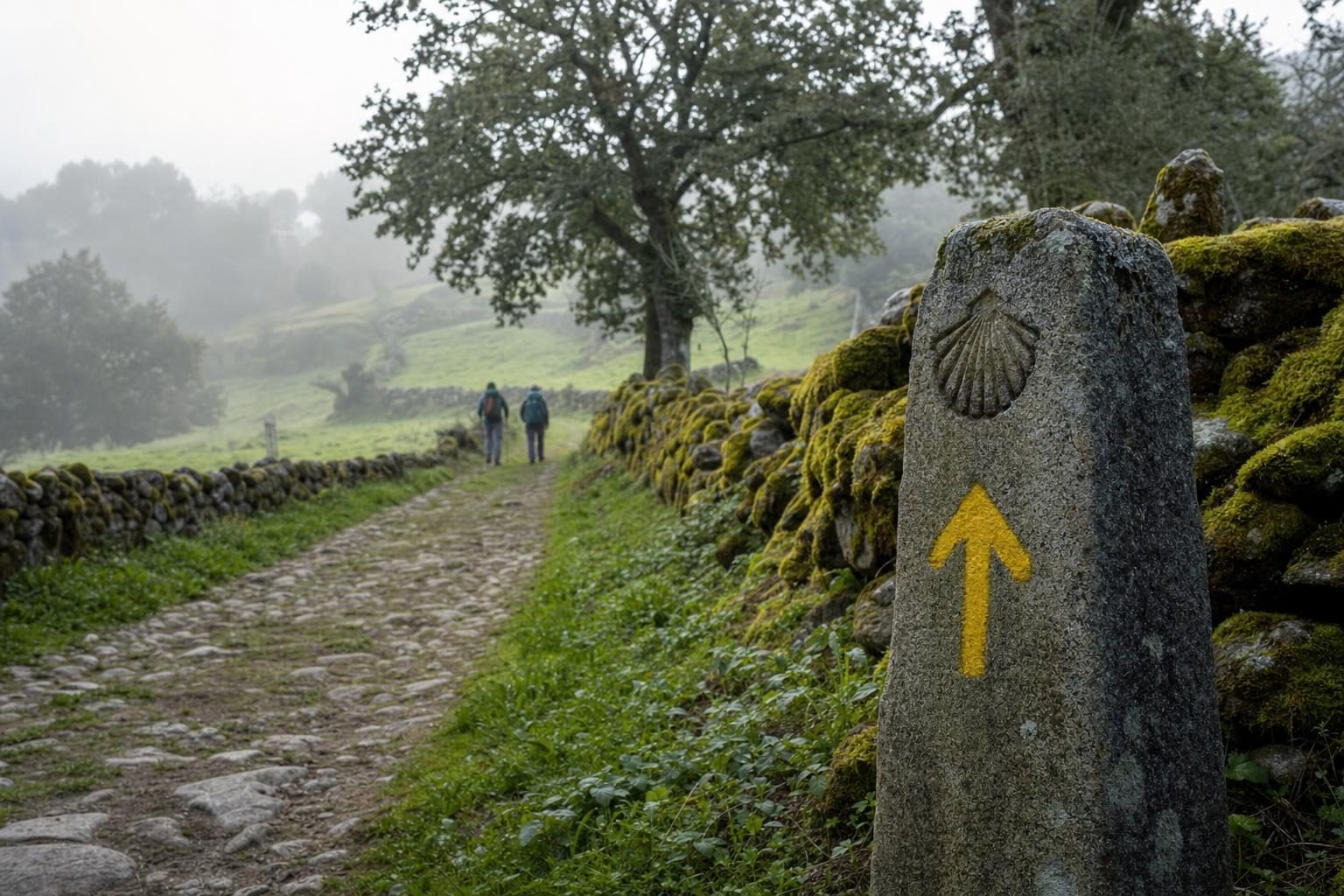
The name is not decoration. CoSM is laid out like a chapel in the old sense: a place meant to be travelled to, entered slowly and left changed. Seen that way it belongs to a much older pattern, the one traced in the history of pilgrimage, even if its saints are painters and chemists.
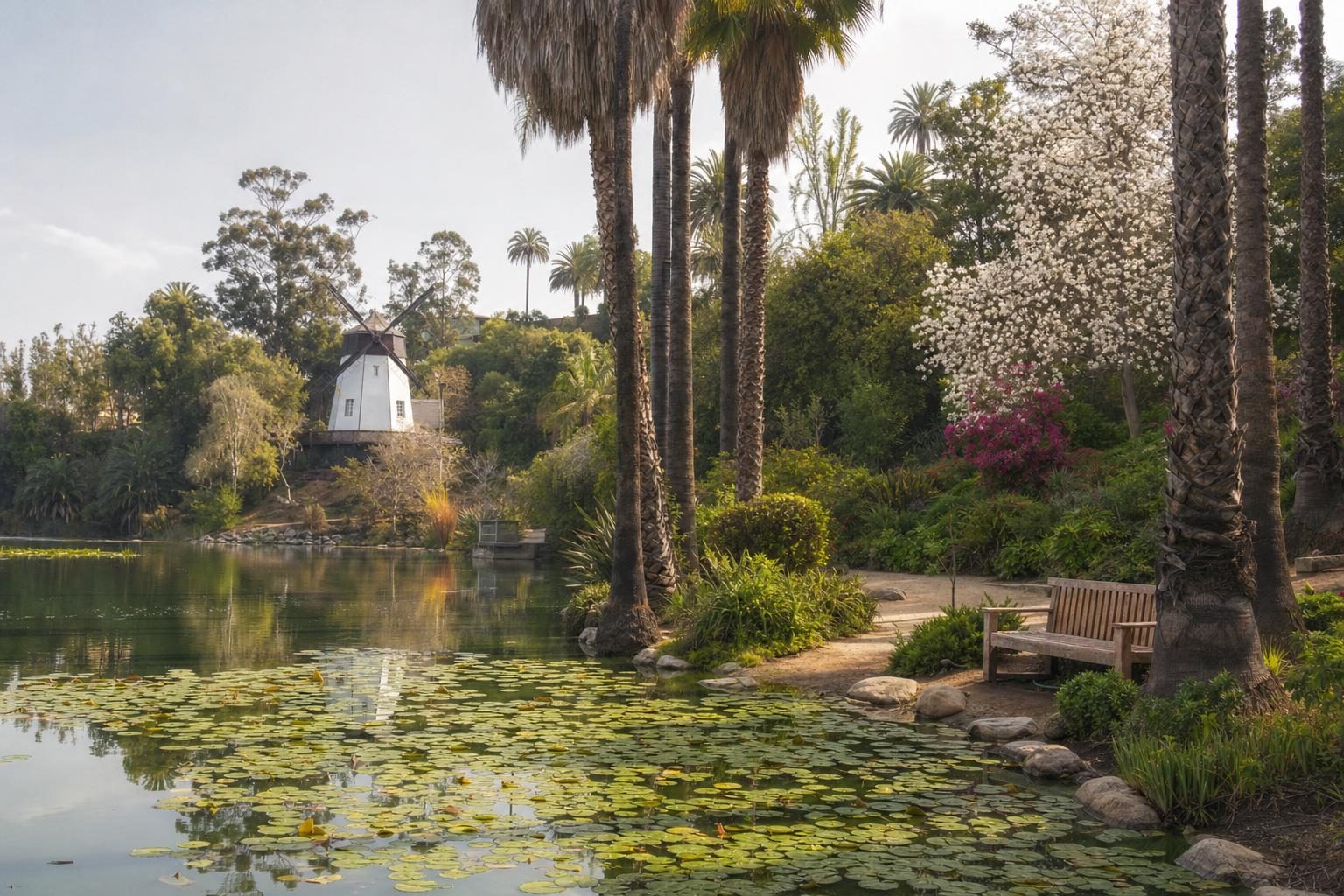
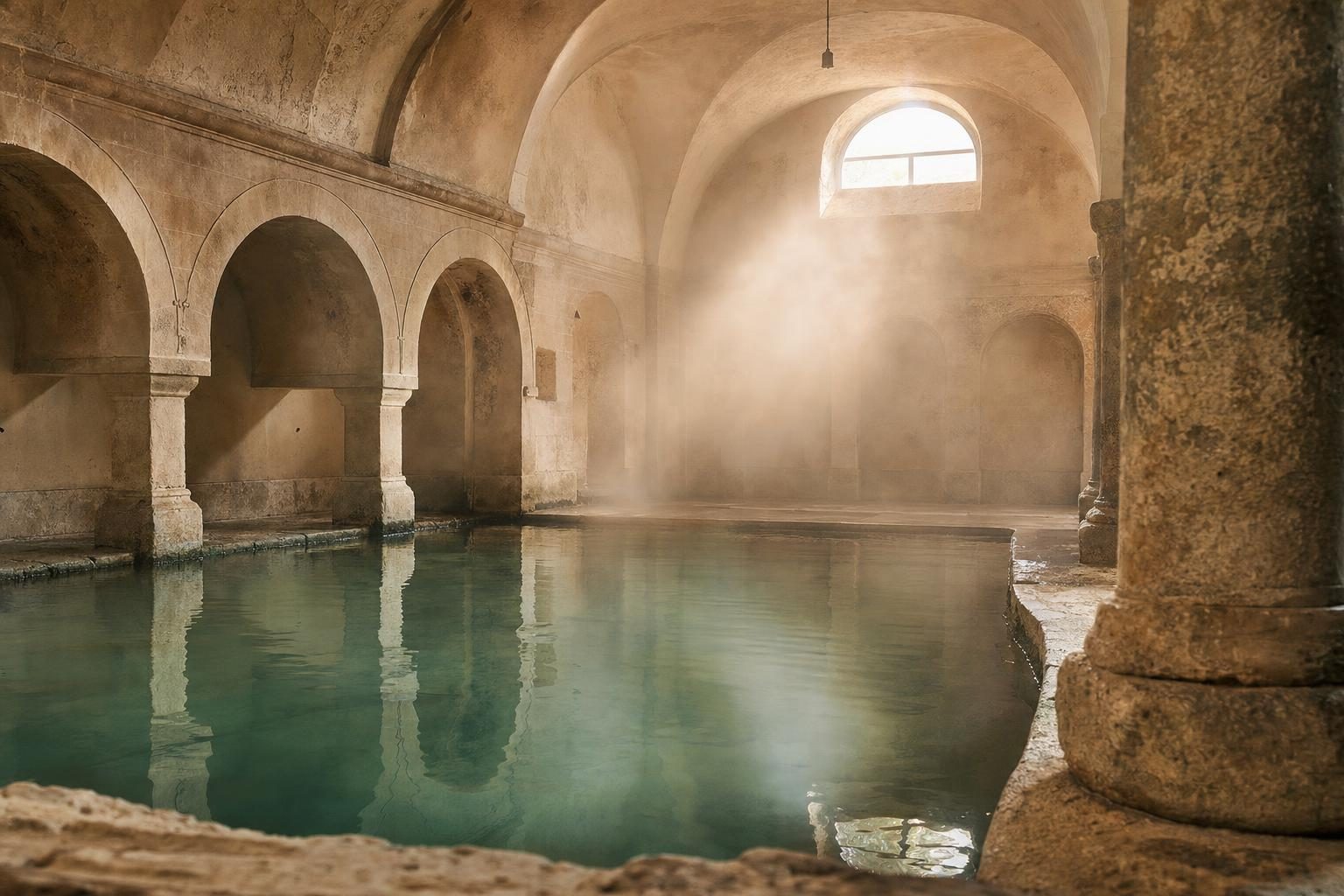
It also sits in a recent American habit of building private sanctuaries in the middle of ordinary life. A small-scale version of the same impulse, without the forty acres, is described in building an urban spiritual retreat in Los Angeles. And the idea of a trip taken for inner rather than practical reasons runs through the long history of spa and bathing culture, where the destination was water rather than paint.
Whatever a visitor makes of the art, the walk from the car park to the carriage house is a pleasant one: a few minutes under tall trees, the sound of the road dropping away, and at the end a heavy wooden door.
Below the hill, the Hudson Line trains still run along the riverbank towards the city.
Questions before you go
Who is Alex Grey?
Alex Grey is an American painter born Alexander Velzy in Columbus, Ohio, on 29 November 1953. He is known for life-size paintings that show the human body as layered anatomy and energy, above all the 21-painting Sacred Mirrors series, and for album artwork for the band Tool.
What is the Chapel of Sacred Mirrors?
The Chapel of Sacred Mirrors, or CoSM, is a non-profit founded by Alex and Allyson Grey to house the Sacred Mirrors series and other visionary art. It opened in Chelsea, Manhattan, in 2004, closed there in 2008 and moved to a 40-acre wooded property in Wappinger, New York, in the Hudson Valley.
What is Entheon?
Entheon is the museum building at the Chapel of Sacred Mirrors. It occupies a converted 19th-century carriage house of about 12,000 square feet and opened on 3 June 2023. It shows the Sacred Mirrors series, a gallery of Allyson Grey's paintings, work by other visionary artists and a room of psychedelic relics.
Where is the Chapel of Sacred Mirrors?
It sits on Deer Hill Road in the town of Wappinger, with a Wappingers Falls postal address, in Dutchess County, New York. The property is in the Hudson Valley, roughly two hours north of Manhattan by car.
When can visitors go to the Chapel of Sacred Mirrors?
CoSM opens to day visitors on selected days each week, generally from midday into the early evening, and hosts monthly gatherings and exhibitions. Days, hours and ticket prices change with the programme, so check the official calendar before travelling.
What is the Sacred Mirrors series?
Sacred Mirrors is a series of 21 life-size paintings Alex Grey made between 1979 and 1988. Each shows a figure through a different layer, from skeleton and nervous system to energy fields, and the series is meant to be viewed so that visitors see themselves reflected in it.
Which Tool albums feature Alex Grey's art?
Alex Grey's work appears on Tool's albums Lateralus (2001), 10,000 Days (2006) and Fear Inoculum (2019). The band's guitarist Adam Jones first came across his paintings in 1999.
Who is Allyson Grey?
Allyson Grey is a painter and Alex Grey's wife and long-time collaborator. The couple met as art students in Boston in the 1970s. Her paintings are built from tiny squares of colour forming geometric fields, and she co-founded and directs the Chapel of Sacred Mirrors.
What books has Alex Grey published?
His books include Sacred Mirrors: The Visionary Art of Alex Grey (1990), The Mission of Art (1998), Transfigurations (2001), CoSM (2007, with Allyson Grey), Art Psalms (2008) and Net of Being (2012, with Allyson Grey).