Spain · Event
Semana Santa: Christian Holy Week in Seville and Across Spain
For one week each spring, Seville's streets belong to the brotherhoods: candlelit processions, carved images swaying on the shoulders of hidden bearers, and silence broken by a single song from a balcony.
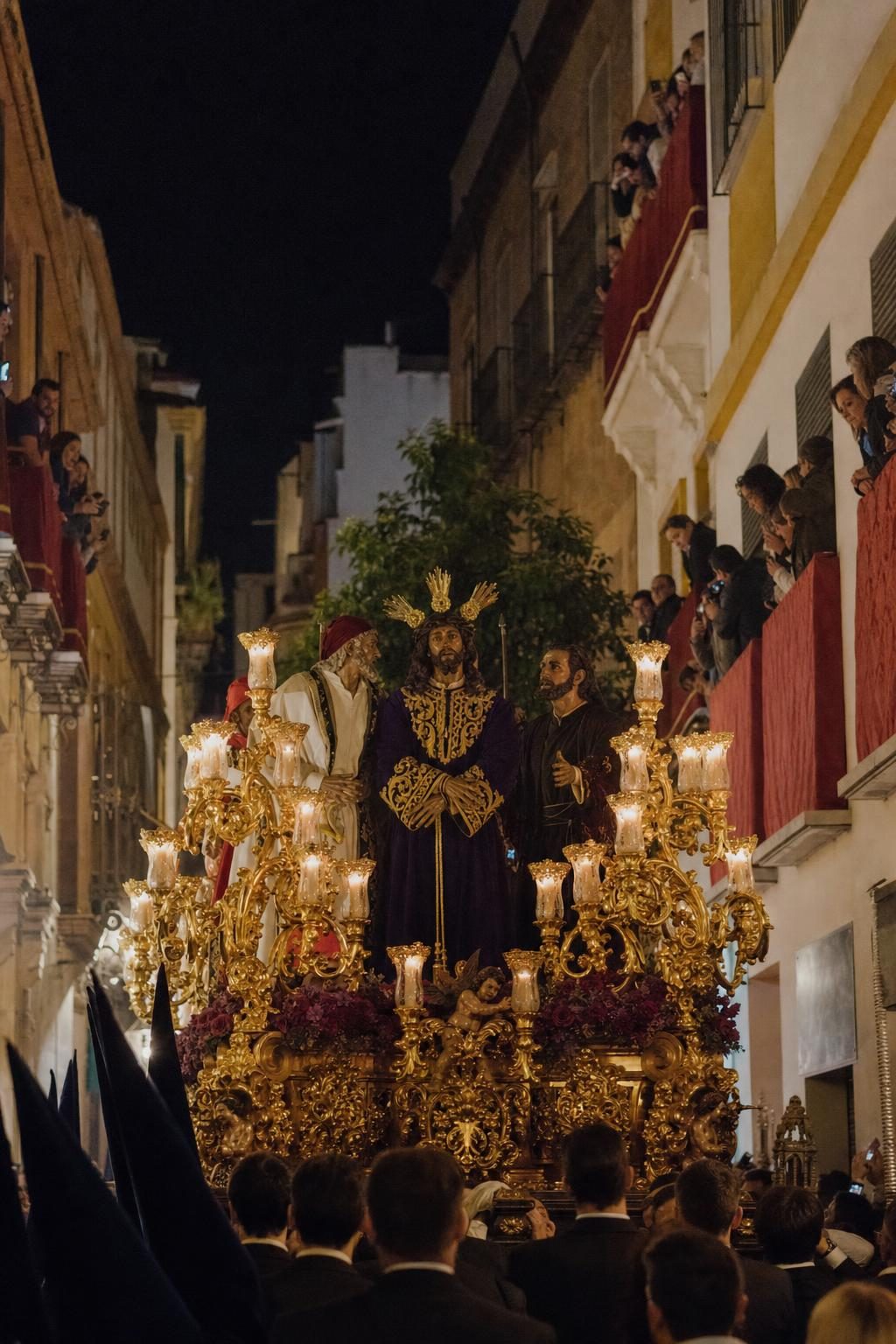
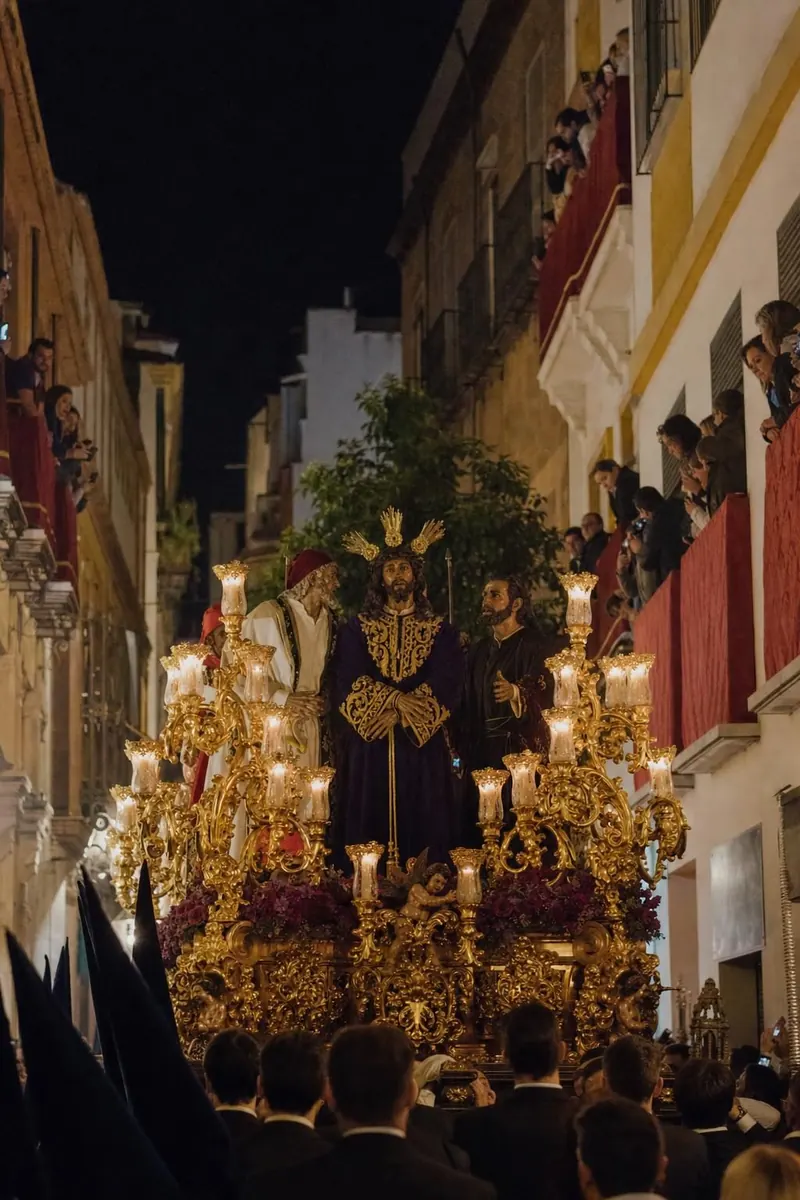
Shortly before midnight on a spring evening in Seville, the narrow street outside a church falls silent. A door swings open. Hooded figures in long robes step out two by two, each holding a tall candle, and behind them, rocking gently as if floating, comes a platform carrying a carved figure of Christ, lit by candles and piled with flowers. The men carrying it cannot be seen. Somewhere above, on a balcony, a single voice starts to sing.
This is Semana Santa, Holy Week, the eight days from Palm Sunday to Easter Sunday that commemorate the last days of Jesus’s life, his death and his resurrection. It is marked across the Christian world, and in Spain it takes over whole cities. Seville is its most famous stage.
Plan your visit
- When
- The eight days from Palm Sunday to Easter Sunday; Easter falls between 22 March and 25 April More
- Where
- Seville's Carrera Oficial, from Calle Campana along Sierpes to the cathedral More
- Tickets
- Chairs and boxes on the official route are rented for the week; elsewhere free from the street More
- Base
- Seville hotels raise prices and fill early for Holy Week; booking months ahead is normal More
The brotherhoods of Seville
The processions in Seville are organised by brotherhoods, known as hermandades or cofradías. Each is attached to a church and has its own images, colours, music and day of the week to process. Around 70 brotherhoods take part, and every one of them makes its way to the cathedral and back, a walk known as the estación de penitencia. Some processions last more than twelve hours from leaving their church to returning to it.
A typical procession has two pasos, or floats. The first usually shows a scene from the Passion, with Christ carrying the cross or nailed to it. The second carries the Virgin Mary under a canopy embroidered with gold, with rows of candles and a long velvet mantle trailing behind. The images are carved and painted wood, many of them made in the sixteenth and seventeenth centuries by leading Andalusian sculptors.
Between the pasos walk the nazarenos, penitents in long robes and the tall pointed hood called a capirote, their faces hidden. Several thousand may walk with one brotherhood. Some walk barefoot. Some carry crosses rather than candles. The robes and hoods vary in colour from white to purple, black, red or green, so each procession has its own look.
Underneath the pasos, out of sight, are the costaleros, the bearers. In Seville they carry the weight on their necks and shoulders from inside the platform, hidden by a curtain, and they move in short, shuffling steps that make the image seem to sway. Outside, the capataz, the foreman, guides them with spoken commands and a knock of a hammer on the front of the float. When the paso is lifted in one movement, the crowd often applauds.
Music sets the pace. Brass bands with cornets and drums march behind the Christ figures, while the Virgins are usually followed by bands playing processional marches, slow and mournful pieces written for the purpose. Some of these marches are over a century old, and Sevillians recognise the best known, such as Amarguras, from the first few bars. Other processions move with no music at all, and the only sounds are footsteps, the hammer of the capataz and the creak of the wooden platform.
Palm Sunday to Wednesday
Holy Week in Seville begins on Palm Sunday with processions accompanied by children carrying palm fronds and olive branches. The first days of the week are the easiest for visitors: the crowds are dense but manageable, the processions leave in daylight, and it is possible to watch a paso squeeze out of a church doorway, a manoeuvre that takes the bearers on their knees and can last several minutes.
Over these days, a pattern settles in. Processions leave their churches in the afternoon, wind through their own neighbourhood, join the Carrera Oficial in the city centre, pass through the cathedral and return home late at night. The Carrera Oficial, the official route, starts in Calle Campana and runs along Sierpes, the Plaza de San Francisco and the Avenida de la Constitución to the cathedral. Much of it is lined with chairs and boxes rented for the whole week, often by the same families for generations. Everywhere else, the processions can be watched free from the street.
The Madrugá
The emotional centre of Semana Santa in Seville is the Madrugá, the night between Holy Thursday and Good Friday. Six brotherhoods process through the dark until well into the morning: El Silencio, the Gran Poder, the Macarena, the Calvario, the Esperanza de Triana and Los Gitanos. The streets are full all night.
The Gran Poder, a seventeenth-century image of Christ bent under the cross, moves through the city in near silence, its nazarenos dressed in black. The Macarena, the city’s most beloved image of the Virgin, leaves her basilica near the old city walls after midnight and is greeted with cries and applause, returning home around midday on Good Friday. The Esperanza de Triana crosses the bridge over the Guadalquivir from her own neighbourhood across the river.
It is during these hours that saetas are most often heard. A saeta is a short, unaccompanied religious song in the flamenco tradition, sung from a balcony or the crowd as a paso stops in front of the singer. The whole street goes quiet to listen.
The Madrugá depends on the weather. Rain damages carved wood, gold leaf and embroidery, so brotherhoods cancel or turn back if it threatens. In 2024, all six brotherhoods suspended their Madrugá processions because of the forecast. For the brotherhoods, who prepare for the night all year, a cancellation is a hard blow.
Good Friday to Easter Sunday
On Good Friday afternoon more brotherhoods process, many in mourning tones. Holy Saturday is quieter, and Easter Sunday ends the week with a single procession of the Resurrection, a lighter image after the darkness of the previous nights. Then, within hours, the city begins to change. Seville’s spring Feria, the April fair of horses, flamenco dresses and striped marquees, usually follows a couple of weeks later.
Food follows the calendar too. Torrijas, slices of bread soaked in milk or wine, fried and coated with honey or sugar, are eaten all week. Bakeries and convents sell them alongside other Lenten sweets.
Semana Santa beyond Seville
Holy Week in Spain is not one festival but dozens. Every Spanish region marks the week in its own way, and some of the best processions take place far from Seville.
Málaga’s processions are the largest in scale. Its floats, called tronos, are huge and carried by teams of hundreds of bearers on the outside, under long poles, rather than hidden inside. On Holy Thursday, soldiers of the Spanish Legion carry the Christ of Mena through the streets, a spectacle that draws enormous crowds. One Málaga brotherhood has the privilege, granted by the king in the eighteenth century, of releasing a prisoner each year during its procession, and the practice still continues with the approval of the authorities.
In Castile the mood is more sombre. Valladolid’s processions carry polychrome wooden sculptures of exceptional quality, several of them on loan from the city’s National Museum of Sculpture. Zamora, a small city on the Duero, has a Holy Week documented for many centuries and is known for silent night processions in its Romanesque old town. Cuenca’s Good Friday procession at dawn is accompanied by the turbas, crowds of people with drums and trumpets representing the mob at the Crucifixion. Cartagena and Lorca, in Murcia, are known for rival brotherhoods and lavish embroidered costumes.
In parts of Aragon and Murcia, the week is marked by drumming. In towns such as Calanda and Hellín, thousands of drummers play for hours, sometimes until their hands bleed. These tamboradas were added to UNESCO’s list of Intangible Cultural Heritage in 2018.
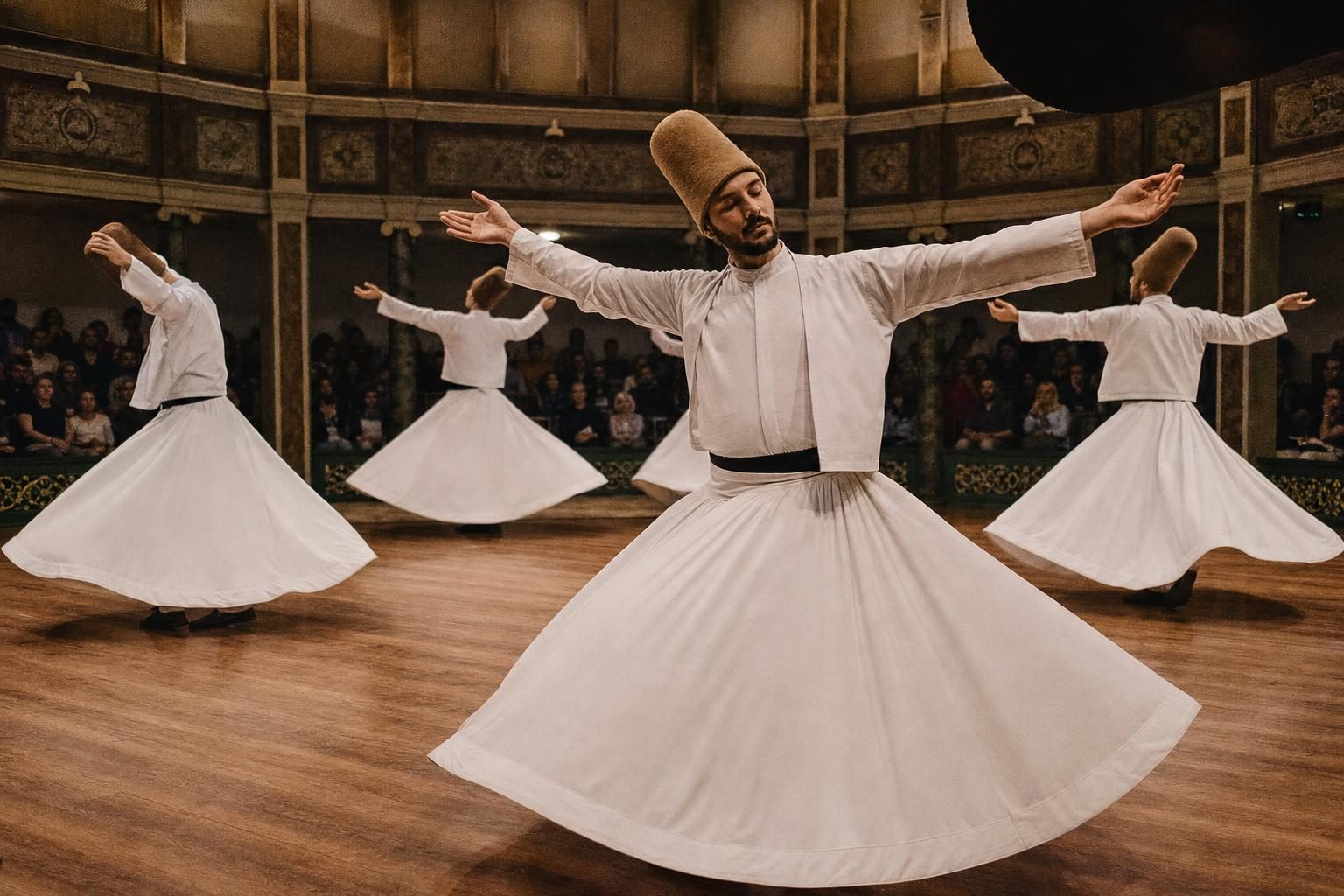
Semana Santa travelled with Spain to the Americas, and Antigua in Guatemala is famous for its alfombras, carpets of coloured sawdust and flowers laid on the streets for processions to walk over. The pageant fits into a much older history of pilgrimage and procession, and readers interested in other living religious rituals may want to read about the Mevlana whirling dervishes of Konya. In Greece, where Easter follows the Orthodox calendar and sometimes falls on a different date, islands such as Corfu and Tinos hold their own celebrations, described in the guide to the Cyclades and Ionian Islands.
Dates and practical notes
Holy Week in Spain moves every year because Easter does. In the Western churches, Easter Sunday falls on the first Sunday after the first ecclesiastical full moon on or after 21 March, so it can land anywhere between 22 March and 25 April. The coming dates are:
- 2027: Palm Sunday 21 March, Good Friday 26 March, Easter Sunday 28 March
- 2028: Palm Sunday 9 April, Good Friday 14 April, Easter Sunday 16 April
- 2029: Palm Sunday 25 March, Good Friday 30 March, Easter Sunday 1 April
Hotels in Seville raise their prices and fill early for Holy Week, so booking months ahead is normal. Crossing the city centre during processions takes time, because routes cut streets off for hours. The brotherhoods’ timetables and itineraries are printed in local newspapers and widely shared in pocket guides and apps, and locals plan their evenings around them.
Visitors are welcome, but respect is expected. Do not cross through a procession, keep voices down during saetas and silent processions, and avoid using a flash on the images. In Spain, Good Friday is a public holiday everywhere and Holy Thursday is a holiday in most regions, so some shops and museums close and public transport runs on holiday timetables. More festivals and religious celebrations are listed in the events section.
Bring comfortable shoes and patience: in Seville, the night of the Madrugá ends for many people with hot chocolate and churros at dawn, eaten standing at a bar counter while the last procession goes home.
Questions before you go
When is Semana Santa?
Semana Santa runs from Palm Sunday to Easter Sunday. Because Easter is set by the moon, the dates change every year. In 2027 Easter Sunday falls on 28 March, in 2028 on 16 April and in 2029 on 1 April.
How is the date of Easter calculated?
In the Western churches, Easter Sunday is the first Sunday after the first ecclesiastical full moon on or after 21 March. That means it can fall anywhere between 22 March and 25 April, and Holy Week moves with it.
What is the Madrugá in Seville?
The Madrugá is the night between Holy Thursday and Good Friday, when six of Seville's best-known brotherhoods process through the city until morning. They include the Macarena, the Gran Poder and the Esperanza de Triana.
Why do the nazarenos wear pointed hoods?
The tall pointed hood, called a capirote, is a traditional penitential garment that hides the wearer's identity, so that penance is done anonymously. Each brotherhood has its own colours of robe and hood.
How many brotherhoods process in Seville?
Around 70 brotherhoods make their procession to Seville Cathedral during Holy Week. Together they put tens of thousands of nazarenos on the streets over eight days.
What is the Carrera Oficial?
The Carrera Oficial is the official route in central Seville that every brotherhood must follow on its way to the cathedral. It begins in Calle Campana and passes along Sierpes, the Plaza de San Francisco and the Avenida de la Constitución. Much of it is lined with paid seating.
Which other Spanish cities are known for Holy Week?
Málaga, Granada, Córdoba and other Andalusian cities hold large processions. In Castile, Valladolid and Zamora are known for solemn processions and historic sculpture, while Cuenca, Cartagena and Lorca each have their own distinct traditions.
Are processions cancelled when it rains?
Yes, often. Brotherhoods may delay or cancel a procession to protect centuries-old carved images and their embroidered canopies. In 2024, all the brotherhoods of Seville's Madrugá cancelled their processions because of the weather.
Is Holy Week a public holiday in Spain?
Good Friday is a public holiday throughout Spain, and Holy Thursday is also a holiday in most regions. Some regions add Easter Monday. Shops and offices may close, and transport runs on holiday timetables.